Setup from North-South Position
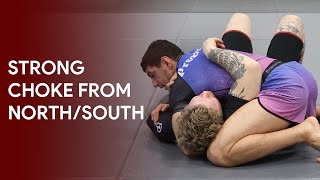
The arm triangle choke begins from a cross-body (north-south) position when the opponent keeps their arms tucked defensively. The instructor establishes a heavy cross-body base by dropping body weight down and bringing the leg closest to the opponent's shoulders flat to the mat. This heavy positioning prevents the opponent from creating space or escaping.
Trapping the Arm with the Knee
The practitioner slides their knee upward to position it underneath the opponent's trapped arm. Maintaining tight body contact throughout this movement is critical—any separation allows the opponent to tuck their elbow to safety. The knee placement creates the initial constraint that prevents arm withdrawal.
Securing the Grip
Once the arm is trapped by the knee, the instructor reaches their arm through and grabs their own thigh as deeply as possible. This deep grip through the opponent's body creates the arm triangle frame. The hand remains on the opponent's hip with the other hand for control and stability.
Hip Positioning—The Critical Detail
The most important aspect of the technique is maintaining hip contact with the opponent's body while transitioning positions. If the hips lift at any point, the opponent can tuck their elbow and escape. The instructor must keep their hips low and tight against the opponent as they begin rotating.
Rotating and Compressing
The practitioner places their head down on the mat and secures a gable grip with both hands while keeping body weight heavy on the trapped arm. They then rotate their hips away from the opponent while maintaining downward pressure. The back and hips drive the opponent's arm upward toward their forehead, tightening the choke.
Finishing the Choke
With the gable grip secure and hips rotated, the instructor simply brings their clasped hands toward their stomach and squeezes to complete the submission. Throughout the finish, body weight must remain on the opponent's arm—any elevation allows escape. The squeeze targets both the neck and the compressed arm simultaneously.
Handling Continued Arm Defense
If the opponent resists by keeping their hand elevated near their neck, the instructor can take additional hip steps to drive the arm further across the opponent's face. This persistent hip pressure makes the position increasingly uncomfortable, often forcing the opponent to voluntarily remove their own arm. The technique remains effective even against active resistance.
Complete Sequence Recap
The full sequence begins with a heavy cross-body drop and knee slide to trap the arm. The instructor then reaches deep for the grip, maintains hip contact while rotating, places their head down, secures the gable grip, and finishes with a controlled squeeze. Throughout execution, the critical principle remains constant: never lift the hips.
Jiu Jitsu Technique - Arm Triangle from North South
Key Takeaways
- •Setup from North-South Position
- •Trapping the Arm with the Knee
- •Securing the Grip
- •Hip Positioning—The Critical Detail
Mark Plavcan of Madison JiuJitsu and Twisted Fitness shows a sneeky Arm Triangle from N/S set up from side control. More video at WICOMBATSPORTS.COM
Related Techniques
Frequently Asked Questions
What does this video teach about arm triangle — from north-south?
This video covers setup from north-south position, trapping the arm with the knee, securing the grip. It provides detailed instruction from wicombatsports.
How long does it take to learn arm triangle — from north-south?
The basic mechanics can be understood in a single session, but developing reliable execution requires consistent drilling over weeks of practice. This 8-part breakdown helps structure your training by isolating each phase of the technique.
What are the key details for finishing arm triangle — from north-south?
If the opponent resists by keeping their hand elevated near their neck, the instructor can take additional hip steps to drive the arm further across the opponent's face. This persistent hip pressure makes the position increasingly uncomfortable, often forcing the opponent to voluntarily remove their own arm. The technique remains effective even against active resistance.
Related videos
Arm Triangle from North South
Tarik BJJ
Arm Triangle Choke from Mount - ArmTriangle Kata Gatame BJJ Grappling Judo Basics for MMA
Peter Mettler Martial Arts
How to : Rolling Arm Triangle from Turtle Part 3
UltimateMMA Plus

Knee on Belly to Arm Triangle!
TeachMeGrappling Coach Brian
Head and arm choke from half guard || The Jiu Jitsu Journal || BJJ Techniques
Prism Jiu Jitsu