Arm Triangle Choke From Side Control - Learn to Grapple
0
Arm Triangle Choke — From Side Control·Precision Boxing & MMA
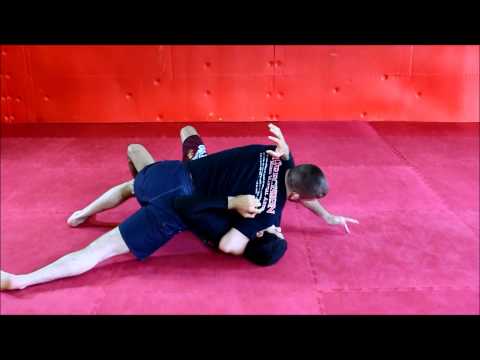
BJJ Blackbelt Brian Mclaughlin shows an Arm triangle choke from side control. http://learntograpple.com/
Translation: Shoulder Hold / Arm-and-Head Lock — From Side Control
A head-and-arm choke variation applied from side control. The attacker traps the opponent’s far arm across their neck while lowering the shoulder and chest beside the head, applying strong lateral compression. Side control creates a natural angle that increases choke tightness and prevents bridging defenses.
Classic Kata Gatame form in Judo, widely adapted in BJJ as one of the highest-percentage side control submissions. Common continuation from mount arm triangle setups.
The side control arm triangle (kata-gatame) is one of the oldest and most effective head-and-arm chokes, originating in judo's osaekomi-waza. [1]
No images yet for this technique.
Sign in to suggest an image.
BJJ Blackbelt Brian Mclaughlin shows an Arm triangle choke from side control. http://learntograpple.com/
No instructional courses yet for this technique.
Sign in to suggest a course.
Risk of injury to the person this technique is applied to
Direct vascular choke; fast finish if angle is correct.
Skill level needed to execute this technique reliably
Whether this technique is allowed under major competition rule sets
Kodokan Judo — Official Katame-waza Classification (肩固め Kata-gatame)
Japanese terminology sourced from Kodokan Judo — Official Katame-waza Classification (肩固め Kata-gatame)
Official Kodokan ground technique classification system
Established Japanese martial arts naming convention — native Japanese term (和語/漢語)
Japanese terminology sourced from Kodokan Judo — Official Katame-waza Classification (肩固め Kata-gatame)
hip flexibility, long legs relative to torso
longer limbs for easier figure-four lock around head and arm
hip adductors, hamstrings, quadriceps
Every move, in any martial art, shares a few universal traits. Mix and match below to pinpoint the right tool — or compare equivalents across styles.
A side-control kata gatame finished with one knee pinning the near-side hip and the opposite leg posted (knee-on-belly–style base). The knee-hip pin blocks shrimping and guard recovery while the posted leg provides stability. Upper-body squeeze (shoulder + chest) does the choking; legs manage control without a full sprawl.
A side-control kata gatame finished with a full or partial sprawl. The attacker drives shoulder and chest pressure beside the defender’s head while sprawling the legs back to load weight through the ribcage and neck. The sprawl removes the defender’s bridge power and tightens carotid compression with minimal arm effort.
Side control angle often provides the tightest finish for Kata Gatame; many athletes set choke from mount then dismount to side for completion.
Get the opponent's arm all the way across their body before settling into the choke. If you don't fully extend the arm across, they can easily grab your arm near their head (called 'answering the phone'), which weakens the submission. Having the arm fully across makes it much harder for them to escape.
When you rise up high to get your grip, driving pressure goes into the opponent's face rather than their carotid artery, making the choke less effective. Staying flat ensures the pressure targets the correct anatomy for the submission.
Yes—shrugging the shoulder drives it into the neck and significantly helps with the choke's effectiveness. Without the shoulder shrug and using only squeezing pressure, you create only minimal pressure.
Use a gable grip (interlocking fingers with no thumb over the hands) with bottom palm up and top palm down. Walking your body out to an L-shape while squeezing with a shoulder shrug creates the most force.
A head-and-arm choke variation applied from side control. The attacker traps the opponent’s far arm across their neck while lowering the shoulder and chest beside the head, applying strong lateral compression.
Classic Kata Gatame form in Judo, widely adapted in BJJ as one of the highest-percentage side control submissions. Common continuation from mount arm triangle setups.
Danger: 9/10 | Direct vascular choke; fast finish if angle is correct.
The standard setup chain: Achieve Controlling Position → Isolate the Neck → Set the Grip → Apply Pressure.
Standard counters include: Tuck Chin — protect the neck by lowering the chin to prevent the choke from sinking / Two-on-One Grip Fight — use both hands to strip the choking grip before it locks / Turn Into — rotate toward the choking arm to relieve carotid pressure / Posture Up — straighten the spine and create distance to break the choking angle.
Common variants: Side control finish; North-south kata gatame finish; Transition to mount kata gatame.
The arm triangle from side control is one of the most commonly finished chokes in UFC history, used by dozens of fighters including Jon Jones and Demian Maia.
Top errors to watch for: Not dropping head low enough / Allowing opponent’s elbow to slip free / Trying to finish flat instead of angling chest / Squeezing with arms only instead of chest/shoulder.
The Arm Triangle Choke — From Side Control is also known as Kata Gatame — From Yoko-Shiho / Side Control, Side Control Arm Triangle, Side Kata Gatame, Head-and-Arm Choke from Side.