Southpaw Footwork, Tricks and Secrets Explained In Depth - Full Boxing Breakdown
0
Southpaw Jab·The Modern Martial Artist
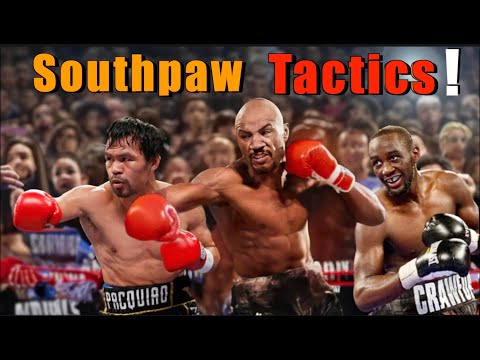
Southpaw fighters are a crazy bunch. Would you go into a battle with no shield if it meant your opponent didn't get a sh…
Translation: southpaw jab
The southpaw jab is a right-hand jab thrown from a southpaw (right-foot-forward) stance, reversed from the orthodox configuration. [1] The term 'southpaw' originated in American baseball but was adopted by boxing, with early references appearing in the late 19th century. [2] Southpaw fighters have historically been considered awkward opponents because their jab comes from the opposite side, creating unfamiliar angles for orthodox fighters. [3] Notable southpaw jabbers include Marvin Hagler, Pernell Whitaker, and Manny Pacquiao, all of whom used the right-hand jab to control range against orthodox opponents. [3]
The southpaw jab is thrown from the right hand in southpaw stance. [1]
The jab for southpaw fighters. [1]
Used by southpaw fighters in boxing and MMA. [1]
No images yet for this technique.
Sign in to suggest an image.
Southpaw fighters are a crazy bunch. Would you go into a battle with no shield if it meant your opponent didn't get a sh…
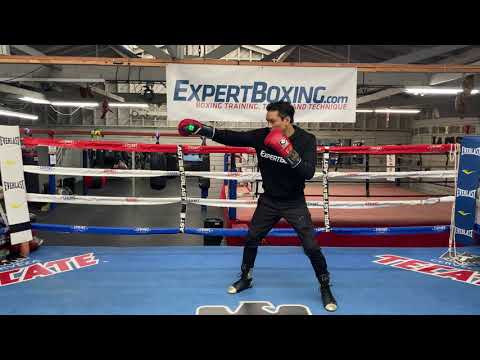
Basic jab punch technique for southpaw (left-handed) boxers. https://expertboxing.com - the #1 boxing training website …
The southpaw jab is a foundational striking technique executed from the southpaw stance, wherein the boxer extends their lead (right) hand toward the opponent with a relaxed arm that closes into a fist during extension. According to expertboxing, the jab begins with the shoulder, arm, and hand rising together to protect the chin while delivering the strike—described as a quick, snappy punch rather than a power shot. The instructor emphasizes keeping the head forward rather than turning it excessively sideways, as true southpaws maintain a square head position to absorb force efficiently down the neck. expertboxing details multiple variations: stepping forward or backward with the jab, pivoting, throwing to the body with accompanying hip rotation, and executing upward jabs with either vertical or inverted fist orientation. The Modern Martial Artist provides strategic context, explaining that southpaws use footwork angles—particularly outside foot positioning—to line up and disguise the rear-hand cross while keeping the opponent offline. Both instructors emphasize practice and repetition to develop natural, instinctive execution. The key distinction is that expertboxing focuses on mechanical fundamentals and punch variations, while The Modern Martial Artist contextualizes the jab within broader southpaw footwork strategy and positional advantage.
Synthesized from 2 instructors
No instructional courses yet for this technique.
Sign in to suggest a course.
Risk of injury to the person this technique is applied to
Jab/cross; fundamental striking tool, cumulative brain trauma risk
Skill level needed to execute this technique reliably
Whether this technique is allowed under major competition rule sets
Karate-Do Kyohan: The Master Text (Gichin Funakoshi, 1935)
Alias sources — [1] Championship Fighting (Dempsey, 1950) [2] Boxing (Fleischer, 1958) [3] Boxing Mastery (Hatmaker, 2004)
History sources — [1] Championship Fighting (Dempsey, 1950) [2] Boxing (Haislet, 1940) [3] Boxing's Greatest Fighters (Sugar, 2006)
Standard katakana transliteration of Western martial arts terminology (外来語) — used in Japanese MMA, boxing, and BJJ communities
Alias sources — [1] Championship Fighting (Dempsey, 1950) [2] Boxing (Fleischer, 1958) [3] Boxing Mastery (Hatmaker, 2004)
History sources — [1] Championship Fighting (Dempsey, 1950) [2] Boxing (Haislet, 1940) [3] Boxing's Greatest Fighters (Sugar, 2006)
hand speed, shoulder endurance, quick retraction
longer reach for keeping opponents at distance
anterior deltoid, triceps, serratus anterior, core
Foot angle relative to your opponent is equally important as hand technique. High-level fighters understand that controlling the outside angle is critical, which often leads to foot battles where opponents try to muscle into better position—this positional dominance can be the difference in fights, as demonstrated when Marquez used superior footwork to KO Pacquiao.
Keep your shoulder lifted to protect your chin, maintain your head forward (not pulled back), and throw it as a quick speed shot—a 'firecracker' rather than a power punch. The footwork itself should be minimal; focus on the jab mechanics first before adding pivots or complex movement.
Yes—experiment with where your hand returns and vary your head position with each jab. You can throw it straight back, slightly off-angle, or set up follow-ups like hooks, all while adjusting where you hold your head to maintain defense.
A jab thrown from a southpaw (right-foot-forward) stance, extending the right fist straight toward the target.
The southpaw jab is a right-hand jab thrown from a southpaw (right-foot-forward) stance, reversed from the orthodox configuration. The term 'southpaw' originated in American baseball but was adopted by boxing, with early references appearing in the late 19th century.
Unified MMA: legal — Legal striking technique; WBC/Boxing: legal — Legal — punches are the core technique of boxing; WKF: legal — Legal, jodan/chudan punch scores 1 point (yuko) — controlled contact required; Kyokushin: restricted — Body punches legal at full power, head punches banned; WT: restricted — Punches to trunk only (1 point), punches to head banned; ITF: legal — Legal — hand techniques to head and body both permitted; WAKO: legal — Legal in Full Contact and Low Kick formats; K: legal — 1/GLORY — Legal — full power punches to head and body; IFMA: legal — Legal
Danger rating 5/10. High — jab/cross; fundamental striking tool, cumulative brain trauma risk
The standard setup chain: Fighting Stance → Weight Transfer → Extend → Snap Back.
Standard counters include: Slip — move the head off the centre line to evade the punch / Parry — deflect the incoming punch with a quick hand redirection / Counter Cross — time a straight punch over the incoming attack.
Common variants: Standard jab (quick, straight lead-hand punch from orthodox stance); Power jab (stepping into the jab with more body weight for increased…); Double jab (two rapid jabs to set up a follow-up power shot); Body jab (targeting the midsection instead of the head).
Used by southpaw fighters in boxing and MMA.
Top errors to watch for: Not fighting for outside foot position, which is the key strategic battle in orthodox-vs-southpaw matchups / Jabbing down the centre line instead of angling to the open side — this walks into the orthodox cross / Standing square to use the strong right hand more, which negates the advantages of the southpaw stance / Neglecting the straight left after establishing the jab — the jab-cross combination is the southpaw's bread and butter.
The Southpaw Jab is also known as Sausupō Jabu, Right Jab, Southpaw Lead, Left-Handed Jab.