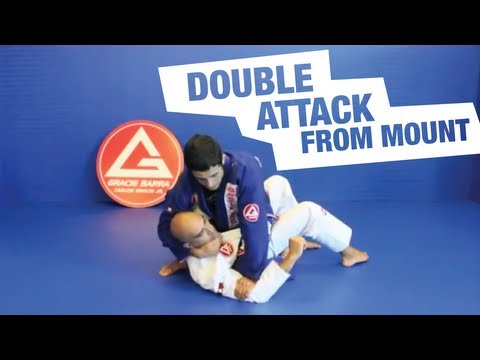
Double Attack from the Mount: Prof. Philipe Della Monica
0
Double Attack Mount·Gracie Barra
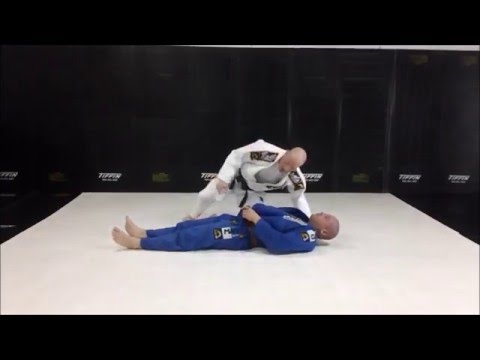
In this video Professor Philipe Della Monica, a 2nd degree black belt from GB Saddleback, teaches a double attack from t…
Translation: double attack mount
The Double Attack Mount is a high mount position where the attacker threatens both an armbar and an arm triangle simultaneously, forcing the opponent to defend one and opening up the other. [1] BJ Penn demonstrates how maintaining dual threats from mount dramatically increases finishing rate. [1]
Double Attack Mount is a technique documented in BJ Penn's comprehensive MMA system. [1]
Proven in UFC-level competition by BJ Penn and training partners. [1]
Modern MMA methodology; BJ Penn / Greg Jackson lineage. [1]
Used in UFC and professional MMA competition
No images yet for this technique.
Sign in to suggest an image.
In this video Professor Philipe Della Monica, a 2nd degree black belt from GB Saddleback, teaches a double attack from t…
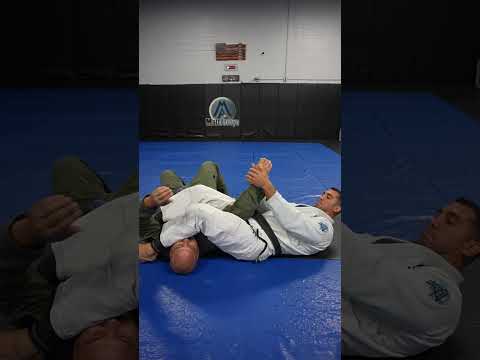
This double attack strategy from the mounted position pairs the simple cross choke with the standard mounted armlock to …
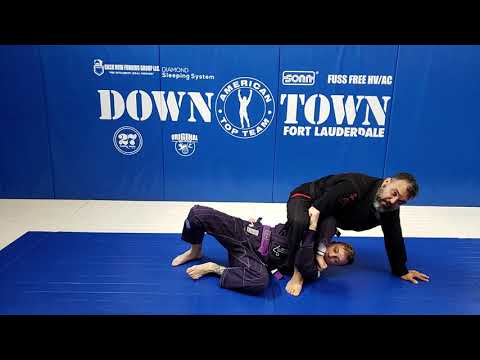
Master Junior Fernandes is a 4th Degree black belt under Ricardo Liborio. Here he shows 2 good options from mount when y…
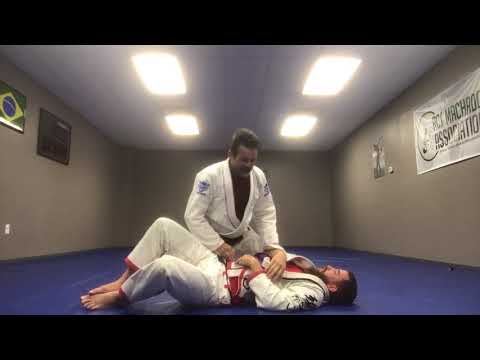
Double attack from mount is danger and efficient is a good defense against the “UPA and ROLL” . Master Ricardo review t…
Great Options From Mount Position by Gordon Ryan - Click Here To Check Out Gordon Ryan's Instructional Videos - https://…
Get in touch :-) www.satoribjj.com www.facebook.com/Satori.BJJ.Dublin/ www.instagram.com/satoribjj satorijohnbjj@gmail.…
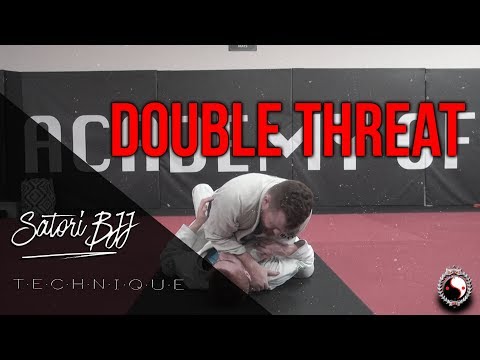
The double attack mount, as taught across these instructional sources, refers to a position and sequence where the top grappler establishes control in mount while the bottom opponent brings an arm around the top player's torso to create defensive contact. Gracie Barra's Felipe Della Monica emphasizes the initial setup: stepping forward to establish base, using two-handed pressure on the opponent's biceps to break their grip, then controlling the head while placing one knee over the biceps with toes still on the mat. From this position, Della Monica presents two primary attacks: a Kimura grip applied to the wrist (with optional elbow control if flexibility is limited), and a leg-over knee slice finishing with hip control. Gordon Ryan via Bernardo Faria BJJ Fanatics introduces a dilemma-based approach, pinning one hand to the floor and creating a choice scenario—if the opponent doesn't react, the top player elevates the arm; if the opponent strips the grip, they expose the back for back attacks or head-and-arm variations. Satori BJJ adds cross-face control mechanics using the thumb-inside grip with elbow cinching, emphasizing low center of gravity, wide knees, and elbow positioning to control the head before finishing with arm traps or X-choke transitions. All instructors agree on the core principle: creating a defensive dilemma that leads to multiple submission pathways regardless of the opponent's reaction.
Synthesized from 4 instructors
No instructional courses yet for this technique.
Sign in to suggest a course.
Risk of injury to the person this technique is applied to
Control position for GNP
Skill level needed to execute this technique reliably
Whether this technique is allowed under major competition rule sets
Mixed Martial Arts: The Book of Knowledge (Penn, Cordoza & Krauss, 2007)
description, historyOrigin: sourced from Penn, B
description, historyOrigin: sourced from Penn, B
MMA-specific body control and pressure
Double attack from mount appears in 10 passages in Drill to Win (Galvao). Threatening two submissions simultaneously from mount — typically an armbar on one side and a collar choke on the other — forcing the opponent to defend one and concede the other. (Galvao, Drill to Win; BJJ instructionals)
Start by establishing a solid base with your hips and keeping your head positioned same-side with your opponent's head while squeezing your belly against theirs. Ricardo Cavalcanti emphasizes that 'the most important thing about mount is to stay in mount' and not rush to attack before you've secured proper positioning.
If your opponent clamps down or defends your first attack, switch to attacking the opposite side. Prof. Philipe Della Monica explains that once you commit to one attack and he defends, you transition by switching your grip and attacking the other side, eventually finishing with control of the knee.
Bring your hip to the mat and bring your knees together—this makes it very hard for your opponent to escape. Prof. Philipe Della Monica notes that at this point 'it's really hard for him to escape' before you grab the outside knee and finish the technique.
A good entry sets up everything that follows. According to Gracie NEPA's instructor, 'if you get that good entry everything else will fall into place and eventually bust through those defenses he's set up for me'—specifically, lifting the 'grocery bag' and sliding your hand in deep gives you control before your opponent can counter.
The Double Attack Mount is a high mount position where the attacker threatens both an armbar and an arm triangle simultaneously, forcing the opponent to defend one and opening up the other. BJ Penn demonstrates how maintaining dual threats from mount dramatically increases finishing rate.
Double Attack Mount is a technique documented in BJ Penn's comprehensive MMA system.
IBJJF: legal — Legal, mount scores 4 points — highest-scoring position; IJF: legal — Legal, osaekomi (pin) — 10-19 seconds scores waza-ari, 20 seconds scores ippon; ADCC: legal — Legal, mount scores 2 points; Unified MMA: legal — Legal dominant position; UWW: legal — Legal, back exposure scores points, pin ends match by fall; FIAS Sport Sambo: legal — Legal, pin scores points
Danger rating 5/10. Control position for GNP
The standard setup chain: Engagement → Double Attack Mount → Advance position.
Standard counters include: Guard retention / Frame and escape / Submission counter.
Common variants: Standard Double Attack Mount; Modified Double Attack Mount.
Used in UFC and professional MMA competition
Top errors to watch for: Losing base / Not maintaining control / Poor transitions.
The Double Attack Mount is also known as Double Attack Mount, Double Threat Mount, Submission Mount.