Introduction and Setup
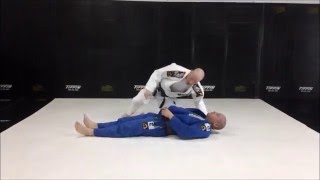
Professor Philipe Della Monica demonstrates two attacks from the mount position when an opponent has wrapped their arm around the instructor to maintain closeness and prevent space creation. When the defender's weight is attached tightly, traditional neck and arm attacks become difficult to execute. The instructor establishes the proper starting position with controlled posture.
Breaking the Grip
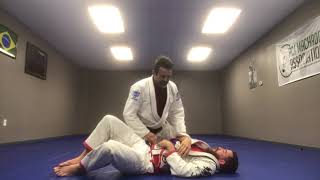
The instructor steps forward to establish a strong base, then uses both hands to break the opponent's grip by applying downward pressure on the biceps. Once the grip is disrupted, control is established around the opponent's head while positioning the knee over the biceps with toes maintaining contact on the mat.
First Attack: Kimura Lock Setup
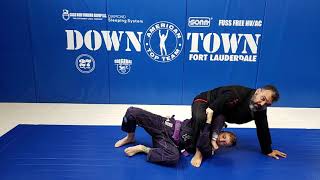
From the established position, the instructor controls the opponent's wrist while keeping the chest close to prevent escape. The hands are clasped together, and the back is arched to reach under the arm, creating a Kimura grip. The attacking arm is driven forcefully toward the opponent's head to secure the submission.
Kimura Grip Modification
For practitioners lacking sufficient flexibility to execute the full Kimura, an alternative control method secures the elbow while using only one hand to drive the arm. This modification maintains submission pressure while adapting to individual physical limitations.
Second Attack: Transition Setup
If the opponent resists the Kimura due to exceptional flexibility, the instructor transitions by placing the hand palm-up and catching the foot. The free hand posts on the mat for balance as the foot is brought over the opponent's face, shifting the attacking position.
Second Attack: Leglock Finish
The hips are brought to the mat while bringing the knees together, creating a position from which escape becomes extremely difficult. The outside knee is grabbed and driven to the left side with force to complete the leglock submission. This transition provides an effective alternative when the initial Kimura is defended.
Full-Speed Demonstration
The instructor demonstrates both attacks executed in sequence at realistic speed, showing the seamless transitions from the initial grip-break through the Kimura attack and into the leglock finish. This demonstration illustrates the practical application and timing required in live grappling.
Training Recommendations
Professor Della Monica emphasizes the importance of extensive repetition when learning techniques with multiple details and transitions. Consistent drilling of both attacks ensures muscle memory development and reliable execution during live rolling.
Double Attack from the Mount: Prof. Philipe Della Monica
Key Takeaways
- •Introduction and Setup
- •Breaking the Grip
- •First Attack: Kimura Lock Setup
- •Kimura Grip Modification
In this video Professor Philipe Della Monica, a 2nd degree black belt from GB Saddleback, teaches a double attack from the mount position.
Frequently Asked Questions
What does this video teach about double attack mount?
This video covers introduction and setup, breaking the grip, first attack: kimura lock setup. It provides detailed instruction from Gracie Barra.
How long does it take to learn double attack mount?
The basic mechanics can be understood in a single session, but developing reliable execution requires consistent drilling over weeks of practice. This 8-part breakdown helps structure your training by isolating each phase of the technique.
What are the key details for finishing double attack mount?
The instructor demonstrates both attacks executed in sequence at realistic speed, showing the seamless transitions from the initial grip-break through the Kimura attack and into the leglock finish. This demonstration illustrates the practical application and timing required in live grappling.