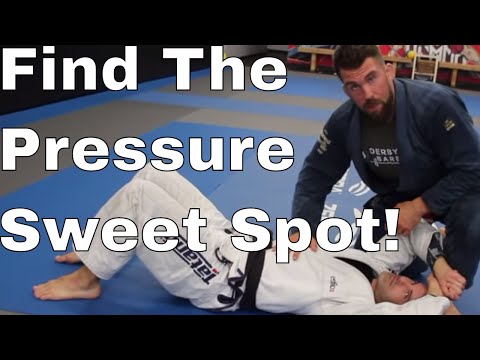
Create Massive Pressure in S Mount With These Fundamental Tips
0
Fundamental Mount·Chewjitsu
Today's BJJ technique video comes as a response to a Reddit questions I received recently from an AMA I did. The questio…
Translation: fundamental mount
The Fundamental Mount family covers the core mount position variations and techniques for maintaining, controlling, and attacking from the mounted position — the apex of the BJJ positional hierarchy and the single most dominant position in grappling. [1] This family addresses the fundamental mount variations: low mount (grapevine legs for maximum control), high mount (knees in armpits for submission access), S-mount (modified position for armbar entries), and the basic strikes and submissions available from mount. [1],[2] Mount maintenance — the art of staying mounted while the bottom player bridges, bucks, and frames to escape — is considered one of the most important and undertrained skills in BJJ, as the mount is only valuable if it can be held against resistance. [2],[3] Roger Gracie's competition career is the definitive demonstration of fundamental mount mastery — he submitted multiple World Championship opponents with the same basic cross-collar choke from mount, proving that perfected fundamentals are nearly unstoppable. [3]
No images yet for this technique.
Sign in to suggest an image.
Today's BJJ technique video comes as a response to a Reddit questions I received recently from an AMA I did. The questio…
No instructional courses yet for this technique.
Sign in to suggest a course.
Risk of injury to the person this technique is applied to
Very high for the bottom player — mount provides unrestricted submission and striking access; for the top player risk is minimal with proper technique
Skill level needed to execute this technique reliably
Whether this technique is allowed under major competition rule sets
Jiu-Jitsu University (Saulo Ribeiro, 2008)
Description sources — [1] Jiu-Jitsu University (Ribeiro, 2008) [2] Mastering Jujitsu (Gracie & Danaher, 2003) [3] Roger Gracie competition analysis
Description sources — [1] Jiu-Jitsu University (Ribeiro, 2008) [2] Mastering Jujitsu (Gracie & Danaher, 2003) [3] Roger Gracie competition analysis
balance, hip dexterity, upper body control for arm isolation
heavy bodyweight, long legs for grapevine, strong core for riding bridges
adductors (squeezing), core (balance), glutes (driving weight down), forearms (arm isolation)
Every move, in any martial art, shares a few universal traits. Mix and match below to pinpoint the right tool — or compare equivalents across styles.
Mount appears in 3,445 passages across our corpus — one of the most referenced positions. The most dominant position in ground fighting, scoring 4 points in IBJJF. From mount, the attacker can strike, choke, and arm lock while the bottom player has limited defensive options. (200+ books; IBJJF Rules v6.0; Ribeiro, Jiu-Jitsu University)
Keep your opponent's head up off the ground by controlling underneath the head, which prevents them from generating a strong bridge. According to Chewjitsu, if the head can drive up freely, the bridge becomes much more problematic.
Chewjitsu recommends isolating an arm for attack first, which allows you to slide your knee up smoothly. You can use a keylock threat to bring both of your opponent's arms up together to defend, then bring the knee up and slide your arm into position.
According to Chewjitsu, position the knee up by the shoulder with active toes, and keep in mind there is a sweet spot for your pressure application in this position.
Make sure to keep your arm out so it doesn't get tucked when you get rolled, especially as you're walking and transitioning into the S-Mount position.
The Fundamental Mount family covers the core mount position variations and techniques for maintaining, controlling, and attacking from the mounted position — the apex of the BJJ positional hierarchy and the single most dominant position in grappling. This family addresses the fundamental mount variations: low mount (grapevine legs for maximum control), high mount (knees in armpits for submission access), S-mount (modified position for armbar entries), and the basic strikes and submissions available from mount.
Mount has been the apex position in BJJ since Hélio Gracie built his self-defence system around achieving and finishing from mount. Roger Gracie's competition career (7x World Champion) demonstrated that perfected mount fundamentals defeat the world's best grapplers.
IBJJF: legal — Legal, mount scores 4 points — highest-scoring position; IJF: legal — Legal, osaekomi (pin) — 10-19 seconds scores waza-ari, 20 seconds scores ippon; ADCC: legal — Legal, mount scores 2 points; Unified MMA: legal — Legal dominant position; UWW: legal — Legal, back exposure scores points, pin ends match by fall; FIAS Sport Sambo: legal — Legal, pin scores points
Danger rating 8/10. Very high for the bottom player — mount provides unrestricted submission and striking access; for the top player risk is minimal with proper technique
The standard setup chain: Achieve Mount → Consolidate → Advance to High Mount → Isolate Arm → Attack → Chain Submissions.
Standard counters include: Trap and Roll (Upa) — trap arm and foot, bridge to reverse / Elbow-Knee Escape — frame and hip escape to recover guard / Foot Drag — trap the mount player's foot, bridge to half guard / Going to Turtle — turn to turtle as intermediate position.
Common variants: Low mount (grapevine) (legs grapevined around the opponent's legs, hips heavy on…); High mount (hips walked up to the chest, knees pinning the arms; supe…); S-mount (one leg posted forward beside the head, shin across the f…); Technical mount (one knee up with foot on ground (lunge position); transit…); Mounted crucifix (opponent's arms trapped under the mount player's legs; de…).
Mount scores the maximum 4 points in IBJJF. Roger Gracie won 10 World Championship golds using mount-based submissions.
Top errors to watch for: Sitting too high without base — leaning too far forward from high mount invites the upa escape / Crossing ankles under the opponent — in both BJJ and MMA, crossed ankles expose a foot lock / Going for submissions too early before consolidating control — rushing armbars from mount often loses the position / Not adjusting base when the opponent turns — failure to post on the turning side leads to being reversed.
The Fundamental Mount is also known as Fandamentaru Maunto, Mount Technique, Mount Control, Mount Position Technique.