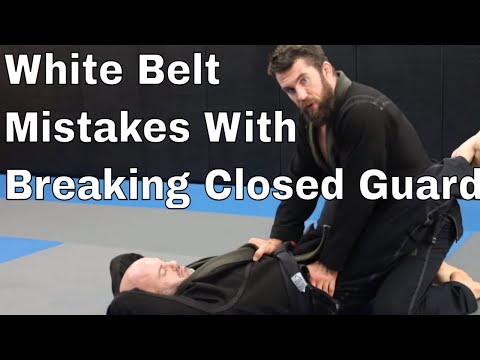
If You Struggle Breaking Closed Guard as White Belt, Then Watch This Video
0
Goes Guard·Chewjitsu
A really difficult technique for many new White Belts in BJJ is breaking the closed guard. Many times when they try they…
Translation: Goes Guard — named after Roberto Goes, a Brazilian BJJ competitor who developed this specific open guard configuration combining De La Riva and open guard mechanics for MMA-specific sweeping and standing
The Goes Guard is a specific open guard configuration from MMA grappling where the bottom player hooks one leg behind the opponent's knee while controlling the same-side sleeve or wrist, creating a dynamic platform for sweeps, stand-ups, and transitions to the De La Riva guard. [1] Named after Roberto Goes, a Brazilian competitor and BJ Penn training partner, the Goes Guard was developed specifically for MMA's unique ground-fighting environment where the bottom player must not only sweep but also be able to stand up quickly to avoid ground-and-pound. [1] The guard combines elements of the De La Riva hook (the leg hooks behind the opponent's knee, controlling their base) with an open guard's hand positioning (controlling the wrist or sleeve for distance management and sweep setup). [1] BJ Penn documented the Goes Guard in The Book of Knowledge (2007) as an MMA-specific guard variant entered from the De La Riva position, presenting two signature sweeps: the Goes Guard Push Sweep (pushing the opponent backward over the hooked leg) and the Goes Guard Switch Sweep (redirecting the sweep mid-attempt when the opponent resists). [1] The tactical value in MMA is the DUAL-PURPOSE nature: the guard provides offensive sweeping capability while maintaining the ability to disengage to standing at any moment — the bottom player is never committed to staying on the ground, which is a critical consideration in MMA where being on the bottom means absorbing strikes. [1]
The Goes Guard was developed by Roberto Goes, a Brazilian BJJ competitor and training partner of BJ Penn, specifically for MMA's ground-fighting environment where the bottom player must balance offensive guard play with defensive strike awareness and the ability to return to standing. [1] BJ Penn documented the Goes Guard and its associated sweeps in Mixed Martial Arts: The Book of Knowledge (2007) as part of his comprehensive MMA bottom-game system. [1] The guard represents the evolution of traditional BJJ guard play for MMA: where pure BJJ guard play can be leisurely and patient (no strikes from top position in sport BJJ), MMA guard play must be URGENT and DUAL-PURPOSE — every guard position must offer both offensive options (sweeps, submissions) and escape routes (stand-ups). [1] The Goes Guard's combination of DLR hooks with MMA-specific hand positioning and stand-up capability exemplifies this MMA-evolved approach to bottom fighting. [1]
The Goes Guard is effective in MMA because it solves the 'bottom position problem' that plagues guard players in MMA: traditional BJJ guards expose the bottom player to ground-and-pound, but the Goes Guard's DLR hook controls the opponent's base (preventing them from generating striking power) while maintaining the ability to sweep or stand at any moment. [1] The dual-purpose nature means the opponent faces a constant dilemma: they must defend the sweeps (which takes their attention from striking) while also preventing the stand-up (which takes their attention from passing). [1] In UFC competition, fighters with DLR-based bottom games (similar to the Goes Guard) have demonstrated the ability to maintain offensive threat from bottom position against high-level opponents. [1]
De La Riva guard (traditional BJJ) → Roberto Goes' MMA adaptation → documented by BJ Penn in The Book of Knowledge (2007) → MMA-specific guard variant. [1]
The Goes Guard and its sweeps are used in MMA by fighters with BJJ guard backgrounds. DLR-based open guards (functionally similar to the Goes Guard) have been demonstrated in UFC competition by fighters including Tony Ferguson, Charles Oliveira, and BJ Penn himself. The dual-purpose guard concept (sweep or stand) has become standard methodology in MMA bottom-game coaching.
No images yet for this technique.
Sign in to suggest an image.
A really difficult technique for many new White Belts in BJJ is breaking the closed guard. Many times when they try they…
875+ BJJ Tech Demos - https://itunes.apple.com/us/app/875+-bjj-technique-demos/id863770966?ls=1&mt=8 Just like any othe…
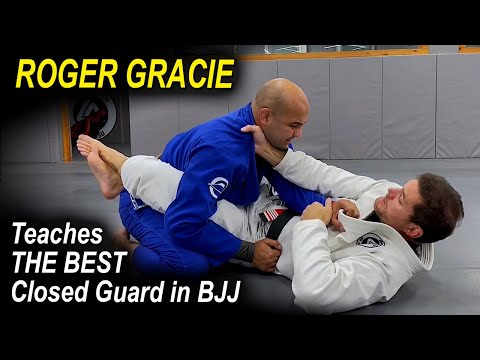
Roger Gracie's Incredible Closed Guard - In this Jiu-Jitsu training video, Roger Gracie demonstrates his closed guard. -…
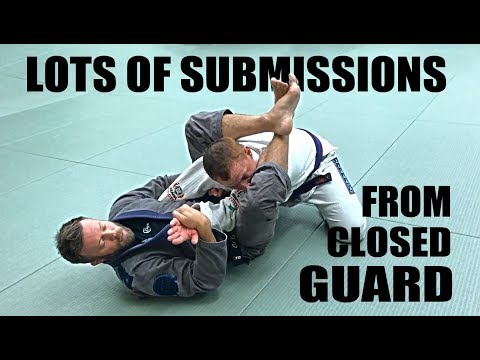
So much more at Patreon.com/KnightJiuJitsu Here are quite a lot of submissions from closed guard. These go from pretty …
This video I go through in my opinion the most simple and effective closed guard system you can use. Often in BJJ new s…
The goes guard (or low guard break) is a foundational closed-guard passing technique used by practitioners who remain kneeling rather than standing. Chewjitsu emphasizes three critical details: maintaining proper posture by keeping the hips back away from the opponent's belt line to avoid being swept (referencing the scissor-sweep principle), locking the arms in extension to flatten the opponent's body, and maintaining a wide base by stepping back before stepping in to avoid becoming vulnerable to flower sweeps or leg attacks. JonThomasBJJ approaches closed-guard control from the guard player's perspective, detailing how opponents typically break posture by either placing both hands on hips, one high and one low, or both hands high—each requiring different defensive responses. Roger Gracie (via Bernardo Faria BJJ Fanatics) adds strategic depth, emphasizing that maintaining the closed guard itself is primarily about controlling the opponent's posture and preventing them from standing; he stresses that a solid grip at the middle of the chest creates the strongest frame resistance, and that timing the sweep pull to the exact moment the opponent lifts their second leg off the floor maximizes effectiveness. Knight Jiu-Jitsu focuses on submissions rather than the guard break itself but reinforces that closed-guard control allows the guard player to attack from a position of advantage. All instructors agree that posture management—either maintaining it (as the passer) or breaking it (as the guard player)—is central to successful closed-guard exchanges.
Synthesized from 4 instructors
No instructional courses yet for this technique.
Sign in to suggest a course.
Risk of injury to the person this technique is applied to
The Goes Guard is a control and sweeping position with no direct injury risk. Its value is in creating sweeping opportunities and maintaining the ability to stand.
Skill level needed to execute this technique reliably
Whether this technique is allowed under major competition rule sets
Mixed Martial Arts: The Book of Knowledge (Penn, Cordoza & Krauss, 2007)
description: [1] Penn 2007 Goes Guard section
Standard katakana transliteration of Western martial arts terminology (外来語) — used in Japanese MMA, boxing, and BJJ communities
description: [1] Penn 2007 Goes Guard section
Good hip flexibility for the DLR-style hook
Grip strength for wrist/sleeve control
Active hip movement for the seated guard position
Ability to transition between sitting and standing rapidly
Standard MMA guard athleticism
Leaning forward is the most common error that prevents success. According to Chewjitsu, if you avoid leaning forward and stay mindful of your base, you'll be much more successful breaking the guard.
Never bring your feet together or narrow your base, as this makes you off-balance. Instead, take your knee back first and then step in, similar to how you'd push off your back leg when moving forward to maintain your stance.
Once the opponent's body is flat, you can begin to push and create space between the legs. Lock their body in place with your arms before stepping out to maximize the effectiveness of the break.
Chewjitsu recommends the staggered hand grip guard break (lower guard break) as a good starting point for newer jiu-jitsu students, though a standing guard break is preferred against good guard players once you develop more skill.
According to Roger Gracie, it's much easier to block guard-opening attempts when the opponent is kneeling down, since the legs are always stronger than the arms and you can reach their arm regardless of angle from that position.
The Goes Guard is a specific open guard configuration from MMA grappling where the bottom player hooks one leg behind the opponent's knee while controlling the same-side sleeve or wrist, creating a dynamic platform for sweeps, stand-ups, and transitions to the De La Riva guard. Named after Roberto Goes, a Brazilian competitor and BJ Penn training partner, the Goes Guard was developed specifically for MMA's unique ground-fighting environment where the bottom player must not only sweep but also be able to stand up quickly to avoid ground-and-pound.
The Goes Guard was developed by Roberto Goes, a Brazilian BJJ competitor and training partner of BJ Penn, specifically for MMA's ground-fighting environment where the bottom player must balance offensive guard play with defensive strike awareness and the ability to return to standing. BJ Penn documented the Goes Guard and its associated sweeps in Mixed Martial Arts: The Book of Knowledge (2007) as part of his comprehensive MMA bottom-game system.
IBJJF: legal — Legal — guard is fundamental to BJJ, sweeps from guard score 2 points; IJF: restricted — Guard pulling penalized as non-combativity — groundwork from guard permitted …; ADCC: legal — Legal, guard pull penalized -1 point in points portion; Unified MMA: legal — Legal — no penalty for playing guard; FIAS Sport Sambo: legal — Legal
Danger rating 2/10. The Goes Guard is a control and sweeping position with no direct injury risk. Its value is in creating sweeping opportunities and maintaining the ability to stand.
The standard setup chain: Opponent stands over the bottom player in open guard → Bottom player hooks one leg behind the opponent's knee (DLR-style) → Same-side hand grips the opponent's wrist → Non-hooking leg posts on the opponent's hip for distance → Goes Guard established → Read the opponent's reaction: → If they push forward → Goes Push Sweep (push them backward over the hooked leg) → If they resist the push → Goes Switch Sweep (redirect the sweep to the opposite direction) → If neither sweep works → Release the hook, post, and stand up to striking range.
Standard counters include: Strip the hook — pushing the hooking leg off the knee removes the guard's foundation / Step out — if the wrist grip is broken, stepping the hooked leg backward removes the hook / Pressure pass — driving forward into the guard with heavy hip pressure can collapse the open guard structure / Ground-and-pound through the guard — if the bottom player fails to maintain distance with the non-hooking leg, the to….
Common variants: Standard Goes Guard (De La Riva hook with same-side wrist control); Goes Guard with collar grip (using the non-hooking hand to grip the opponent's collar …); Goes Guard with butterfly hook (adding a butterfly hook with the non-hooking leg for addi…); Standing Goes Guard (using the Goes Guard hooks while already in a seated-to-s…); Goes Guard to X-Guard (transitioning from the Goes hook to X-Guard hooks for dee…).
The Goes Guard and its sweeps are used in MMA by fighters with BJJ guard backgrounds. DLR-based open guards (functionally similar to the Goes Guard) have been demonstrated in UFC competition by fighters including Tony Ferguson, Charles Oliveira, and BJ Penn himself.
Top errors to watch for: Hooking without wrist control — the DLR-style hook alone (without the same-side wrist control) allows the opponent to… / Staying flat on the back — the Goes Guard requires an ACTIVE, seated or angled hip position; lying flat on the back r… / Committing fully to one option — the Goes Guard's tactical value is in its dual-purpose nature (sweep OR stand); comm… / Not controlling distance — the non-hooking leg must actively manage distance by pushing on the opponent's hip; withou….
The Goes Guard is also known as Goesu Gādo, Roberto Goes Guard, Goes Open Guard, Goes Hook Guard, Goes MMA Guard.