Introduction: The Low Guard Break Problem
White belt practitioners frequently struggle with the low guard break, experiencing posture collapse, being pulled down, or getting swept when attempting to establish position. This instructional guide addresses the most common technical errors that cause these failures and provides solutions for more effective guard breaking.
Standing vs. Low Guard Break: When to Use Each
While standing guard breaks are generally superior, the low position offers a more accessible entry point for newer practitioners still developing balance and positional awareness. Even advanced grapplers employ low guard breaks effectively, making this a viable technique across all skill levels.
The Belt Line Rule: Maintaining Proper Posture
Leaning forward over the opponent's belt line creates an off-balance position similar to defending against a scissor sweep. The practitioner must remain seated back on their hips with proper distance, preventing the opponent from pulling posture down and controlling the exchange.
Arm Position and Locking Structure
Both arms must be locked in extension, similar to the pressing motion in a bench press. This locked arm position flattens the opponent's body and prevents them from riding up on top of the guard breaker as positional adjustments are made.
Base Management: Preventing the Flower Sweep
A narrow base invites sweeps such as the flower sweep, which exploit the momentary imbalance created by bringing the knee in and stepping out simultaneously. The correct sequence is to step back first, establish width, then step in—maintaining a consistently wide base throughout the movement.
Execution: Step Sequence and Pressure Application
The guard breaker positions themselves with locked arms and proper posture, steps back to widen the base, steps in with the second leg, then applies downward pressure through locked elbows. This controlled stepping pattern prevents imbalance while flattening the opponent and creating separation between their legs.
Progressive Advancement: When to Transition to Standing
The low guard break serves as an excellent starting point for developing practitioners, but standing guard breaks should be the long-term goal for facing skilled guard players. As practitioners gain comfort and balance, transitioning to standing techniques significantly improves defensive positioning and control.
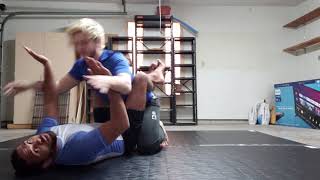
If You Struggle Breaking Closed Guard as White Belt, Then Watch This Video
Key Takeaways
- •Introduction: The Low Guard Break Problem
- •Standing vs. Low Guard Break: When to Use Each
- •The Belt Line Rule: Maintaining Proper Posture
- •Arm Position and Locking Structure
A really difficult technique for many new White Belts in BJJ is breaking the closed guard. Many times when they try they get knocked off balance, have their grips disrupted or get swept in the process. Now I honestly prefer a standing guard break to open the legs in full guard. But for a lot of people early on the lower guard breaks will be easier to use. Kind of like standing guard passes. I tend to find lower, tight, guard passes are easier for newcomers whereas standing guard passes take a bit more time to develop. In today's video I'm going to show you some common mistakes to avoid when breaking the guard using the low staggered hand position. This video is mostly for White Belts in Brazilian Jiu-jitsu but I'll be honest with you. Some of the details I share in this video I didn't learn until I had been training for many years. So I hope this helps! -Chewy ----------------- Free Ebook: http://www.chewjitsu.net/focused-jiu-jitsu-13-page-ebook/ Video Courses and Products: http://www.chewjitsu.net/products T shirts: http://www.chewjitsu.net/shop/ http://www.Facebook.com/Chewjitsu http://www.instagram.com/Chewjitsu http://www.twitter.com/Chewjitsu Intro/Outtro Music : https://bknapp.bandcamp.com If you’d ever like to train with the team and I. Check out my gym Derby City MMA in Louisville,KY.
Related Techniques
Frequently Asked Questions
What does this video teach about goes guard?
This video covers introduction: the low guard break problem, standing vs. low guard break: when to use each, the belt line rule: maintaining proper posture. It provides detailed instruction from Chewjitsu.
How long does it take to learn goes guard?
The basic mechanics can be understood in a single session, but developing reliable execution requires consistent drilling over weeks of practice. This 7-part breakdown helps structure your training by isolating each phase of the technique.
What are the key details for finishing goes guard?
The guard breaker positions themselves with locked arms and proper posture, steps back to widen the base, steps in with the second leg, then applies downward pressure through locked elbows. This controlled stepping pattern prevents imbalance while flattening the opponent and creating separation between their legs.
Related videos
38 Closed Guard BJJ Combinations Everyone Should Know in 4 Minutes - Jason Scully
The Grapplers Guide by Jason Scully
Jiu-Jitsu Submissions | Lots of Closed Guard Submissions
Knight Jiu-Jitsu
ROGER GRACIE Explains the Best Closed Guard in BJJ
Bernardo Faria BJJ Fanatics
Easy to Use Entire Closed Guard System
JonThomasBJJ
Damn Good Guard Triangle
Mood Swing