Foundational Principle: Breaking Posture
The closed guard is only effective when the opponent's posture is broken forward. When an opponent maintains an upright posture, arm bars and triangles become inaccessible. The practitioner must use a crunch motion combined with knee-to-chest pulls to create an off-balance position that forces the opponent to adjust their hand placement.
Four Primary Framing Responses
An opponent will respond to posture breaks in one of four ways: hands on the floor, both hands on the hips, one high and one low, or both hands high. Mastering a specific counter for each framing position creates a complete closed guard system. This systematic approach transforms the closed guard from a collection of isolated techniques into a cohesive attacking framework.
Both Hands on Hips: Lapel Control and Arm Isolation
When the opponent places both hands on the hips, they create a control point that is unstable against forward pressure. The practitioner grabs both lapels and executes a sharp crunch, buckling the opponent and forcing a hand position change. This typically results in the opponent placing hands on the floor, creating an immediate opportunity to trap the arm and transition into a triangle setup.
Triangle Execution from Arm Trap
After isolating the opponent's arm with an overhook and lapel control, the practitioner shrimps to the side and blocks the bicep to create space for the leg. The triangle is completed by bringing the free leg over the opponent's shoulder and securing a tight grip on the wrist. Proper leg positioning—creating a nutcracker effect with the shin tight against the neck—ensures maximum pressure and submission control.
Handling Tight Arm Defense
When the opponent compresses their arm tightly against the body to defend the overhook, the practitioner must elevate on the elbow and pump fingers under the opponent's arm. Once the elbow is secured on the inside, the opponent cannot re-pump, and the practitioner can methodically slide back and secure the wrist. This grinding transition eventually leads to a clean arm extraction and finishing position.
One High, One Low Frame: Cross-Sleeve Break and Arm Drag
Against a high-low frame, the practitioner secures a cross-sleeve grip and pummels underneath before grabbing their own wrist. By driving the wrist into the opponent's grip, the frame is broken, allowing the sleeve to be dragged across the body. The practitioner then transitions to the tricep and uses chest weight and body positioning to lock the arm in place before progressing to back attacks or sweeps.
Pendulum Sweep Alternative
When the opponent turns their body weight backward during the arm drag, the practitioner can immediately transition to a leg grab and pendulum sweep. Both legs drive upward with high trajectory to rock the opponent toward the mount position. This sweep demonstrates the importance of recognizing positional shifts and having multiple attack options from the same setup.
Both Hands High: Collar Choke and Elbow Control
Against a high frame with both hands blocking, the practitioner pushes the biceps to create space and pummels the arm underneath with speed. Once underneath, the practitioner achieves a collar grip and immediately pins the elbow to prevent re-pummeling. The grip is tightened behind the neck, using the bone structure of the wrist to create maximum pressure on the choke.
Armbar Transition from Collar Choke
When the opponent's arm sits on the chest during a collar choke threat, the practitioner uses the hand behind the elbow to bridge the opponent's arm toward the belly button. This allows the practitioner to unlock the legs, jump the hips up, and re-close the guard with a leg over the opponent's shoulder. Once this position is secured with feet locked, the practitioner can transition cleanly to the armbar while maintaining complete postural control.
Easy to Use Entire Closed Guard System
Key Takeaways
- •Foundational Principle: Breaking Posture
- •Four Primary Framing Responses
- •Both Hands on Hips: Lapel Control and Arm Isolation
- •Triangle Execution from Arm Trap
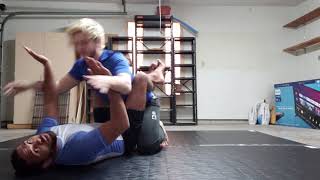
This video I go through in my opinion the most simple and effective closed guard system you can use. Often in BJJ new students are taught techniques but they are not shown how they go together. This video I show an entire system that deals with every main response your opponent can have. Hope you like the video. More content on my website here: https://www.jonthomasbjj.com/collections Kimonos: https://vitalkimonos.eu/
Related Techniques
Frequently Asked Questions
What does this video teach about goes guard?
This video covers foundational principle: breaking posture, four primary framing responses, both hands on hips: lapel control and arm isolation. It provides detailed instruction from JonThomasBJJ.
How long does it take to learn goes guard?
The basic mechanics can be understood in a single session, but developing reliable execution requires consistent drilling over weeks of practice. This 9-part breakdown helps structure your training by isolating each phase of the technique.
What are the key details for finishing goes guard?
Against a high frame with both hands blocking, the practitioner pushes the biceps to create space and pummels the arm underneath with speed. Once underneath, the practitioner achieves a collar grip and immediately pins the elbow to prevent re-pummeling. The grip is tightened behind the neck, using the bone structure of the wrist to create maximum pressure on the choke.
Related videos
38 Closed Guard BJJ Combinations Everyone Should Know in 4 Minutes - Jason Scully
The Grapplers Guide by Jason Scully
Jiu-Jitsu Submissions | Lots of Closed Guard Submissions
Knight Jiu-Jitsu
ROGER GRACIE Explains the Best Closed Guard in BJJ
Bernardo Faria BJJ Fanatics
If You Struggle Breaking Closed Guard as White Belt, Then Watch This Video
Chewjitsu
Damn Good Guard Triangle
Mood Swing