A CONCEPTUAL Approach To Passing The Guard | Gi & Nogi BJJ Theory
0
Standard Z-Guard·Jordan Teaches Jiujitsu
✅ BJJ Beginner Course: https://bjjbeginnercourse.com ✅ Jiu-Jitsu Theory Course: https://jiujitsutheorycourse.com 📩 Ne…
Translation: standard Z-guard
The Standard Z-Guard establishes the Z-guard with the top knee angled across the opponent's midsection and the bottom leg controlling the opponent's leg in half guard, with hands controlling the collar and sleeve (gi) or wrists (no-gi). [1] The standard Z-guard is the base position from which all Z-guard attacks originate, including kimura traps, straight armlock attacks, and sweeps based on the knee shield leverage. [1],[2] The position's versatility makes it one of the most commonly played half guard configurations in modern competition. [2],[3]
The standard Z-guard (knee shield) uses the shin across the opponent's torso as a primary frame. [1]
Z-guard was developed in modern BJJ as a variant of knee shield half guard. [1]
Z-guard is widely used in BJJ competition. [1]
No images yet for this technique.
Sign in to suggest an image.
✅ BJJ Beginner Course: https://bjjbeginnercourse.com ✅ Jiu-Jitsu Theory Course: https://jiujitsutheorycourse.com 📩 Ne…
✅ #transparentlabs https://athlete.transparentlabs.com/jordan-teaches ✅ BJJ Beginner Course: https://bjjbeginnercourse…
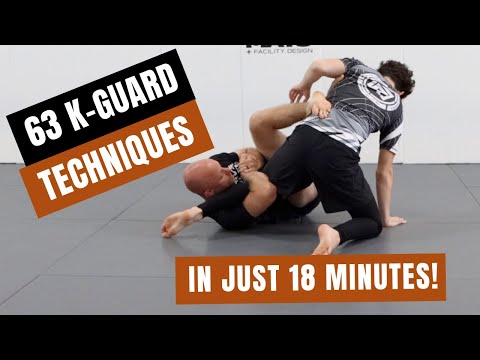
The K-Guard Is A Versatile Attacking Guard That Allows You To Be Offensive Against Your Opponent With Sweeps, Submission…
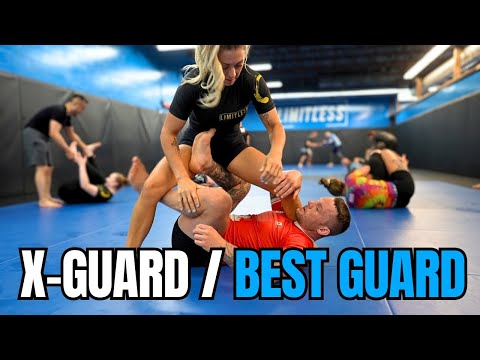
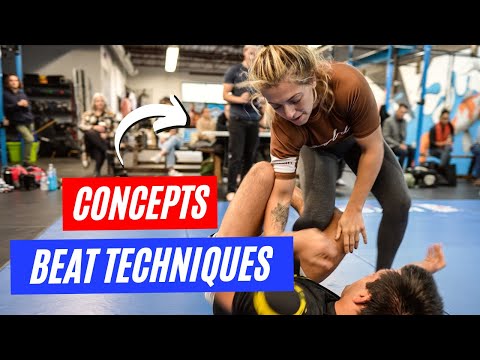
The Standard Z-Guard, also called K-Guard, is a half-guard variation positioned with the bottom player's inside foot connected to the opponent's hip and outside knee pointing upward, combined with a deep elbow grip on the opponent's leg. According to Jiu Jitsu In Minutes, proper entry requires pulling the opponent's hips off their heels to create space underneath the leg, and maintaining an elbow-deep grip rather than a shallow wrist grip prevents the opponent from sprawling or leg-slipping. The guard excels at creating offensive opportunities through sweeps, leg locks, and back takes. Key positional details emphasized across instructors include tracking the opponent away with the outside foot to prevent them from turning into pressure, keeping the inside foot tightly connected to the hip to prevent easy removal, and avoiding inward-pointing knees which collapse structure. Jordan Teaches Jiujitsu contextualizes the Z-Guard as functionally half of an X-Guard, making transitions between these positions natural and creating a cohesive system. The position transitions readily to X-Guard, close guard, reverse close guard, leg locks (including belly-down ankle locks, 50/50 heel hooks, knee bars, and calf slicers), submissions (shotgun arm bars, butterfly arm bars, triangles, omaplatas), and back takes (including the noji matrix and baby bolo). Jiu Jitsu In Minutes stresses that entry points are abundant—from closed guard, open guard, sitting guard, tripod guard, daily heave, arm-settle positions, and reactively when opponents stand up during submissions like triangles, arm bars, or kimuras.
Synthesized from 3 instructors
No instructional courses yet for this technique.
Sign in to suggest a course.
Risk of injury to the person this technique is applied to
Guard positions are defensive; injury risk comes from transitions, not the position itself
Skill level needed to execute this technique reliably
Whether this technique is allowed under major competition rule sets
Jiu-Jitsu University (Saulo Ribeiro, 2008)
Alias sources — [1] Jiu-Jitsu University (Ribeiro, 2008) [2] The Guard (Moreira & Beneville, 2003)
Effectiveness sources — [1] Jiu-Jitsu University (Ribeiro, 2008)
Standard katakana transliteration of Western martial arts terminology (外来語) — used in Japanese MMA, boxing, and BJJ communities
Alias sources — [1] Jiu-Jitsu University (Ribeiro, 2008) [2] The Guard (Moreira & Beneville, 2003)
Effectiveness sources — [1] Jiu-Jitsu University (Ribeiro, 2008)
hip flexibility, active legs, grip management
long legs for distance control and guard retention
hip flexors, adductors, quadriceps, core, grip
According to Jason Scully, you want an elbow-deep grip on their leg rather than just a wrist-deep grip. A shallow grip allows them to sprawl their leg back with more power and perform leg slips, while an elbow-deep grip gives you much better control and makes it significantly harder for them to escape.
Jason Scully emphasizes that your inside foot must stay connected to your opponent's hip. If your foot becomes loose and disconnected, your opponent can easily push it away and work to pass your guard.
Your outside knee should point upward rather than turning inward toward your opponent. Pointing your knee upward prevents your opponent from applying passing pressure, gives you more mobility and freedom, and allows you to place your foot on their body to track them away and create attack opportunities.
Jason Scully advises controlling your opponent's leg at the knee pit rather than at the calf. Controlling at the calf makes it easy for them to slip their leg out, while controlling deep at the knee pit gives you much more control and makes it significantly harder for them to escape.
The Standard Z-Guard establishes the Z-guard with the top knee angled across the opponent's midsection and the bottom leg controlling the opponent's leg in half guard, with hands controlling the collar and sleeve (gi) or wrists (no-gi). The standard Z-guard is the base position from which all Z-guard attacks originate, including kimura traps, straight armlock attacks, and sweeps based on the knee shield leverage.
The standard Z-guard is a widely used half guard configuration in modern BJJ, representing one of the most versatile and commonly taught half guard positions. Its effectiveness at all levels has made it a staple of the half guard curriculum.
IBJJF: legal — Legal — guard is fundamental to BJJ, sweeps from guard score 2 points; IJF: restricted — Guard pulling penalized as non-combativity — groundwork from guard permitted …; ADCC: legal — Legal, guard pull penalized -1 point in points portion; Unified MMA: legal — Legal — no penalty for playing guard; FIAS Sport Sambo: legal — Legal
Danger rating 2/10. Low — guard positions are defensive; injury risk comes from transitions, not the position itself
The standard setup chain: Achieve Guard Contact → Control Grips → Manage Distance → Threaten Submissions/Sweeps.
Standard counters include: Guard Pass — systematically work to clear the legs and establish a dominant position / Leg Pin — control one or both legs to neutralize guard retention / Pressure Passing — use heavy chest pressure to flatten and immobilize the guard player.
Common variants: Standard half guard (one leg trapped between both legs with an underhook); Deep half guard (fully under the opponent with the leg fully entangled); Lockdown half guard (figure-four leg lock on the trapped leg (10th Planet)); Z-guard (knee shield) (knee across the opponent's chest creating a frame).
Z-guard is widely used in BJJ competition.
Top errors to watch for: Positioning the knee flat across instead of at a diagonal — the angle is what makes Z-guard offensive / Not hooking the opponent's leg with the bottom leg — the hook maintains the guard and prevents the pass / Using only the knee frame without grips — grips and the frame must work as a system / Keeping the Z-guard static without pushing — the knee must actively drive into the opponent.
The Standard Z-Guard is also known as Sutandādo Z Gādo, Basic Z-Guard, Standard Knee Shield.