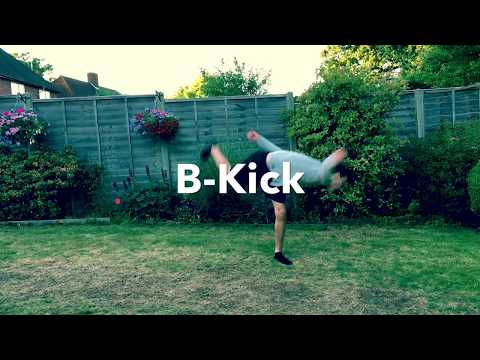
Butterfly Kick/Tricker Aerial Tutorial (First Ever Tutorial!)
0
Standard Single Butterfly·Zenix Tricking·Added by Admin
Hope you guys learn something! Enjoy! —————————————————————— This is a tutorial aimed at beginners to tricking. ————————…
Translation: standard single butterfly
The Standard Single Butterfly establishes one butterfly hook inside the opponent's thigh while the other foot is positioned on the mat, on the hip, or in a secondary control position. [1] This position serves as the entry point to full butterfly guard, X-guard transitions, single leg X entries, and arm drag attacks. [1],[2] The asymmetric leg positioning provides different tactical options than double butterfly hooks, particularly for angular attacks and guard transitions. [2],[3]
The standard single butterfly hook is the baseline version of this guard position. [1]
A standard BJJ guard variant. [1]
Used in BJJ competition. [1]
No images yet for this technique.
Sign in to suggest an image.
Hope you guys learn something! Enjoy! —————————————————————— This is a tutorial aimed at beginners to tricking. ————————…
Don't forget to SUBSCRIBE, like,share, and leave a comment🤙 www.leviathanacademy.com Illusive Fight Wear https://www…
Check out http://lachlangiles.net for more instructionals and seminars
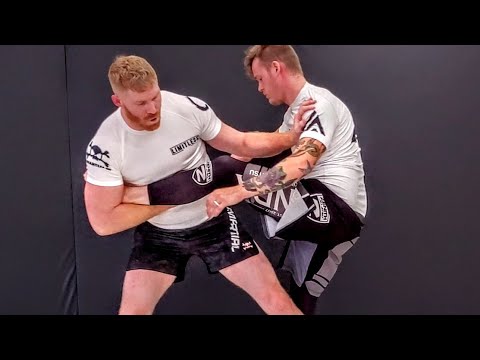
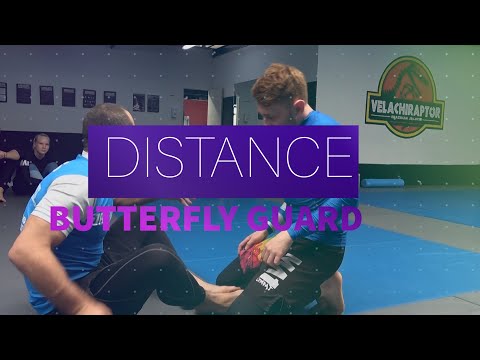
The standard single butterfly hook is a foundational guard position employed in Brazilian jiu-jitsu from the butterfly guard, where the bottom player uses one foot to hook the opponent's inner thigh while maintaining strategic distance and hand positioning. Absolute MMA St Kilda emphasizes working from distance rather than a tight clinch, advising practitioners to keep one foot ready to free itself rather than committing both hooks, as this limits escape options if the top player pinches the knees together. The instructor prioritizes hand engagement based on the opponent's arm positioning: arm drags when the opponent reaches for the legs, two-on-one grips when they engage the upper body, and forward drives when hands are disengaged. The two-on-one grip proves particularly effective, allowing the bottom player to lock elbows to hips, control the opponent's arm across their body, and create opportunities for the underhook sweep or leg attacks. Still Rolling demonstrates how the single butterfly hook functions as a transition point within leg lock sequences, particularly when transitioning from a single-leg takedown attempt or when falling back from top position into leg lock entries. Both instructors agree that positional control and hand fighting dictate which attacks become available from the single butterfly hook, and that maintaining hip mobility rather than rigid hook placement provides superior tactical flexibility.
Synthesized from 3 instructors
No instructional courses yet for this technique.
Sign in to suggest a course.
Risk of injury to the person this technique is applied to
Guard positions are defensive; injury risk comes from transitions, not the position itself
Skill level needed to execute this technique reliably
Whether this technique is allowed under major competition rule sets
Advanced Brazilian Jiu-Jitsu Techniques (Marcelo Garcia, 2011)
Alias sources — [1] Jiu-Jitsu University (Ribeiro, 2008) [2] The Guard (Moreira & Beneville, 2003)
Effectiveness sources — [1] Jiu-Jitsu University (Ribeiro, 2008)
Standard katakana transliteration of Western martial arts terminology (外来語) — used in Japanese MMA, boxing, and BJJ communities
Alias sources — [1] Jiu-Jitsu University (Ribeiro, 2008) [2] The Guard (Moreira & Beneville, 2003)
Effectiveness sources — [1] Jiu-Jitsu University (Ribeiro, 2008)
hip flexibility, active legs, grip management
long legs for distance control and guard retention
hip flexors, adductors, quadriceps, core, grip
According to Zenix Tricking, you should use a tricker cartwheel rather than a gymnastics one, as gymnastics cartwheels aren't the right form for this technique.
Keep your back relatively straight when you dip and kick up. A bent back will make it much harder to get height and will also make the butterfly kick look worse overall, according to Zenix Tricking.
The main difference is arm position and chest orientation. In a butterfly kick, your arms go out to the side, whereas in an aerial you tuck your arms in and move more vertically across, explains Zenix Tricking.
No, butterfly kicks are not really an advanced move and are primarily useful early on when learning to progress to more advanced techniques like aerials, according to Zenix Tricking.
The Standard Single Butterfly establishes one butterfly hook inside the opponent's thigh while the other foot is positioned on the mat, on the hip, or in a secondary control position. This position serves as the entry point to full butterfly guard, X-guard transitions, single leg X entries, and arm drag attacks.
The standard single butterfly hook is a fundamental transitional position in modern guard play, used as the gateway between various guard positions and sweeping systems. It is one of the most commonly occurring guard configurations in competition due to its role in guard transitions.
IBJJF: legal — Legal — guard is fundamental to BJJ, sweeps from guard score 2 points; IJF: restricted — Guard pulling penalized as non-combativity — groundwork from guard permitted …; ADCC: legal — Legal, guard pull penalized -1 point in points portion; Unified MMA: legal — Legal — no penalty for playing guard; FIAS Sport Sambo: legal — Legal
Danger rating 2/10. Low — guard positions are defensive; injury risk comes from transitions, not the position itself
The standard setup chain: Achieve Guard Contact → Control Grips → Manage Distance → Threaten Submissions/Sweeps.
Standard counters include: Guard Pass — systematically work to clear the legs and establish a dominant position / Leg Pin — control one or both legs to neutralize guard retention / Pressure Passing — use heavy chest pressure to flatten and immobilize the guard player.
Common variants: Standard butterfly guard (both feet hooked inside the opponent's thighs); Single butterfly hook (one hook in while the other leg posts or controls); Butterfly with overhook (combining the hooks with an overhook for sweep setups).
Used in BJJ competition.
Top errors to watch for: Inserting the hook without upper body control — the grip and hook must be coordinated / Posting the free leg too far from the body — keep it close enough to assist with movement / Not threatening sweeps from single hook — the position has offensive potential; use it / Failing to transition when the opponent negates the hook — switch to half guard, single-leg X, or re-guard.
The Standard Single Butterfly is also known as Sutandādo Shinguru Batafurai, Basic Single Hook, Half Butterfly Guard.