Establishing the Straight Ankle Lock Foundation
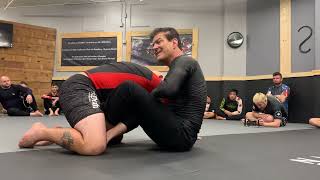
The instructor begins by securing a straight ankle lock, controlling the opponent's foot while establishing proper positioning. The initial setup requires precise foot placement and hip positioning to create the mechanical advantage needed for the technique.
Transitioning to the Butterfly Hook Setup
Once the ankle lock is established, the instructor implements a butterfly hook with the opposite leg to control the opponent's posture. This positioning creates a stable base while preventing the opponent from escaping the submission.
Reading Opponent Resistance and Countering Escape Attempts
When the opponent resists the initial ankle lock by protecting their foot, the instructor pivots to an alternative finish. Rather than forcing the original position, he transitions seamlessly into the Aoki lock variation.
Executing the Aoki Lock Finish
The Aoki lock is executed by pinching the toes in the armpit while maintaining control of the heel from underneath. Though structurally different from a traditional straight ankle lock, it remains legal in competition and applies equivalent pressure to the ankle joint.
Advanced Arm Positioning and Pressure Application
Proper arm placement is critical to controlling the foot and maintaining the lock's integrity. The instructor demonstrates how to hook the arms for maximum mechanical advantage while preventing the opponent from sliding free.
Berimbolo Alternative and Single Leg Conversion
If the opponent successfully defends against the initial attack sequence, the instructor has the option to transition into a berimbolo or convert to a single-leg takedown. This flexibility ensures continuous offensive momentum regardless of opponent resistance.
Single Leg Takedown to Butterfly Oshi Transition
By controlling the single leg and stepping inward, the instructor can execute a takedown that naturally positions him for the butterfly oshi entry. This blend of wrestling and leg lock techniques creates multiple submission pathways from a single position.
Positional Control and Guard Passing Integration
The instructor emphasizes maintaining distance and control during the single leg setup to prevent the opponent from pulling guard. This approach allows for scoring takedown points while preserving the option to transition into leg lock submissions.
Safety Considerations During the Butterfly Hook Entry
When falling back into the butterfly oshi position, practitioners must execute the movement controlled and deliberately. Falling too explosively while locked in the submission can cause injury before the opponent has time to tap, requiring careful management in both training and competition.
Butterfly Ashi and Single Leg to Aoki Lock!
Key Takeaways
- •Establishing the Straight Ankle Lock Foundation
- •Transitioning to the Butterfly Hook Setup
- •Reading Opponent Resistance and Countering Escape Attempts
- •Executing the Aoki Lock Finish
Don't forget to SUBSCRIBE, like,share, and leave a comment🤙 www.leviathanacademy.com Illusive Fight Wear https://www.ilsv.net/shop.html StillRolling22 10% off XMartial Gear https://www.xmartial.com/?ref=STILLROLLING Also use promo code: STILLROLLING for an extra 10% off #xmartialgear Origin USA https://originmaine.com/?ref=ukfvvSIA4Wbf07&utm_source=affiliate STILLROLLING 10% Off
Frequently Asked Questions
What does this video teach about standard single butterfly?
This video covers establishing the straight ankle lock foundation, transitioning to the butterfly hook setup, reading opponent resistance and countering escape attempts. It provides detailed instruction from Still Rolling.
How long does it take to learn standard single butterfly?
The basic mechanics can be understood in a single session, but developing reliable execution requires consistent drilling over weeks of practice. This 9-part breakdown helps structure your training by isolating each phase of the technique.
What are the key details for finishing standard single butterfly?
The instructor emphasizes maintaining distance and control during the single leg setup to prevent the opponent from pulling guard. This approach allows for scoring takedown points while preserving the option to transition into leg lock submissions.
Related videos
Distance butterfly guard (Lachlan Giles)
Absolute MMA St Kilda - Melbourne
Butterfly Kick/Tricker Aerial Tutorial (First Ever Tutorial!)
Zenix Tricking
Use your Butterfly Hook from Half Guard
Eduardo Fraga BJJ
Double Leg from Seated Butterfly Guard (No Gi BJJ)
Brian Glick
Basics of the no-gi butterfly guard
JeanJacquesMachado