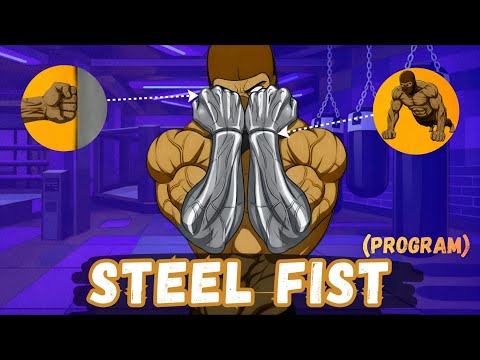
This Weekly Fist Conditioning Program would Turn Your Hands Into Weapons!
0
Standard Upa·The warrior·Added by Admin
#calisthenics #fitness #gym #workout In this video, I break down a weekly fist conditioning program designed to build …
Translation: standard upa
The Standard Upa (trap and roll) traps the opponent's wrist and hooks the same-side ankle with the foot, then bridges explosively by driving the hips toward the ceiling while turning to the trapped side, rolling the opponent over. [1] The bridge must be powerful and committed — the hips drive straight up, then the body turns toward the trapped side in one continuous motion. [1],[2] The defender follows the roll to end up in the opponent's closed guard in top position, completing the reversal. [2],[3]
The upa (bridge and roll) is considered the most fundamental mount escape in BJJ and is effective at all levels of competition when the top player commits to a high mount or overextends for a submission. [1] Saulo Ribeiro describes it as the first escape a student should learn because it develops the explosive hip power that underpins all ground movement. [1] Its effectiveness decreases against experienced opponents who maintain a low base and wide posture, but it remains a reliable first-option escape when properly timed. [2]
The upa remains one of the most frequently attempted mount escapes in IBJJF competition at all belt levels, though its success rate decreases at black belt level where top players maintain better base. [1] In MMA, the trap-and-roll has been used successfully by numerous fighters including UFC competitors to escape mount and return to guard or standing. [2]
No images yet for this technique.
Sign in to suggest an image.
#calisthenics #fitness #gym #workout In this video, I break down a weekly fist conditioning program designed to build …
No instructional courses yet for this technique.
Sign in to suggest a course.
Risk of injury to the person this technique is applied to
Bottom escapes from mount/side control; bridge and hip escape mechanics (Ribeiro 2008)
Skill level needed to execute this technique reliably
Whether this technique is allowed under major competition rule sets
Drysdale, Robert. Opening Closed-Guard: The Origins of Jiu-Jitsu in Brazil (2020). ISBN: 979-8680602287
Alias sources — [1] Gracie Jiu-Jitsu (Gracie & Gracie, 2001) [2] Brazilian Jiu-Jitsu: Theory and Technique (Renzo Gracie & Royler Gracie, 2001) [3] Jiu-Jitsu University (Saulo Ribeiro, 2008) [4] Mastering Jujitsu (Renzo Gracie & John Danaher, 2003)
Mixed Japanese-Western terminology — combines traditional Japanese terms with katakana loanwords
Alias sources — [1] Gracie Jiu-Jitsu (Gracie & Gracie, 2001) [2] Brazilian Jiu-Jitsu: Theory and Technique (Renzo Gracie & Royler Gracie, 2001) [3] Jiu-Jitsu University (Saulo Ribeiro, 2008) [4] Mastering Jujitsu (Renzo Gracie & John Danaher, 2003)
explosive hip bridge power, shrimping ability, timing
strong glutes and hip extensors for powerful bridges
glutes, hip extensors, core, quadriceps
Bone conditioning must be gradual—never shock your hands into hardness. Instead, teach the bone to adapt to impact through progressive controlled stress, starting with light knuckle taps on a wall to awaken the bones without bruising, then progressing to knuckle push-ups on a mat to build knuckle stability.
Knuckle push-ups strengthen the alignment of your first two knuckles, while inverted fist push-ups build resilience in all angles of force by pressing the wrist and knuckles through resistance on their back.
In pro-fighting, even if you master the punching mechanism perfectly, if you have untrained hands with poor conditioning, the impact won't change much—proper conditioning turns the fist into a compact striking weapon.
The Standard Upa (trap and roll) traps the opponent's wrist and hooks the same-side ankle with the foot, then bridges explosively by driving the hips toward the ceiling while turning to the trapped side, rolling the opponent over. The bridge must be powerful and committed — the hips drive straight up, then the body turns toward the trapped side in one continuous motion.
The standard upa is one of the most iconic techniques in BJJ, taught by the Gracie family since the art's founding as the fundamental mount reversal. It embodies the BJJ philosophy of using leverage and technique to overcome positional disadvantage regardless of size difference.
Unified MMA: legal — Legal defensive/transitional technique; IBJJF: legal — Legal; IJF: legal — Legal; ADCC: legal — Legal; UWW: legal — Legal; FIAS Sport Sambo: legal — Legal
Danger rating 3/10. Moderate — bottom escapes from mount/side control; bridge and hip escape mechanics (Ribeiro 2008)
The standard setup chain: Frame Defence → Trap the Arm → Bridge Explosively → Roll to Top.
Standard counters include: Heavy Hips — maintain low hip pressure and wide base to absorb the bridge / Grapevine — hook legs inside opponent's thighs to neutralize hip movement / Post Hand — post arm on the mat in the direction of the bridge to maintain balance.
Common variants: Bridge and roll (upa) (explosive bridge trapping arm and leg to reverse position); Elbow-knee escape (framing and shrimping to recover guard); Foot drag escape (dragging the opponent's foot with the heel to create spac…); Combination escape (bridging to force a reaction, then shrimping when the opp…).
The upa remains one of the most frequently attempted mount escapes in IBJJF competition at all belt levels, though its success rate decreases at black belt level where top players maintain better base. In MMA, the trap-and-roll has been used successfully by numerous fighters including UFC competitors to escape mount and return to guard or standing.
Top errors to watch for: Not trapping both the arm and the foot — removing only one posting point is usually insufficient / Trapping the arm and foot on different sides — they must be on the same side for the roll to work / Bridging straight up without rolling over the shoulder — the bridge must be directional / Weak, slow bridge — the upa requires explosive hip extension.
The Standard Upa is also known as Sutandādo Ue-kaeshi, Upa, Bridge And Roll, Trap And Roll, Bump Sweep.