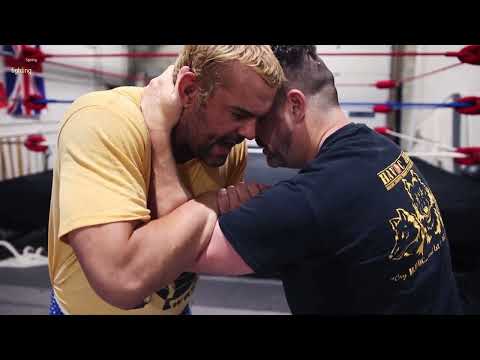
Collar & Elbow Clinch
0
Collar Elbow Clinch·Força Martial Arts & Fitness
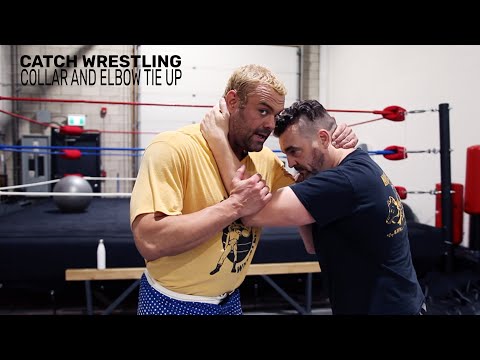
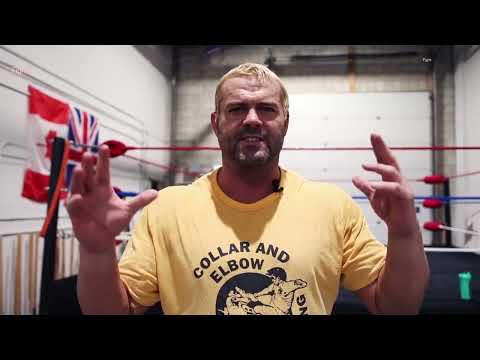
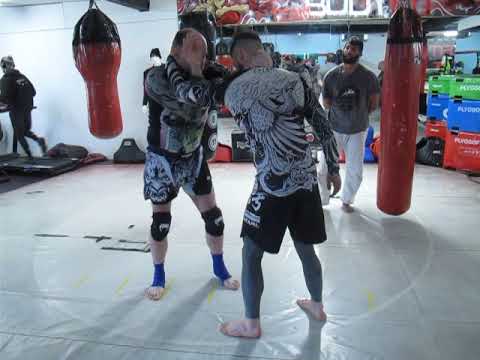
This video highlights one of the key beginner/entry level clinches we teach students in our striking and grappling progr…
Translation: Collar and elbow clinch — one hand grips the opponent's collar/neck area while the other controls their elbow, creating the fundamental wrestling tie-up position
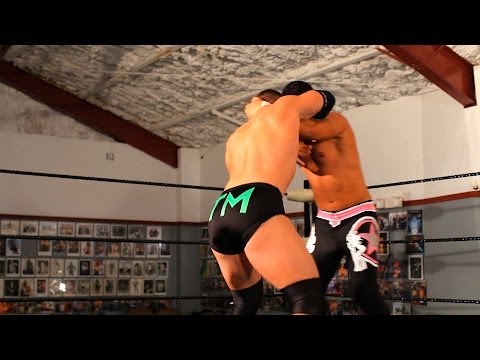
The Collar Elbow Clinch is the most fundamental clinch position in wrestling, where one hand grips the back of the opponent's neck or collar (the collar tie) while the other hand controls the opponent's elbow or bicep, creating a neutral tie-up position from which both wrestlers can initiate offensive and defensive actions. [1] This position is universally recognised as the starting point of standup wrestling across virtually all wrestling styles — freestyle, Greco-Roman, folkstyle, and catch wrestling — because it provides balanced control: the collar tie controls the opponent's head (and therefore their posture and balance), while the elbow control manages their ability to shoot, pummel, or strike. [1],[2] In competition wrestling, the collar elbow tie-up is where the vast majority of standup exchanges begin: both wrestlers reach for the tie simultaneously, and the quality of the resulting grip battle (who gets a deeper collar tie, who controls whose elbow) often determines who scores the takedown. [2],[3] The position's tactical importance extends far beyond wrestling: in MMA, the collar elbow clinch is the transitional battleground between striking and grappling, where fighters decide whether to disengage to striking range, pummel for underhooks, or initiate takedowns. [3] In Judo, the equivalent position (kumi-kata or grip fighting) is considered so important that elite judoka spend years perfecting their grip-fighting sequences from collar-and-sleeve positions that are structurally similar to the wrestler's collar and elbow. [4] The collar elbow tie-up appears in the earliest documented wrestling traditions, including ancient Greek wrestling depictions and medieval European wrestling manuals, making it one of the oldest and most universal combat positions in human history. [2]
The collar and elbow clinch is one of the oldest documented combat positions in human history, appearing in wrestling depictions from ancient Egypt (Beni Hasan tomb paintings, c. 2000 BCE), ancient Greece (Olympic wrestling from 708 BCE), and virtually every wrestling tradition worldwide. [2] The position is so fundamental to human grappling that it appears independently in wrestling cultures that had no contact with each other — from Mongolian Bökh to Senegalese Laamb to Irish collar-and-elbow wrestling (a specific style named after this very position). [2] In fact, 'collar-and-elbow' was the name of a distinct Irish wrestling style brought to America by immigrants in the 19th century, which influenced the development of American catch wrestling and eventually collegiate/folkstyle wrestling. [2] In modern competitive wrestling, the collar elbow tie-up was formalised as the standard engagement position through the evolution of freestyle and Greco-Roman wrestling during the late 19th and early 20th centuries. [2],[3] The position's universality across cultures and centuries speaks to its biomechanical optimality — controlling the head and the arm simultaneously is simply the most efficient way for two standing grapplers to engage each other. [2]
The collar elbow clinch is not a technique that wins fights directly — it is the PLATFORM from which fight-winning techniques are launched. [2],[3] In NCAA Division I wrestling, approximately 80% of takedowns are initiated from some variation of the collar elbow tie-up. [3] In MMA, the clinch is the transitional space where the fight's strategic direction is decided: whoever controls the collar elbow exchange determines whether the fight stays standing (advantageous for strikers) or goes to the ground (advantageous for wrestlers). [3] The position's effectiveness lies in its versatility: from the collar elbow tie, a wrestler can snap down, arm drag, duck under, initiate a single-leg, double-leg, high crotch, or any number of throws — making it the most tactically rich position in standup grappling. [2]
The collar elbow tie-up is the starting position for approximately 80% of takedowns in NCAA Division I wrestling. In Olympic wrestling (both freestyle and Greco-Roman), the position is the standard engagement from which nearly all scoring actions originate. In MMA, the collar elbow clinch is the most common transitional position between striking and grappling exchanges.
No images yet for this technique.
Sign in to suggest an image.
This video highlights one of the key beginner/entry level clinches we teach students in our striking and grappling progr…
All fights in the ring or the octagon start standing. A very common technique you will see catch wrestlers and jiu jitsu…
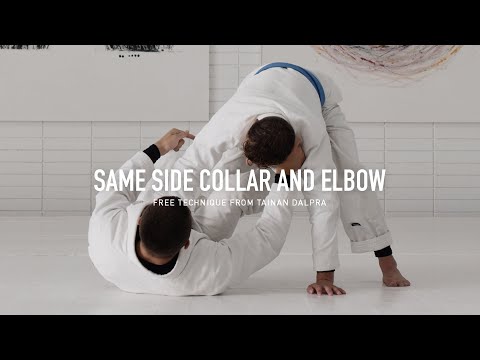
Free technique from Week 02 of Tainan Dalpra's AOJ+ Curriculum showcasing the Same Side Collar & Elbow Guard - Watch the…
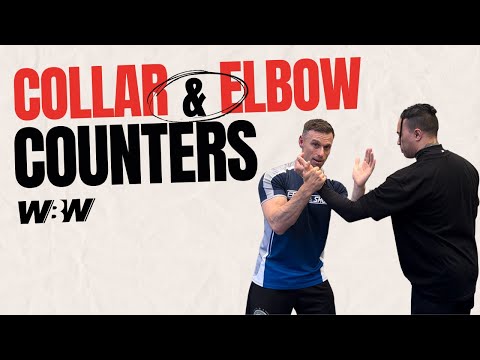
Iron Faith Merch ➡️ https://amptstudio.chipply.com/ifwc/ Join the #1 Online Wrestling Academy in the world ➡️ https://w…
https://www.patreon.com/wbw to support my work and find exclusive new content daily. These videos are released a week ea…
Full Playlist: https://www.youtube.com/playlist?list=PLLALQuK1NDrjAtHPtEFiIXDj7CQ-Cyywd - - Like these Wrestling Moves !…
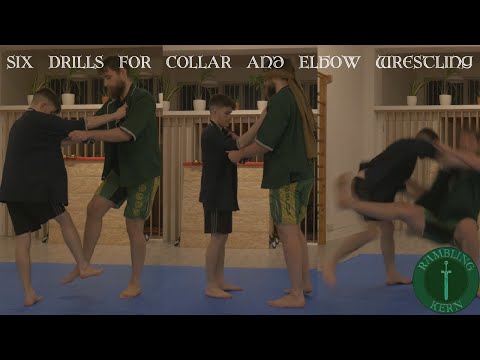
This week I go over some drills I have been using to improve my Irish collar and elbow wrestling practice, I discuss how…
Join this channel to get access to perks: https://www.youtube.com/channel/UCdIZoPQFyO8IXVRIoSehzgA/join Master the Pivo…
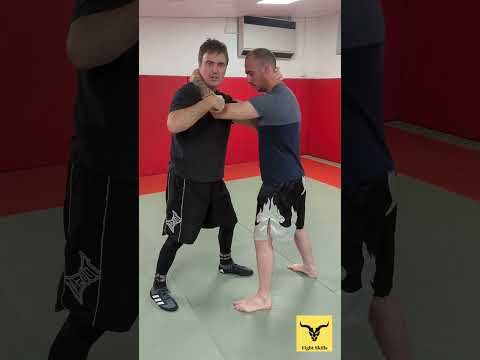
This is a very nice simple and quick takedown when both your opponent and you have a collar and elbow grip from standing
The Simple things make all the difference, NEVER BE NEUTRAL AGAIN. Coach Dave shows how to DOMINATE the Collar and Elbow…
The collar-and-elbow clinch is a fundamental neutral wrestling position in which one hand controls the opponent's collar or upper chest while the other hand controls the elbow. According to Pretty Boy Larry Sharp (Howcast), this symmetric position—identical for both participants—serves as the standard starting configuration in amateur wrestling matches. The primary objective, as all instructors emphasize, is positional dominance: preventing the opponent from moving behind you while seeking to establish control behind them. Sharp stresses maintaining an upright posture with bent knees and hips retracted to prevent being driven backward. Damian Slater (World-Beater Wrestling) focuses on offensive counters, describing proactive blocking techniques such as 'answering the phone' (blocking the ear to prevent collar capture before executing an arm drag) and the hammer lock counter, both designed to intercept the opponent's collar arm on approach. Rambling Kern advocates for technical development through six progressive drills—hopping, sticky foot, bullet matador, blindfolded contact, and throw-for-throw—emphasizing upright posture and footwork-based throws rather than relying on traditional hip throws. Scientific Wrestling addresses overhook counters and pivot roll mechanics from the collar-and-elbow tie, focusing on shoulder rotation and leg placement. Collectively, instructors agree the position prioritizes balance, leg engagement, and hip control while disagreeing on emphasis: counters versus positional maintenance versus drilling progression.
Synthesized from 4 instructors
No instructional courses yet for this technique.
Sign in to suggest a course.
Risk of injury to the person this technique is applied to
The collar elbow clinch is a control position, not a striking or submission technique — it causes no direct injury. However, it is the gateway position from which takedowns, throws, and strikes (in MMA) are initiated, making it tactically one of the most consequential positions in combat.
Skill level needed to execute this technique reliably
Whether this technique is allowed under major competition rule sets
The Evolution of Martial Arts in Combat Sports
description: [1] Evolution of MA, [2] Poliakoff 1987, [3] Couture 2008
Standard katakana transliteration of Western martial arts terminology (外来語) — used in Japanese MMA, boxing, and BJJ communities
description: [1] Evolution of MA, [2] Poliakoff 1987, [3] Couture 2008
Requires good grip strength for maintaining the collar tie and elbow control
Neck strength to resist the opponent's collar tie (the neck must support the opponent's pulling force)
Footwork and balance for circling while maintaining the tie-up
Upper body endurance for sustained clinch exchanges
Accessible to all body types — taller wrestlers have a reach advantage for the collar tie, shorter wrestlers can use their lower centre of gravity for level changes
Match lead legs with your opponent, then shoot to the knee while dropping that knee forward. Keep your pinky on the mat as you grab the heel, and push the tricep across the body toward the knee you're attacking. Make sure not to reach too high, or your opponent can bend their heel back to defend.
Your pinky should be right on the mat when grabbing the heel, and you maintain control of the tricep throughout the setup. This low hand position prevents your opponent from defending by bending their heel backwards.
If the slide by doesn't work and your opponent fully faces you, you can attack a straight double leg, high crotch, or head outside low single—whatever opening presents itself. Just drop off your legs and finish the takedown.
As your opponent comes in for the lock, block your ear with your hand so they can't capture your neck, then turn your hand out and grab their wrist. This leads into an arm drag or transition to a hammer lock.
The Collar Elbow Clinch is the most fundamental clinch position in wrestling, where one hand grips the back of the opponent's neck or collar (the collar tie) while the other hand controls the opponent's elbow or bicep, creating a neutral tie-up position from which both wrestlers can initiate offensive and defensive actions. This position is universally recognised as the starting point of standup wrestling across virtually all wrestling styles — freestyle, Greco-Roman, folkstyle, and catch wrestling — because it provides balanced control: the collar tie controls the opponent's head (and therefore their posture and balance), while the elbow control manages their ability to shoot, pummel, or strike.
The collar and elbow clinch is one of the oldest documented combat positions in human history, appearing in wrestling depictions from ancient Egypt (Beni Hasan tomb paintings, c. 2000 BCE), ancient Greece (Olympic wrestling from 708 BCE), and virtually every wrestling tradition worldwide.
Unified MMA: legal — Legal — clinching is integral to MMA; IJF: legal — Legal — kumi-kata (grip fighting) is fundamental to judo; IBJJF: legal — Legal — standing grip fighting and clinch work permitted; IFMA: legal — Legal — the clinch is a core element of Muay Thai, clinch dominance is highly…; WBC/Boxing: restricted — Holding is technically a foul — referee breaks clinch, excessive holding resu…; K: restricted — 1/GLORY — One attack from clinch allowed, then referee breaks; WAKO: restricted — Clinch generally broken by referee — limited or no clinch fighting in most fo…; UWW: legal — Legal — clinch is fundamental to wrestling, the primary position in Greco-Roman
Danger rating 2/10. The collar elbow clinch is a control position, not a striking or submission technique — it causes no direct injury. However, it is the gateway position from which takedowns, throws, and strikes (in MMA) are initiated, making it tactically one of the most consequential positions in combat.
The standard setup chain: Both fighters engage → Reach for the collar tie (hand to back of opponent's neck) simultaneously with elbow control (hand to opponent's bicep) → Compete for grip depth (deeper collar tie = dominant position) → Use active collar tie to snap, pull, circle, and break opponent's posture → When opponent's balance is disrupted → Initiate takedown (single-leg, double-leg, snap-down, duck-under, arm drag) OR transition to underhook battle OR disengage to striking range.
Standard counters include: Pummel for underhooks — the primary offensive counter: swim the controlled arm inside the opponent's grip to achieve … / Strip the collar tie — use both hands to peel the opponent's collar tie hand off the neck / Arm drag — drag the collar tie arm past your body and circle behind the opponent / Snap down — use your own collar tie to snap the opponent's head down, breaking their posture and creating scramble op….
Common variants: Standard collar and elbow (neutral) (both wrestlers mirror each other with matching collar tie…); Dominant collar tie (one wrestler has a deeper, more aggressive collar tie whi…); Inside collar elbow (the elbow-controlling hand is on the inside of the oppone…); Outside collar elbow (the elbow-controlling hand is on the outside of the oppon…); Post collar tie (using the collar tie to post the opponent's head to one s…); Snap collar tie (using the collar tie primarily as a snapping tool to brea…).
The collar elbow tie-up is the starting position for approximately 80% of takedowns in NCAA Division I wrestling. In Olympic wrestling (both freestyle and Greco-Roman), the position is the standard engagement from which nearly all scoring actions originate.
Top errors to watch for: Passive collar tie — holding the back of the neck without actively pulling, snapping, or circling allows the opponent… / Shallow grip — gripping only the base of the skull or the top of the neck provides minimal control; the hand must rea… / Allowing underhooks — the elbow control hand's primary job is preventing the opponent from pummelling to an underhook… / Standing flat-footed — the collar elbow clinch requires constant footwork; standing still in the tie-up is a defensiv….
The Collar Elbow Clinch is also known as Karā ando Erubō Kurinchi, Collar and Elbow, Collar Tie and Elbow Control, Standard Wrestling Tie-Up, Collar Elbow Tie.