Foundation of the Collar Elbow Clinch
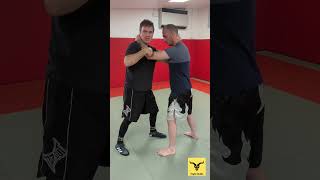
The collar elbow clinch is a fundamental catch wrestling tie-up that establishes control over an opponent. This position serves as the entry point for numerous takedowns and pressure techniques. Proper hand placement on the collar and opposite elbow creates a stable framework for offense.
Head and Arm Control Position
When an opponent's arm flares outward, the instructor transitions into a standing head and arm position, a technique popularized by legendary wrestler Alexander Karelin. The practitioner wraps around the opponent's head while controlling the arm, then sucks the opponent downward into the clinch. This position generates significant pressure and control while preventing the opponent from developing counteroffense.
Leg Positioning and Base Management
Proper leg placement is critical to maintaining the clinch without vulnerability to counters. The instructor positions his leg in the middle of the opponent's legs to prevent the opponent from executing a head and arm throw in return. Maintaining a strong base allows for continuous pressure application and smooth transitions to takedowns.
Controlling Hip Movement and Preventing Escape
When an opponent attempts to create space by spreading their hips, the instructor counters by pulling the chin inward and scooping to maintain control. By sucking the hips into the opponent and managing their base, the practitioner prevents the opponent from walking away or generating their own offensive opportunities. This continuous pressure keeps the opponent engaged in defensive movement.
Wrist Control and Neck Pressure Technique
The instructor demonstrates using the cutting bone of the wrist to apply pressure against the opponent's neck while in the clinch. This creates additional discomfort and can transition into a scissors-like leg position that breaks down the opponent's posture. The combination of wrist pressure and leg control forces the opponent downward into a compromised position.
Defensive Mentality and Pressure Strategy
Catch wrestling emphasizes keeping an opponent in a defensive mindset rather than allowing offensive opportunities. By maintaining constant pressure and control, the practitioner forces the opponent to focus on escape and survival rather than mounting their own attacks. This psychological and physical control is fundamental to catch wrestling superiority.
Preventing Guard Positioning
When threatened with guard positioning, the instructor maintains control by securing the inside leg position and compressing the opponent into the clinch. With proper hip sucking and base management, the opponent cannot establish guard hooks or control. This defensive application demonstrates how clinch mastery neutralizes common wrestling counterattacks.
Reactive Control and Catch Wrestling Principles
Catch wrestling operates on the principle of "catch me if you can," where every technique responds dynamically to the opponent's reactions. Rather than executing predetermined moves, the practitioner reads the opponent's defensive adjustments and adapts accordingly. This reactive approach, exemplified by masters like Josh Barnett and Sakuraba, creates fluid and effective offense from superior positioning.
Catch Wrestling Techniques Collar And Elbow Tie Up_R
Key Takeaways
- •Foundation of the Collar Elbow Clinch
- •Head and Arm Control Position
- •Leg Positioning and Base Management
- •Controlling Hip Movement and Preventing Escape
Related Techniques
Frequently Asked Questions
What does this video teach about collar elbow clinch?
This video covers foundation of the collar elbow clinch, head and arm control position, leg positioning and base management. It provides detailed instruction from Linda Spenceres.
How long does it take to learn collar elbow clinch?
The basic mechanics can be understood in a single session, but developing reliable execution requires consistent drilling over weeks of practice. This 8-part breakdown helps structure your training by isolating each phase of the technique.
What are the key details for finishing collar elbow clinch?
When threatened with guard positioning, the instructor maintains control by securing the inside leg position and compressing the opponent into the clinch. With proper hip sucking and base management, the opponent cannot establish guard hooks or control. This defensive application demonstrates how clinch mastery neutralizes common wrestling counterattacks.
Related videos

Jax Forrest Elbow Tie System
Iron Faith Wrestling

Collar & Elbow Clinch
Força Martial Arts & Fitness

Catch Wrestling Techniques Collar And Elbow Tie Up_R
Lynn Phillipsen
How to DOMINATE the Collar and Elbow and IMMEDIATELY IMPROVE Position 2023 #shorts #martialarts
Fight Skills
BJJ Tips: Takedown from Collar and Elbow Clinch 1
UMMAH BJJ