Introduction to Collar and Elbow Wrestling Drills
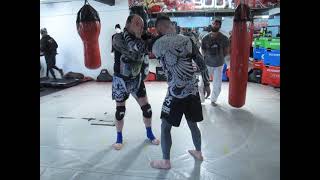
This instructional guide presents six progressive drills designed to develop proficiency in collar and elbow wrestling. The techniques are applicable across multiple martial arts disciplines, from striking to weapon-based systems. The first two drills are emphasized as foundational, as they establish and reinforce the upright posture and leg-driven mechanics essential to the discipline.
Core Principles: Posture and Leg-Driven Mechanics
Collar and elbow wrestling prioritizes an upright, athletic stance with loose arms and active footwork rather than the hunched forward posture of Greco-Roman wrestling. The discipline operates on the principle of 'a fist fight with the feet'—emphasizing lower body control and sweeping techniques over traditional hip throws. Practitioners must maintain this postural integrity while developing reactive throwing responses.
Drill One: The Hopping Drill
The hopping drill requires practitioners to maintain balance and movement on a single leg throughout the engagement. This restriction naturally enforces upright posture, as forward bending becomes biomechanically impossible. The drill develops sweep recognition and execution while reinforcing the leg-driven mechanics fundamental to collar and elbow wrestling.
Drill Two: The Sticky Foot Drill
The sticky foot drill maintains single-leg positioning while requiring constant foot contact with the training partner. Variations include both feet outside, one inside and one outside, or opposite outside positioning. This drill emphasizes footwork sensitivity and prevents over-reliance on power-based throws, instead developing nuanced foot-based sweeping techniques.
Drill Three: The Bullet Matador Drill
In this cooperative drill, one practitioner applies constant forward pressure while the partner practices throw timing and execution. The aggressor provides predictable resistance, allowing the defending practitioner to develop proper positioning and technique without the complexity of reactive variability. This foundational drill builds confidence and technical accuracy before introducing live resistance.
Drill Four: Bullet Matador with Progressive Resistance
This advanced variation escalates the bullet matador drill by introducing increasing aggression and resistance from the forward-pressure aggressor. The practitioner applies controlled resistance at approximately 10-20% intensity, forcing the defender to adapt technique against slight resistance while maintaining the core mechanics developed in earlier drills.
Drill Five: The Blindfolded Drill
Closing the eyes eliminates visual input and forces practitioners to develop proprioceptive awareness and positional sensitivity. This drill transfers across multiple grappling systems and enhances the ability to recognize opponent positioning through contact and pressure alone. The heightened sensory demand accelerates neural adaptation and improves reactive decision-making.
Drill Six: The Throw-for-Throw Drill
Practitioners exchange throws in rapid succession, with each participant executing a throwing attempt immediately upon returning to standing position. The constantly shifting baseline positions require practitioners to quickly assess available techniques and adapt throw selection accordingly. This drill develops technical adaptability and reinforces familiarity with the complete throwing arsenal under varied conditions.
Progressive Training Methodology and Emphasis
The recommended training progression emphasizes the first two drills for foundational development, particularly for newcomers to the discipline. Subsequent drills build upon this foundation while addressing specific technical gaps and introducing variable resistance. The overall training philosophy prioritizes stance integrity and leg-driven mechanics over traditional power-based grappling approaches.
Six drills to improve your collar and elbow wrestling
Key Takeaways
- •Introduction to Collar and Elbow Wrestling Drills
- •Core Principles: Posture and Leg-Driven Mechanics
- •Drill One: The Hopping Drill
- •Drill Two: The Sticky Foot Drill
This week I go over some drills I have been using to improve my Irish collar and elbow wrestling practice, I discuss how to apply these when practicing Irish Collar and Elbow wrestling and some of the benefits they offer. Irish Collar and Elbow Wrestling Association https://collarandelbow.ie/ My School and social media: https://www.facebook.com/kernschoolofcombat https://www.instagram.com/theramblingkern/ https://www.facebook.com/theramblingkern
Related Techniques
Frequently Asked Questions
What does this video teach about collar elbow clinch?
This video covers introduction to collar and elbow wrestling drills, core principles: posture and leg-driven mechanics, drill one: the hopping drill. It provides detailed instruction from Rambling Kern.
How long does it take to learn collar elbow clinch?
The basic mechanics can be understood in a single session, but developing reliable execution requires consistent drilling over weeks of practice. This 9-part breakdown helps structure your training by isolating each phase of the technique.
What are the key details for finishing collar elbow clinch?
Practitioners exchange throws in rapid succession, with each participant executing a throwing attempt immediately upon returning to standing position. The constantly shifting baseline positions require practitioners to quickly assess available techniques and adapt throw selection accordingly. This drill develops technical adaptability and reinforces familiarity with the complete throwing arsenal under varied conditions.
Related videos
Jax Forrest Elbow Tie System
Iron Faith Wrestling
Collar & Elbow Clinch
Força Martial Arts & Fitness
Catch Wrestling Techniques Collar And Elbow Tie Up_R
Lynn Phillipsen
How to DOMINATE the Collar and Elbow and IMMEDIATELY IMPROVE Position 2023 #shorts #martialarts
Fight Skills
BJJ Tips: Takedown from Collar and Elbow Clinch 1
UMMAH BJJ