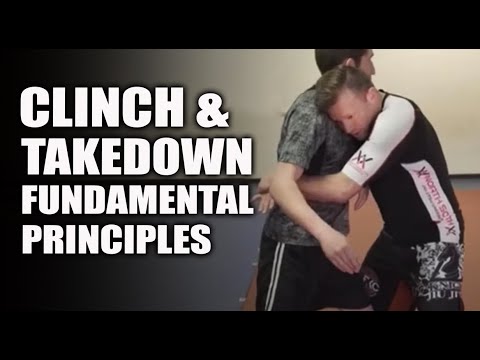
Clinch & Takedown Fundamental Principles
0
Fundamental Clinch·Knight Jiu-Jitsu
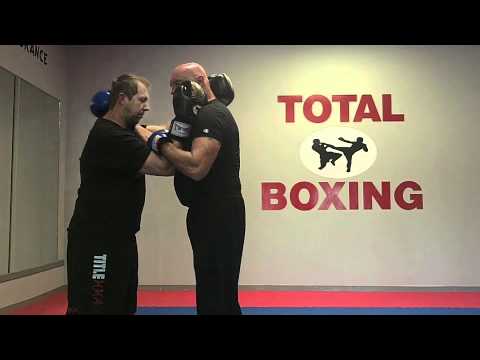
The clinch range is such a significant area of the fight, that understanding how to effectively navigate the entry and r…
Translation: Clinch
The clinch encompasses all standing grappling techniques performed at close range where both fighters have gripping contact — the critical transitional zone between striking distance and the ground. [1] Clinch fighting determines who controls the exchange: the fighter with superior inside position (underhooks), head placement, and body mechanics dictates whether the fight stays standing, goes to the ground, or returns to striking range. [1],[2] Each martial art has developed its own clinch system — Muay Thai's double collar tie (plum) enables devastating knee strikes, Greco-Roman wrestling's body locks generate powerful throws, judo's kumi kata (grip fighting) sets up entries for nage waza, and MMA cage clinch work combines all three with dirty boxing. [2],[3] Mastery of the clinch is what separates elite fighters from good ones, as it connects every range of combat. [3]
Clinch fighting has been central to combat sports throughout recorded history — ancient Greek wrestling (pale) and pankration both began from the clinch, as depicted in ancient vase paintings and sculptures. [1] Greco-Roman wrestling (formalised in the 19th century) developed the most sophisticated upper-body clinch system in Western martial arts, while Muay Thai refined the clinch for striking over centuries of Thai boxing tradition. [1],[2] Judo's kumi kata (grip fighting) system, formalised by Jigoro Kano, represents perhaps the most detailed study of standing grip strategy ever codified. [2],[3] In modern MMA, clinch fighting evolved as a distinct skill set after Randy Couture demonstrated cage clinch work as a fight-winning strategy in the early 2000s. [3]
The clinch is the controlling position that connects striking to grappling — fighters who dominate the clinch control where the fight takes place. [1] In Muay Thai, clinch-dominant fighters like Dieselnoi Chor Thanasukarn and Petchboonchu FA Group built entire careers on the plum clinch and knee strikes. [2] In MMA, clinch control was central to the dominance of fighters like Randy Couture, GSP, Khabib Nurmagomedov, and Daniel Cormier, who used clinch work to dictate the range of combat and impose their gameplan. [2],[3]
Clinch fighting techniques have been independently developed across multiple martial arts traditions — Greco-Roman wrestling's upper-body clinch, Muay Thai's plum clinch, and judo's kumi kata each represent distinct lineages. [1] In MMA, these systems merged as fighters cross-trained in wrestling, Thai boxing, and judo, creating a hybrid clinch system unique to cage fighting. [1],[2] Randy Couture's 'dirty boxing' clinch approach (early 2000s) and Khabib Nurmagomedov's pressure clinch system (2010s) represent two of MMA's most influential clinch lineages. [2]
Clinch fighting is central to Greco-Roman wrestling (entire bouts take place in the clinch), elite Muay Thai (clinch exchanges determine many fights in Thai stadiums), and MMA (cage clinch work is a major strategic component). [1] In the UFC, fighters with superior clinch work have historically dominated — Randy Couture's five UFC titles, GSP's welterweight reign, and Khabib's undefeated record all featured elite clinch control as a cornerstone. [1],[2]
No images yet for this technique.
Sign in to suggest an image.
The clinch range is such a significant area of the fight, that understanding how to effectively navigate the entry and r…
Here is a thorough lesson on the Muay Thai clinch and 3 different knees that can be used in the clinch. We demonstrate t…
No instructional courses yet for this technique.
Sign in to suggest a course.
Risk of injury to the person this technique is applied to
The clinch itself is relatively safe, but it enables high-impact techniques (throws, takedowns, knee strikes, elbows) that carry significant injury risk; accidental head-butts are common in clinch exchanges
Skill level needed to execute this technique reliably
Whether this technique is allowed under major competition rule sets
Wrestling for Fighting (Ben Askren, 2019)
Description sources — [1] Wrestling for Fighting (Askren, 2019) on clinch as transitional zone [2] Muay Thai: The Art of Eight Limbs (Kraitus, 1988) on Thai clinch systems [3] The Clinch (Silva & Krauss, 2008) on MMA clinch integration
History sources — [1] The Martial Arts of Ancient Greece (Poliakoff, 1987) [2] Kodokan Judo (Kano, 1986) on kumi kata [3] UFC competition history
Effectiveness sources — [1] Wrestling for Fighting (Askren, 2019) [2] Muay Thai record books [3] UFC fight statistics (ufcstats.com)
Official Kodokan ground technique classification system
Description sources — [1] Wrestling for Fighting (Askren, 2019) on clinch as transitional zone [2] Muay Thai: The Art of Eight Limbs (Kraitus, 1988) on Thai clinch systems [3] The Clinch (Silva & Krauss, 2008) on MMA clinch integration
History sources — [1] The Martial Arts of Ancient Greece (Poliakoff, 1987) [2] Kodokan Judo (Kano, 1986) on kumi kata [3] UFC competition history
Effectiveness sources — [1] Wrestling for Fighting (Askren, 2019) [2] Muay Thai record books [3] UFC fight statistics (ufcstats.com)
upper body strength (pummeling and grip fighting), core stability (resisting pushes and pulls), endurance (clinch fighting is extremely fatiguing)
shorter, stockier build (lower centre of gravity for inside control), strong neck (resisting collar ties and plum clinch), long arms (easier to establish body locks and collar ties)
shoulders and chest (pummeling), biceps (pulling), forearms (grip fighting), core (rotational stability), legs (base and level changes)
Every move, in any martial art, shares a few universal traits. Mix and match below to pinpoint the right tool — or compare equivalents across styles.
The Clinch Control family covers techniques for establishing and maintaining dominant control positions in the clinch — the grip configurations, body positions, and pummeling strategies that determine who dictates the action in close-range standing grappling. [1] Clinch control is the 'grip fighting' of standing grappling — the fighter who achieves superior inside position (double underhooks), head positioning, and hip placement controls whether the exchange results in strikes, takedowns, throws, or disengagement. [1,2] Key clinch control positions include the double underhook (the most dominant clinch position), the Muay Thai plum (double collar tie for knee strikes), the over-under (50/50 neutral position), and the body lock (arms encircling the torso for throws and takedowns). [2,3] Pummeling — the constant inside-outside arm fighting to gain underhook position — is the fundamental skill that determines clinch control outcomes. [3]
The Clinch Takedown family covers all takedowns executed from clinch range — where both fighters already have gripping contact — using trips, throws, drives, and lifts rather than shot-based entries from distance. [1] Clinch takedowns are the primary takedown method in Greco-Roman wrestling (where attacks below the waist are prohibited), a core component of judo (all judo throws begin from the clinch), and an essential MMA skill for cage fighting (cage clinch takedowns use the fence for leverage). [1,2] Key clinch takedowns include the inside trip (o uchi gari), outside trip (ko soto gari), body lock takedown (Khabib's signature), and various Greco-Roman lifts. [2,3] Clinch takedowns gained renewed importance in MMA through fighters like Randy Couture, Daniel Cormier, and Khabib Nurmagomedov who demonstrated that clinch-based offence could defeat the world's best fighters. [3]
The Mae Mai (แม่ไม้, 'mother techniques') of Muay Thai clinch work represent the foundational clinch techniques of traditional Thai boxing — the core curriculum for controlling an opponent at close range and delivering the devastating knee strikes and sweeps that define Muay Thai's clinch game. [1] The Mae Mai clinch techniques include the plum clinch (double collar tie, Muay Thai's signature clinch position), the single collar tie with arm control, the body lock clinch, and the traditional clinch sweeps (dumps) that off-balance and throw the opponent to the ground using clinch leverage. [1,2] In Thai stadium fighting, the clinch exchange is where experienced fighters excel — the late rounds of Thai boxing matches are typically dominated by clinch work, with the fighter who controls the plum position landing knees while the opponent struggles to escape. [2,3] The Mae Mai clinch is what distinguishes Muay Thai from all other striking arts — no other combat sport has developed such a comprehensive system of close-range clinch control integrated with striking. [3]
The MMA Clinch family covers clinch techniques adapted specifically for mixed martial arts competition, integrating striking (dirty boxing), takedown attempts, and cage work into a unified clinch system that exists in no traditional martial art. [1] MMA clinch fighting uniquely combines elements from Muay Thai (knees, elbows), wrestling (takedowns, cage control), boxing (short hooks, uppercuts), and judo (throws) into a hybrid system where the fighter must simultaneously manage all of these threats. [1,2] The cage wall adds a dimension not found in any traditional martial art — fighters pin opponents against the fence for control, deliver strikes from this position, and use the fence as leverage for takedowns in ways impossible on an open mat. [2,3] Randy Couture pioneered 'dirty boxing' (striking from the clinch in MMA) in the early 2000s, and Khabib Nurmagomedov's cage clinch pressure system (2010s) demonstrated that clinch control could dominate even the most skilled strikers. [3]
The Wrestling Clinch family covers clinch techniques from competitive wrestling disciplines — the collar-and-elbow tie-up, underhook positions, and the pummeling exchanges that form the opening of most wrestling matches and provide the launching platform for takedown entries. [1] Wrestling clinch work emphasises inside control (underhooks over overhooks), head positioning, and the use of the clinch as a transitional position rather than a fighting position — wrestlers use the clinch to set up shots (single legs, double legs) and takedowns (trips, throws) rather than to strike or hold position. [1,2] The collar-and-elbow tie-up is the starting position for most wrestling exchanges, with both fighters placing one hand on the opponent's neck and one on their elbow, then pummeling to gain the dominant underhook position. [2,3] Wrestling clinch skill is arguably the most transferable martial art skill to MMA, as clinch control determines who gets the takedown and thus who controls where the fight takes place. [3]
The fundamental clinch category covers the core clinch positions common across all grappling arts — the starting points before specialization into wrestling, Muay Thai, or judo-specific clinch work. (Wrestling and MMA training manuals)
Your hips should be positioned next to your opponent's hips, and you want to keep your hips lower than theirs when stepping inside to throw someone of equal or greater size.
Avoid sacrifice throws that could wind you up in compromising positions on the ground or cause knee injuries; instead, focus on controlled techniques like small outside trips.
Don't reach for your opponent; instead, come in with a punch (jab, cross, or pick depending on your stance) and use that entry to control their neck with your hands inside theirs for better body position.
Run your opponent forward until they lean back into you to put on the brakes; once you feel them commit that weight forward, you have the off-balance needed to complete the throw.
The clinch encompasses all standing grappling techniques performed at close range where both fighters have gripping contact — the critical transitional zone between striking distance and the ground. Clinch fighting determines who controls the exchange: the fighter with superior inside position (underhooks), head placement, and body mechanics dictates whether the fight stays standing, goes to the ground, or returns to striking range.
Clinch fighting has been central to combat sports throughout recorded history — ancient Greek wrestling (pale) and pankration both began from the clinch, as depicted in ancient vase paintings and sculptures. Greco-Roman wrestling (formalised in the 19th century) developed the most sophisticated upper-body clinch system in Western martial arts, while Muay Thai refined the clinch for striking over centuries of Thai boxing tradition.
Unified MMA: legal — Legal — clinching is integral to MMA; IJF: legal — Legal — kumi-kata (grip fighting) is fundamental to judo; IBJJF: legal — Legal — standing grip fighting and clinch work permitted; IFMA: legal — Legal — the clinch is a core element of Muay Thai, clinch dominance is highly…; WBC/Boxing: restricted — Holding is technically a foul — referee breaks clinch, excessive holding resu…; K: restricted — 1/GLORY — One attack from clinch allowed, then referee breaks; WAKO: restricted — Clinch generally broken by referee — limited or no clinch fighting in most fo…; UWW: legal — Legal — clinch is fundamental to wrestling, the primary position in Greco-Roman
Danger rating 4/10. Moderate — the clinch itself is relatively safe, but it enables high-impact techniques (throws, takedowns, knee strikes, elbows) that carry significant injury risk; accidental head-butts are common in clinch exchanges
The standard setup chain: Close Distance → Establish Initial Contact → Pummel for Dominant Position → Secure Dominant Clinch → Execute Offence → Maintain or Disengage.
Standard counters include: Frame and Circle — using forearm frames on the biceps/chest while circling away to break the clinch and return to str… / Underhook Counter (Whizzer) — when the opponent secures an underhook, counter with an overhook (whizzer) and hip pres… / Snap-Down — from the collar tie position, snap the opponent's head down to break their posture and create a front hea… / Level Change — dropping the level under the opponent's tie-ups to initiate a takedown.
Common variants: Collar tie (collar-and-elbow) (one hand on the back of the opponent's neck, one controll…); Double underhooks (both arms under the opponent's arms gripping behind the b…); Over-under (50/50) (one underhook and one overhook on each side; a neutral cl…); Muay Thai plum (double collar tie) (both hands clasped behind the opponent's neck, pulling th…); Body lock (arms locked around the opponent's torso (over-under or do…); Single collar tie (one hand on the neck, the other free for striking or cont…).
Clinch fighting is central to Greco-Roman wrestling (entire bouts take place in the clinch), elite Muay Thai (clinch exchanges determine many fights in Thai stadiums), and MMA (cage clinch work is a major strategic component). In the UFC, fighters with superior clinch work have historically dominated — Randy Couture's five UFC titles, GSP's welterweight reign, and Khabib's undefeated record all featured elite clinch control as a cornerstone.
Top errors to watch for: Reaching for grips with arms extended — extended arms are weak and easily redirected; enter the clinch with elbows ti… / Head-on-the-outside positioning — placing your head on the outside of the opponent's body during the clinch exposes y… / Standing upright in the clinch — tall posture without hip engagement loses the leverage battle; bend the knees slight… / Over-committing to one underhook — fighting desperately for double underhooks often results in being dragged off-bala….
The Fundamental Clinch is also known as Kurinchi, Clinch Fighting, Close-Range Grappling, Standing Grappling.