10 Elbow Locks Every Martial Artist Must Know.
0
Z-Lock·Straight Circle Martial Arts·Added by Admin
Learn 10 must know elbow locks. Please check out my newest channel. The Karate Man. https://www.youtube.com/@TheKarate…
Перевод: Z-lock
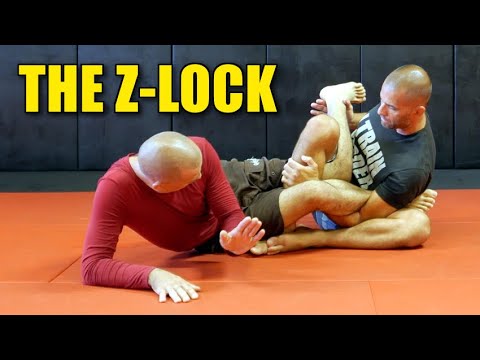
The Z-lock wrist lock from seated guard is a flexion-based submission that uses a distinctive Z-shaped arm configuration to hyperextend the opponent's wrist joint from a bottom guard or seated position. [1] The attacker threads their forearm behind the opponent's wrist in a weaving pattern that creates a Z-shape when viewed from the side — the attacker's arm bends at the elbow, wraps behind the opponent's wrist, and the hand hooks back to create three connected segments. [1],[2] This configuration generates exceptional leverage because the Z-shape creates two fulcrum points acting on the wrist simultaneously. [2] From seated guard, the Z-lock catches opponents who post carelessly or extend their arms during passing attempts. [2],[3] The Z-lock is considered an advanced wrist lock variant due to the precise positioning required to establish the weaving grip. [3]
The Z-lock from guard is a specialized application that emerged as BJJ practitioners with backgrounds in traditional jujutsu and aikido brought their wrist-locking knowledge into guard play. [1],[2] The technique reflects the ongoing integration of traditional martial arts joint manipulation methods into the sport grappling guard system. [1] While less common than standard wrist locks, the Z-lock's multi-planar attack provides a surprise element that catches opponents unfamiliar with compound wrist manipulations. [1],[2]
The Z-lock traps the opponent's arm in a Z-shaped configuration using the legs, applying pressure to the shoulder and elbow simultaneously. [1]
The Z-lock was developed in modern submission grappling as a creative arm entanglement submission. [1]
Z-locks appear at advanced no-gi submission grappling events. [1]
Изображений для этой техники пока нет.
Войдите, чтобы предложить изображение.
Learn 10 must know elbow locks. Please check out my newest channel. The Karate Man. https://www.youtube.com/@TheKarate…
Here's a breakdown of one of the rarest and most exotic Leg Lock submissions in BJJ, The Z-Lock, which attacks primarily…
I stole this technique from Bobby Sandhu who stole it from Pierre Olivier Leclerc who apparently stole it from a blue be…
The Z-lock is a specialized leg lock submission that primarily targets the hip joint through internal rotation, performed from the diagonal ashi or cross-ashi position in Brazilian jiu-jitsu. According to MMA Leech, the technique involves establishing double ankle control, hooking the opponent's knee with the attacker's ankle, then shooting a leg between the opponent's legs into a leg knot position before controlling the secondary leg and applying pressure through hip internal rotation using primarily one arm. RobertDiggleJJ emphasizes the Z-lock's strategic advantage: unlike most leg locks requiring both hands on the submission, the Z-lock uses only one arm to attack the primary leg, leaving the other arm free to control the secondary leg, thereby immobilizing both legs and severely restricting escape options. Both MMA Leech and RobertDiggleJJ stress the importance of the transition sequence—moving from cross-ashi through specific grip transitions (over-under positioning) to diagonal ashi, then executing the Z-lock with precise foot-to-foot positioning and deep grip placement on the thigh. RobertDiggleJJ notes this submission is more dangerous than heel hooks and requires slow, controlled practice. The technique's effectiveness stems from controlling both limbs simultaneously while targeting a vulnerable joint through a difficult-to-resist motion at end-range internal rotation, making it a potent but technically demanding submission.
Сформировано на основе 2 инструкторов
Учебных курсов по этой технике пока нет.
Войдите, чтобы предложить курс.
Риск травмы для человека, к которому применяется техника
Wrist lock variant targeting carpal and radioulnar joints through forced deviation or torsion
Уровень мастерства, необходимый для надёжного выполнения техники
Разрешена ли техника по основным соревновательным правилам
Japanese BJJ — follows S字固め (esu-ji gatame) naming pattern
Japanese terminology sourced from Japanese BJJ — follows S字固め (esu-ji gatame) naming pattern
Standard katakana transliteration of Western martial arts terminology (外来語) — used in Japanese MMA, boxing, and BJJ communities
Japanese terminology sourced from Japanese BJJ — follows S字固め (esu-ji gatame) naming pattern
fine motor control, grip sensitivity, quick hand transitions
dexterous hands with strong fingers
forearm flexors and extensors, intrinsic hand muscles
Каждое движение в любом боевом искусстве обладает рядом универсальных свойств. Комбинируйте параметры ниже, чтобы найти нужный инструмент или сравнить аналоги из разных стилей.
The Z-lock from clinch is applied during a standing clinch by trapping the opponent's wrist and bending it into a Z-shaped configuration where the forearm, wrist, and hand form angular zigzag segments. [1,2] The Z-shape is created by applying both flexion and radial or ulnar deviation simultaneously, stressing the wrist ligaments from multiple angles at once. [1] The clinch provides the body-to-body contact needed to trap the arm and apply the compound wrist manipulation before the opponent can retract. [1,2]
The Z-lock from prone control is applied against a face-down opponent by trapping the wrist and bending it into the angular Z-configuration, combining flexion with lateral deviation to create compound stress on the wrist joint. [1,2] The prone position immobilizes the opponent's body, preventing them from using rotation or posture to relieve the multi-planar wrist stress. [1] The attacker uses both hands to position the wrist precisely into the Z-shape and then applies progressive force to generate a submission. [1,2]
The Z-lock from seated guard is a wrist lock that bends the opponent's wrist into a Z-shaped configuration by combining flexion with lateral deviation. [1] Applied from guard, the attacker traps the hand and uses forearm pressure to create a compound angle that attacks multiple planes of wrist mobility simultaneously. [1,2]
The Z-lock from standing is applied by trapping the opponent's wrist and manipulating it into the zigzag Z-configuration while both fighters are on their feet, combining flexion with radial or ulnar deviation for multi-planar joint stress. [1,2] The standing position allows the attacker to use body rotation and weight shifts to amplify the compound wrist bend. [1] The technique requires precise hand positioning to create the correct angular segments and is typically initiated from a wrist grab, handshake trap, or clinch-range arm control position. [1,2]
Controlling the ankle with the back of your knee in the classic leg knot position frees up both of your arms to attack submissions like the toe hold or outside heel hook, whereas arm control ties up one of your limbs.
If you're controlling both of someone's legs by tying them up together, it's significantly harder for them to escape the position.
You typically execute a Z-lock submission with only one arm, though there is one variation where you can use two hands.
The Z-lock wrist lock from seated guard is a flexion-based submission that uses a distinctive Z-shaped arm configuration to hyperextend the opponent's wrist joint from a bottom guard or seated position. The attacker threads their forearm behind the opponent's wrist in a weaving pattern that creates a Z-shape when viewed from the side — the attacker's arm bends at the elbow, wraps behind the opponent's wrist, and the hand hooks back to create three connected segments.
The Z-lock from guard is a specialized application that emerged as BJJ practitioners with backgrounds in traditional jujutsu and aikido brought their wrist-locking knowledge into guard play. The technique reflects the ongoing integration of traditional martial arts joint manipulation methods into the sport grappling guard system.
IBJJF: разрешён — Legal at all belt levels; IJF: запрещён — Only elbow joint locks (kansetsu-waza) permitted in judo — all other joint lo…; ADCC: разрешён — Legal — all submissions legal in ADCC; Unified MMA: разрешён — Legal submission technique; FIAS Sport Sambo: разрешён — Legal; FIAS Combat Sambo: разрешён — Legal
Оценка опасности 5/10. Wrist lock variant targeting carpal and radioulnar joints through forced deviation or torsion
Стандартная цепочка подготовки: Control the Arm → Position the Hips → Pinch Knees → Extend for the Finish.
Стандартные контрприёмы: Clasp Hands — grip own wrist to prevent arm extension / Stack — drive forward to compress the attacker and relieve elbow pressure / Hitchhiker Escape — rotate the thumb toward the mat and roll to extract the arm.
Распространённые варианты: Standard wrist lock (kote gaeshi) (two-handed rotational lock on the wrist); Gooseneck wrist lock (flexion lock bending the wrist down toward the forearm); Standing wrist lock (applied during grip fighting or a standing exchange); Ground wrist lock (catching the opponent's posted hand from mount, side cont…).
Z-locks appear at advanced no-gi submission grappling events.
Основные ошибки, на которые стоит обратить внимание: Not creating the Z-shape properly — the arm must be bent at 90 degrees at both the elbow and the wrist; incorrect ang… / Applying only wrist pressure without maintaining the elbow angle — both joints must be controlled simultaneously for … / Not using body weight to maintain the position — the Z-lock requires weight on the opponent's arm; hands alone cannot… / Releasing when the opponent begins to straighten — if they straighten, transition to an armbar; the Z-lock and armbar….
Z-Lock также известен как Z Rokku, Z Wrist Lock, Z-Shaped Wrist Lock, Zed Lock.