No Gi Triangle Choke From Closed Guard
0
Triangle Choke·Chewjitsu
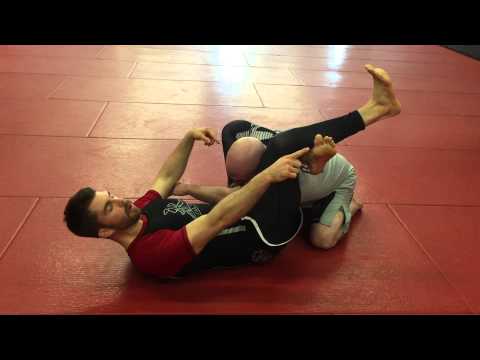
WWW.CHEWJITSU.NET In this video I show a triangle choke from guard. This is a great setup for either gi or no gi Brazil…
Перевод: Triangle Strangle
The triangle choke (sankaku-jime) traps the opponent's head and one arm inside a triangular leg configuration — one leg across the back of the neck, the ankle locked behind the opposite knee — creating bilateral carotid compression. [1],[2] The trapped arm acts as a wedge against one carotid while the leg compresses the other side. [1],[3] The triangle choke is most commonly applied from closed guard but can be executed from mount, back control, side control, and standing positions. [1],[4] Proper angle adjustment (cutting at approximately 90 degrees) and squeezing with the legs while pulling the head are essential for an effective finish. [1],[5]
Sankaku-jime (三角絞め, 'triangle strangle') was developed in judo, with various accounts crediting its origins to the early-to-mid 20th century. [2],[3] The technique was largely dormant in judo until Brazilian Jiu-Jitsu practitioners recognized its power from the guard position. [1],[4] Rolls Gracie is credited with popularizing the triangle choke in BJJ during the 1970s-80s. [1] It has since become one of the most common submissions in both BJJ competition and MMA. [1],[5]
The triangle choke (sankaku-jime) is among the most versatile submissions in grappling, applicable from guard, mount, and back control. [1] By enclosing the opponent's neck and one arm between the legs and locking a figure-four, the attacker compresses both carotid arteries using the thigh and the opponent's own trapped shoulder. [1],[2] Saulo Ribeiro rates the triangle as a fundamental closed guard attack due to its reliability and the difficulty of escape once locked. [3]
Sankaku-jime (三角絞め) was developed in Kodokan Judo and appears in the shime-waza curriculum. [1] The technique was transmitted to Brazil through Mitsuyo Maeda's teaching and became a centrepiece of the Gracie Jiu-Jitsu guard game. [2] Rolls Gracie is credited with greatly expanding triangle choke setups from closed guard in the 1970s–1980s. [3]
The triangle choke is one of the most common submission finishes in UFC history, with notable examples including Anderson Silva's triangle of Chael Sonnen at UFC 117 (2010) and Fabricio Werdum's triangle-armbar of Fedor Emelianenko at Strikeforce (2010). [1] In IBJJF competition, the triangle is statistically among the top three submissions at black belt level. [2]
Изображений для этой техники пока нет.
Войдите, чтобы предложить изображение.
WWW.CHEWJITSU.NET In this video I show a triangle choke from guard. This is a great setup for either gi or no gi Brazil…
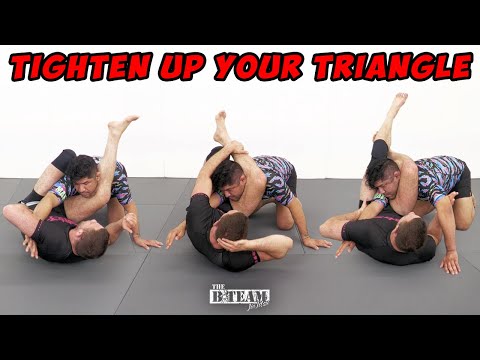
Merch out now! https://bteamjj.shop // Submeta: https://submeta.io/@bteam | The triangle choke is one of the most classi…
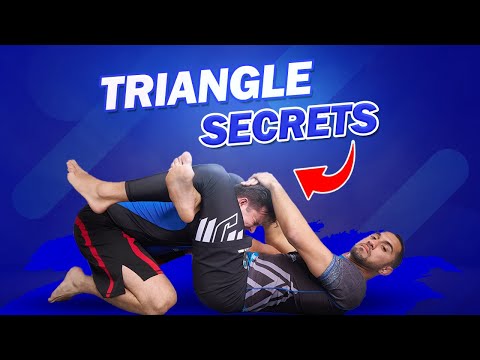
Get my New Course the GUARD ATTACK BLUEPRINT and learn to DOMINATE from the closed guard! https://guardattackblueprint.…
The triangle choke is a leg-based strangulation attack that functions by compressing both carotid arteries using the legs while controlling the opponent's arm placement. All three instructors emphasize the fundamental prerequisite: one arm must be trapped inside the legs while the other remains outside. Matt Arroyo (Matt Arroyo Jiu Jitsu) and Ethan Crelinsten (The B-Team) stress the critical importance of positioning the knee pit—the soft tissue behind the knee—directly against the opponent's neck with skin-to-skin contact to maximize arterial compression with minimal muscular effort. The B-Team additionally advocates for hip movement and shoulder control to create a perpendicular angle to the head, while Arroyo emphasizes the "diamond" leg position as an intermediate checkpoint and later the figure-four ankle lock mechanism. All three instructors agree on the finishing sequence: securing the ankle behind the opposite knee, pulling the head downward, raising the hips, and applying steady, continuous pressure rather than intermittent squeezing. Entry methods vary by context: Arroyo highlights sweeps and the "shotgun" wrist manipulation from closed guard; Crelinsten presents entries from knee-shield or Z-guard using collar ties and bicep scrapes; Chewjitsu (Mike Davison) focuses on no-gi overhook control from closed guard. Common mistakes across instructors include insufficient knee-to-neck contact, improper ankle positioning, allowing the leg to slide down the back rather than over the shoulder, and relying solely on muscular squeeze rather than structural mechanics. All three recommend progressive drilling with varying opponent heights to develop consistent technical execution.
Сформировано на основе 3 инструкторов
Учебных курсов по этой технике пока нет.
Войдите, чтобы предложить курс.
Риск травмы для человека, к которому применяется техника
Triangle chokes compress the carotid arteries using the legs; loss of consciousness in 8-12 seconds
Уровень мастерства, необходимый для надёжного выполнения техники
Разрешена ли техника по основным соревновательным правилам
Kodokan Judo — Shinmeisho-no-waza (added 1997)
Japanese terminology sourced from Kodokan Judo — Shinmeisho-no-waza (added 1997)
Alias sources — [1] Kodokan Judo (Kano, 1986) [2] Brazilian Portuguese BJJ terminology [3] IBJJF Rules & Regulations
Official Kodokan ground technique classification system
Standard Japanese martial arts terminology (kanji/hiragana)
Established Japanese martial arts naming convention — native Japanese term (和語/漢語)
Japanese terminology sourced from Kodokan Judo — Shinmeisho-no-waza (added 1997)
Alias sources — [1] Kodokan Judo (Kano, 1986) [2] Brazilian Portuguese BJJ terminology [3] IBJJF Rules & Regulations
hip flexibility, long legs relative to torso
longer limbs for easier figure-four lock around head and arm
hip adductors, hamstrings, quadriceps
Каждое движение в любом боевом искусстве обладает рядом универсальных свойств. Комбинируйте параметры ниже, чтобы найти нужный инструмент или сравнить аналоги из разных стилей.
The triangle choke from back control is applied by the attacker who has back mount and threads one leg across the side of the opponent's neck while locking the other leg behind the knee to form the triangular figure. [1,2] Unlike the standard front-facing triangle, the rear triangle compresses the carotid arteries from behind, using the opponent's own trapped shoulder as the wedge against one carotid and the thigh against the other. [1] The attacker adjusts the angle by turning perpendicular to the opponent and squeezing the legs while pulling the head to complete the strangle. [1,2,3]
The triangle choke from closed guard is the most fundamental application of the technique, where the bottom player traps one of the opponent's arms and their head inside a triangle formed by the legs, then squeezes the thighs together while pulling the head down. [1,2] The trapped arm acts as a wedge against one carotid artery while the thigh compresses the other side, creating bilateral vascular occlusion. [1] The attacker must cut an angle by pivoting on the shoulder to align the legs perpendicular to the opponent's body for maximum compression effectiveness. [1,2,3]
The triangle choke from mount is applied when the mounted attacker isolates one of the opponent's arms and swings a leg over the head while maintaining the mount position, then transitions to the triangle configuration with the opponent's arm and head trapped inside the legs. [1,2] The mount provides a gravitational advantage that makes it difficult for the opponent to defend the leg swing, and the attacker can finish by either staying in the mounted triangle or rolling to the back. [1] The mounted triangle is particularly tight due to the downward pressure of the attacker's weight. [1,2]
The triangle choke from open guard is applied from various open guard configurations — spider guard, lasso guard, De La Riva guard, or simply open guard with feet on hips — by shooting one leg across the opponent's shoulder line and trapping the head and one arm inside the triangle lock. [1,2] Open guard provides greater range of motion for leg elevation and hip movement compared to closed guard, allowing faster and more dynamic triangle entries. [1] The attacker uses grips on sleeves, collar, or wrists to control distance and create the opening for the triangle lock. [1,2]
The triangle choke from side control is applied by the bottom player who creates space from underneath the side control pin, threads one leg across the opponent's neck, and locks the triangle by trapping the head and near-side arm inside the leg configuration. [1,2] This is a defensive submission that converts a disadvantageous position into a choking threat, requiring precise timing when the top player transitions or reaches. [1] The attacker must bridge and shrimp to create enough space to shoot the leg across the shoulder line and lock the triangle. [1,2]
The triangle choke from standing is applied by jumping guard and simultaneously shooting the legs into a triangle configuration around the opponent's head and arm, or by using a flying triangle entry where the attacker leaps from the ground and wraps the legs mid-air. [1,2] The standing triangle requires explosive hip elevation and precise timing to lock the legs before both fighters reach the ground. [1] Once locked in the air, the attacker pulls the opponent down while maintaining the triangle squeeze, often finishing the choke upon landing. [1,2]
According to Matt Arroyo Jiu Jitsu, the biggest mistake is having space between your knee pit and the opponent's neck—you want that area completely tight with no gap. You can actually test it by trying to fit your hand in the space; if you can, it needs to be tighter.
Ethan Crelinsten from The B-Team emphasizes that your knee should be positioned below the opponent's ear with the skin of the back of your knee directly touching the skin of his neck—there shouldn't even be enough space for a piece of paper. Your ankle should come over the shoulder, not down the back, and you hide the opposite shoulder to trap the arm.
Matt Arroyo Jiu Jitsu explains you must squeeze your knees together as the primary mechanism—not try to squeeze with your thigh muscles or bring your heel down. Apply one steady, continuous pressure rather than squeezing and releasing repeatedly.
Matt Arroyo Jiu Jitsu teaches that you can create the 'one arm in, one arm out' position by feinting sweep attempts like a scissor sweep or bump sweep, then releasing the wrist so your opponent bases with their hand, creating the gap you need to bring your leg over their shoulder.
The triangle choke (sankaku-jime) traps the opponent's head and one arm inside a triangular leg configuration — one leg across the back of the neck, the ankle locked behind the opposite knee — creating bilateral carotid compression. The trapped arm acts as a wedge against one carotid while the leg compresses the other side.
Sankaku-jime (三角絞め, 'triangle strangle') was developed in judo, with various accounts crediting its origins to the early-to-mid 20th century. The technique was largely dormant in judo until Brazilian Jiu-Jitsu practitioners recognized its power from the guard position.
IBJJF: разрешён — Legal at all belt levels, gi and no-gi — chokes are the safest submission cat…; IJF: разрешён — Legal (shime-waza) — strangulation techniques are one of three permitted subm…; ADCC: разрешён — Legal; Unified MMA: разрешён — Legal — choke submissions are among the most common finishes in MMA; FIAS Sport Sambo: запрещён — All chokes prohibited in Sport Sambo; FIAS Combat Sambo: разрешён — Legal
Оценка опасности 8/10. Triangle chokes compress the carotid arteries using the legs; loss of consciousness in 8-12 seconds
Стандартная цепочка подготовки: Achieve Controlling Position → Isolate the Neck → Set the Grip → Apply Pressure.
Стандартные контрприёмы: Tuck Chin — protect the neck by lowering the chin to prevent the choke from sinking / Two-on-One Grip Fight — use both hands to strip the choking grip before it locks / Turn Into — rotate toward the choking arm to relieve carotid pressure / Posture Up — straighten the spine and create distance to break the choking angle.
Распространённые варианты: Standard triangle (classic figure-four leg lock around the head and one arm …); Reverse triangle (legs locked from behind or inverted angle for different a…); Mounted triangle (applied from mount position with gravity assisting the sq…); No-arm triangle (both arms excluded, legs-only compression on the neck).
The triangle choke is one of the most common submission finishes in UFC history, with notable examples including Anderson Silva's triangle of Chael Sonnen at UFC 117 (2010) and Fabricio Werdum's triangle-armbar of Fedor Emelianenko at Strikeforce (2010). In IBJJF competition, the triangle is statistically among the top three submissions at black belt level.
Основные ошибки, на которые стоит обратить внимание: Not angling the body — staying square to the opponent reduces the shoulder-into-neck compression; cut the angle by pi… / Locking the triangle with the wrong leg — the leg across the back of the neck should be on the same side as the trapp… / Not pulling the head down — the head must be pulled toward the chest to tighten the triangle; allowing the opponent t… / Squeezing only with the legs — leg compression alone is insufficient; the angle and head position are equally important.
Triangle Choke также известен как Sankaku-jime, Triângulo, Triangle.