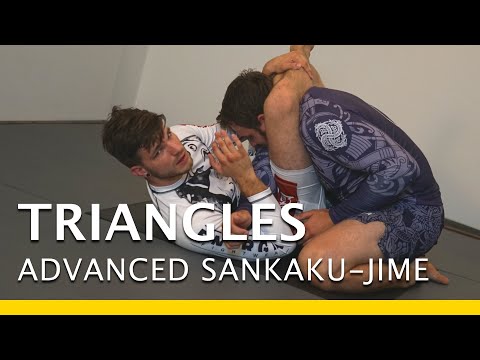
Triangle choke advanced details and mixups
0
Choke And Strangle Lock·Energia Martial Arts
Triangle choke advanced details and mixups Let's look at the sankaku-jime! A well known strangle/submission from variou…
Перевод: Choking / Strangling Techniques
Chokes and strangles are submission techniques that restrict either blood flow (strangles) or airflow (chokes) to force a tap out or render an opponent unconscious. [6] The distinction between a choke and a strangle is physiological: a blood choke (strangle) compresses the carotid arteries on one or both sides of the neck, reducing cerebral blood flow and causing unconsciousness within 8–14 seconds if held correctly; an air choke compresses the trachea, blocking the airway, which takes significantly longer to produce unconsciousness and carries higher risk of laryngeal injury. [6] In practice, most techniques apply some combination of both mechanisms. This group encompasses all choking and strangling submissions organized by the primary mechanism and body configuration used: arm triangles (head-and-arm compression), back control chokes (rear naked choke and collar chokes from back mount), forearm and collar chokes (using the gi lapel or forearm against the throat), front headlock chokes (guillotine family and its derivatives), guard chokes (submissions applied from bottom guard positions), leg chokes (triangle choke family using the legs to compress the neck), neck crank chokes (combining cervical spine torque with vascular restriction), and the north-south choke (applied from the north-south position). [7] Chokes and strangles are permitted in virtually all submission grappling rule sets [2] and are the most common submission finish in professional MMA competition.
Choking techniques appear in virtually every grappling tradition worldwide. Depictions of chokes exist in ancient Egyptian tomb paintings at Beni Hasan (c. 2000 BCE) and in Greek Pankration descriptions. In Japan, the Kodokan Judo shime-waza (strangle technique) division formalized by Jigoro Kano includes classical techniques such as hadaka-jime (rear naked choke), kata-ha-jime (single wing choke), and okuri-eri-jime (sliding collar choke) that remain fundamental to modern competition. [6] Brazilian Jiu-Jitsu expanded the choking repertoire dramatically, particularly from the guard position — a strategic innovation largely absent from judo's standing-oriented competition format. [7] The rear naked choke became the single most successful submission in UFC history, while the triangle choke and guillotine choke emerged as high-percentage finishes in both gi and no-gi competition. [7] Modern no-gi grappling competitors such as Marcelo Garcia, Gordon Ryan, and Danaher Death Squad athletes have further refined choking systems into comprehensive positional frameworks. [8]
Chokes and strangles are submissions that restrict either blood flow to the brain (vascular strangles compressing the carotid arteries) or airflow through the trachea (respiratory/air chokes). [1] Vascular strangles produce unconsciousness in approximately 5–10 seconds when fully applied, making them among the most decisive submissions in grappling. [1],[2] They are the most common submission category in both MMA and BJJ competition. [3]
Shime-waza (絞技, strangling techniques) is one of the three divisions of Kodokan Judo's katame-waza, codified by Jigoro Kano. [1] The Gracie family's transmission of judo strangles to Brazil, combined with the development of guard-based chokes, created the BJJ choking curriculum that now dominates submission grappling. [2] Catch wrestling's 'strangleholds' and sambo's choking techniques contributed additional methods. [3]
Изображений для этой техники пока нет.
Войдите, чтобы предложить изображение.
Triangle choke advanced details and mixups Let's look at the sankaku-jime! A well known strangle/submission from variou…
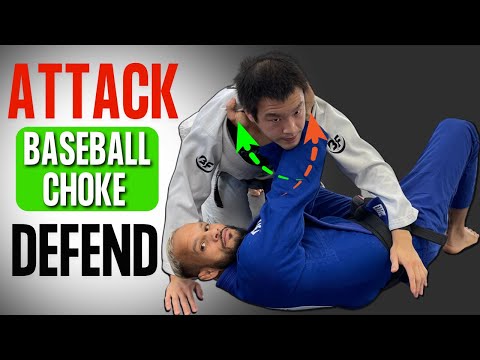
on this video i show you how to choke from bottom using baseball choke and how to defend the baseball choke from top thi…
Учебных курсов по этой технике пока нет.
Войдите, чтобы предложить курс.
Риск травмы для человека, к которому применяется техника
Vascular chokes can cause unconsciousness in 5-10 seconds if fully applied
Уровень мастерства, необходимый для надёжного выполнения техники
Разрешена ли техника по основным соревновательным правилам
Kodokan Judo — Jigoro Kano (1986)
Shime-waza classification and foundational choking techniques
Comprehensive BJJ choke technique documentation
Progressive curriculum covering choke defense and application
Alias sources — [1] Kodokan Judo (Kano, 1986) [2] Kodokan Judo (Kano, 1986) [3] Kodokan Judo (Kano, 1986) [4] Kodokan Judo (Kano, 1986)
Effectiveness sources — [1] Kodokan Judo (Kano, 1986) [2] Mastering Jujitsu (Gracie & Danaher, 2003) [3] UFC Stats — historical submission data (ufcstats.com, accessed 2024)
Official Kodokan ground technique classification system
Standard Japanese martial arts terminology (kanji/hiragana)
Established Japanese martial arts naming convention — native Japanese term (和語/漢語)
Shime-waza classification and foundational choking techniques
Comprehensive BJJ choke technique documentation
Progressive curriculum covering choke defense and application
Alias sources — [1] Kodokan Judo (Kano, 1986) [2] Kodokan Judo (Kano, 1986) [3] Kodokan Judo (Kano, 1986) [4] Kodokan Judo (Kano, 1986)
Effectiveness sources — [1] Kodokan Judo (Kano, 1986) [2] Mastering Jujitsu (Gracie & Danaher, 2003) [3] UFC Stats — historical submission data (ufcstats.com, accessed 2024)
hip flexibility, long legs relative to torso
longer limbs for easier figure-four lock around head and arm
hip adductors, hamstrings, quadriceps
Каждое движение в любом боевом искусстве обладает рядом универсальных свойств. Комбинируйте параметры ниже, чтобы найти нужный инструмент или сравнить аналоги из разных стилей.
The arm triangle choke (kata-gatame) is a family of blood chokes that use the attacker's arms in combination with the opponent's own trapped shoulder to compress both carotid arteries. [1,2] The defining mechanism is a triangular structure formed by the attacker's arm on one side of the neck and the opponent's own shoulder pressed against the other side, creating bilateral vascular compression. The attacker typically threads one arm under the opponent's head and clasps hands (or grips the biceps in a figure-four), then drives the opponent's trapped arm across the neck to complete the seal. Arm triangles can be applied from mount, side control, half guard, north-south, and even standing positions, making them among the most versatile choke families in grappling. The technique is high-percentage because even partial application creates significant discomfort and positional control. [3]
Back control chokes are submission techniques applied when the attacker has secured a position behind the opponent, typically with hooks (legs wrapped around the torso) or a body triangle for control. [1] This family includes the rear naked choke (hadaka-jime), collar chokes from the back (okuri-eri-jime, kata-ha-jime), lapel-feed chokes, and hybrid variations that combine arm compression with rear choking mechanics. The rear naked choke — a no-gi technique using the forearm and biceps to compress both carotids — is statistically the most successful submission in UFC history and one of the highest-percentage finishes in all grappling competition. Back control represents the most dominant position in submission grappling because the attacker can attack the neck while the defender has no offensive options and limited defensive tools. [2]
Forearm and collar chokes are submission techniques that use the gi lapel, collar, or the bare forearm pressed against the front or side of the neck to restrict blood flow or airflow. [1] This family includes cross-collar chokes (juji-jime variations), loop chokes, Ezekiel chokes (sode-guruma-jime), and thrust chokes that drive the lapel or forearm into the throat. The cross-collar choke from mount and guard is one of the most fundamental gi submissions in Brazilian Jiu-Jitsu, requiring deep collar grips and proper wrist rotation to create the shearing force across both carotids. The Ezekiel choke uses the sleeve of the gi as a fulcrum, allowing application from mount, side control, and even inside an opponent's closed guard. [2] Forearm and collar chokes are primarily gi-dependent, though no-gi adaptations exist using wrist-on-wrist grips.
Front headlock chokes are submissions applied from a front headlock position — where the attacker controls the opponent's head and one arm from the front, typically after a sprawl or snap-down. [1] This family includes the guillotine choke (mae-hadaka-jime), the anaconda choke, the D'Arce/Brabo choke, the Peruvian necktie, and various head-and-arm wrapping variations. The guillotine choke — applied by wrapping an arm around the opponent's neck from the front and squeezing — is one of the most common submissions in MMA, effective from standing, in the clinch, and from guard. [1] The anaconda and D'Arce chokes use an arm-in configuration where the attacker threads an arm through the space between the opponent's head and arm, creating a figure-four compression against the neck. [3] Front headlock positions are high-value transitional positions in both wrestling and grappling.
Guard chokes are choking submissions executed from bottom guard positions — closed guard, open guard, half guard, and various guard variations. [1] These techniques exploit the guard player's ability to control distance, break posture, and use the legs to create leverage while the opponent is trapped between the legs or in a guard configuration. Common guard chokes include cross-collar chokes from closed guard, loop chokes from half guard, gogoplatas (shin-across-throat chokes from rubber guard or mission control), and various collar drags into choking positions. Guard chokes are a defining feature of Brazilian Jiu-Jitsu's strategic innovation — the ability to submit an opponent from the bottom position was revolutionary in early MMA and remains central to BJJ's competitive identity. [2]
Leg chokes are submissions that use the legs — primarily the thighs and calves — to compress the neck and restrict blood flow or airflow. [1] The triangle choke (sankaku-jime) is the defining technique of this family: the attacker traps the opponent's head and one arm between the legs, then locks a figure-four with the legs to squeeze the opponent's own trapped shoulder into one carotid while the attacker's thigh compresses the other. Triangle chokes can be applied from guard (most common), mount, side control, and back control positions. Other leg chokes include the head-and-arm triangle using the legs, gogoplata (shin choke), and various calf-compression chokes. The triangle choke is one of the highest-percentage submissions in both gi and no-gi competition because the legs generate significantly more squeezing force than the arms. [2]
Neck crank chokes are hybrid submissions that combine cervical spine manipulation with vascular or airway restriction. [4] Unlike pure chokes (which target blood/air) or pure cranks (which target the spine), neck crank chokes apply both mechanisms simultaneously — twisting or laterally flexing the neck while also compressing the throat or carotids. This family includes the can opener (cranking the neck from inside closed guard), the twister (lateral spine rotation from back control), cervical neck locks, and various headlock-based cranking chokes. [1] Neck crank chokes are considered high-risk techniques because the cervical spine is vulnerable to serious injury from rotational and compressive forces. The IBJJF prohibits cervical locks (neck cranks) at all belt levels [1]; judo prohibits them; but ADCC and MMA under Unified Rules permit them. [2,3]
The north-south choke is a strangulation applied from the north-south position (kami-shiho-gatame orientation), where the attacker lies chest-to-chest on top of the opponent but facing the opposite direction. [2] The attacker wraps an arm around the opponent's neck, drives the shoulder downward in a 'paper cutter' motion against the wrist, and uses body weight and arm pressure to compress the neck — the exact mechanism (carotid blood choke vs. esophageal airway compression) is taught differently across schools (Marcelo Garcia teaches it as a blood choke; John Danaher emphasises esophageal pressure). [1,4] The technique requires precise weight distribution — the attacker must drop the hip on the choking side to create the necessary angle and pressure. The north-south choke is effective in both gi and no-gi grappling and is particularly useful as a transition from side control or as a counter when an opponent turns into the attacker. [1] It is classified as a high-percentage submission at black belt level but requires significant body feel and timing to execute correctly.
Chokes and strangles — blood chokes (compressing carotid arteries) and air chokes (compressing the trachea) — are the safest finishing category because the opponent can be rendered unconscious without permanent injury. Rear naked choke appears in 139 passages across 23 books. In judo, strangles (shime-waza) are one of three permitted submission categories. (23+ books; Kano, Kodokan Judo; Ribeiro, Jiu-Jitsu University)
According to Energia Martial Arts, an opponent can prevent a triangle through three basic reactions: getting their posture back, posturing out of it, or stacking you by putting their weight on top. Being aware of these defensive options allows you to switch your triangle accordingly.
Energia Martial Arts emphasizes keeping your knees together rather than apart, as pushing your knees together creates more pressure and makes it harder for the opponent to retract their arm. Place your calf right above where the skull starts to bend rather than on the neck or back, and bring your knee and foot towards each other to trap the arm.
Energia Martial Arts recommends controlling your shin rather than your foot, because if your opponent aggressively bases up with your foot already trapped, they might injure your ankle or foot. Grab your shin as high as possible and bring your knee and elbow towards each other for a tight finish.
BIG OSS Jiu-Jitsu Channel emphasizes getting a thumb grip first to bump and create space, then securing a four-finger grip on the near side. Bridge to create space between you and your opponent so they can't get under you, then punch your second hand in for the grip.
Chokes and strangles are submission techniques that restrict either blood flow (strangles) or airflow (chokes) to force a tap out or render an opponent unconscious. The distinction between a choke and a strangle is physiological: a blood choke (strangle) compresses the carotid arteries on one or both sides of the neck, reducing cerebral blood flow and causing unconsciousness within 8–14 seconds if held correctly; an air choke compresses the trachea, blocking the airway, which takes significantly longer to produce unconsciousness and carries higher risk of laryngeal injury.
Choking techniques appear in virtually every grappling tradition worldwide. Depictions of chokes exist in ancient Egyptian tomb paintings at Beni Hasan (c.
IBJJF: разрешён — Legal at all belt levels, gi and no-gi — chokes are the safest submission cat…; IJF: разрешён — Legal (shime-waza) — strangulation techniques are one of three permitted subm…; ADCC: разрешён — Legal; Unified MMA: разрешён — Legal — choke submissions are among the most common finishes in MMA; FIAS Sport Sambo: запрещён — All chokes prohibited in Sport Sambo; FIAS Combat Sambo: разрешён — Legal
Оценка опасности 9/10. Vascular chokes can cause unconsciousness in 5-10 seconds if fully applied
Стандартная цепочка подготовки: Achieve Controlling Position → Isolate the Neck → Set the Grip → Apply Pressure.
Стандартные контрприёмы: Tuck Chin — protect the neck by lowering the chin to prevent the choke from sinking / Two-on-One Grip Fight — use both hands to strip the choking grip before it locks / Turn Into — rotate toward the choking arm to relieve carotid pressure / Posture Up — straighten the spine and create distance to break the choking angle.
Распространённые варианты: Short choke (palm-to-palm grip) (compact grip for tight spaces when the chin is partially …); Gable grip RNC (interlocked fingers behind the head for maximum squeeze p…); Body triangle RNC (adds body triangle control for stronger hip management du…); One-arm RNC (single arm under the chin when the second arm cannot reac…).
Chokes and strangles account for approximately 60% of all submission finishes in UFC history, with the rear naked choke, guillotine, and triangle being the three most common. In IBJJF competition, collar chokes are the most frequent submission at black belt level.
Основные ошибки, на которые стоит обратить внимание: Squeezing without proper positioning — chokes require correct angle and alignment; raw squeezing is exhausting and in… / Not distinguishing blood chokes from air chokes — blood chokes are faster and safer; accidentally air choking causes … / Holding a choke after the opponent is unconscious — release immediately when the opponent goes limp; holding beyond u… / Not recognising the signs of unconsciousness — body going limp, arms dropping, eyes rolling — release immediately.
Choke And Strangle Lock также известен как Chokes, Strangles, Strangulation Locks, Shime Waza.