Triangular Strangle

Подсемейство

Перевод: Triangle Strangle

Дистанция и классификация

Категория
Удар и защитаЗамкиБлижний бойБой против нескольких
Дистанция
БлижняяСредняяДальняя
Целевая зона
Верхняя частьСредняя частьНижняя часть

Обзор

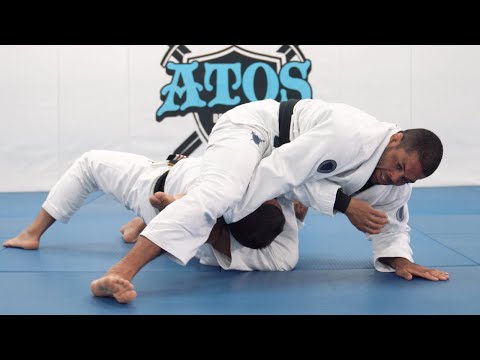
The triangular strangle (sankaku-jime) is the primary triangle choke — the attacker locks a figure-four with the legs around the opponent's head and one arm, squeezing the thighs together to compress both carotid arteries. [1],[2] The trapped arm acts as a wedge against one side of the neck while the attacker's thigh compresses the other side. Applied most commonly from closed guard, the triangle can also be executed from mount, side control, and back control. [3],[4],[5]

Также известна как
Sankaku-jimeJP[1]Triangle Choke Family[2]Leg Triangle[3]
Используется в

История и происхождение

Sankaku-jime (三角絞め) is classified in Kodokan Judo's shime-waza division. [2],[3] Rolls Gracie is widely credited with popularizing the triangle from guard in Brazilian Jiu-Jitsu during the 1970s-1980s. It has become one of the most iconic submissions in all of grappling and MMA. [1],[4],[5]

Страна происхождения· показано в случайном порядке

  • БразилияБразильское джиу-джитсу, Сабмишн-грэпплинг, ММА
  • Япония三角絞(Sankaku-jime)Бразильское джиу-джитсу, Дзюдо, Сабмишн-грэпплинг
  • СШАСабмишн-грэпплинг, ММА
  • РоссияСамбо

Эффективность

The triangular strangle uses the triangular configuration of the legs (sankaku) to compress the carotid arteries, one of the most mechanically efficient choke configurations. [1]

Родословная

The triangular strangle was developed in judo as sankaku-jime and became one of the most important techniques in BJJ. [1]

Соревновательные результаты

Triangular strangles are among the most commonly finished submissions across all grappling competition formats. [1]

Изображения

Изображений для этой техники пока нет.

Войдите, чтобы предложить изображение.

Биомеханический механизм

Primary ActionBilateral compression of the carotid arteries — restricts blood flow to the brain, causing unconsciousness within seconds
Joints InvolvedCervical spine (lateral flexion), glenohumeral joint of the trapped arm (if arm-in), nuchal region
Force VectorLateral squeeze creates inward pressure on both sides of the neck simultaneously
Choking MechanismVascular strangle — occludes carotid arteries and jugular veins, distinct from airway (tracheal) chokes

Позиция и вход

From back control with seatbeltEstablish hooks or body triangle, slide choking arm under the chin, connect hands and squeeze
From turtle top (back take)Break down the turtle, insert hooks, secure seatbelt grip, slide to back control and apply the choke
From standing back clinchSecure rear body lock, drag opponent to the mat while inserting hooks, transition to choking position

Видео

S Mount Triangle Strangle - Andre Galvao

0
Triangular Strangle·Atos Jiu-Jitsu HQ | World's Best BJJ Academy - Home Page

NOW 35%OFF your first year - ALL ACCESS: https://live.atosbjjondemand.com/checkout/subscribe/purchase?code=LEVELUP35&pla

1 video

Изучить технику

Учебных курсов по этой технике пока нет.

Войдите, чтобы предложить курс.

Оценки

Уровень опасности

Риск травмы для человека, к которому применяется техника

8
Очень высокий8/10

Triangle chokes compress the carotid arteries using the legs; loss of consciousness in 8-12 seconds

Сложность

Уровень мастерства, необходимый для надёжного выполнения техники

Средний
Допустимость на соревнованиях

Разрешена ли техника по основным соревновательным правилам

Запрещено
FIAS Sport Sambo — All chokes prohibited in Sport Sambo
FIAS International Sambo Competition RulesPDF
Разрешено
IBJJF — Legal at all belt levels, gi and no-gi — chokes a...
IBJJF Rules Book v6.0, June 2024PDF
ADCC — Legal
ADCC Rules Update, April 2025PDF
Unified MMA — Legal — choke submissions are among the mos...
Unified Rules of MMA, August 2025PDF
FIAS Combat Sambo — Legal
FIAS Combat Sambo RulesPDF

Заметки по тренировке

The triangular strangle is the general term for any choking technique that uses a triangular limb configuration to compress the neck — encompassing triangle chokes from all positions and angles (Kashiwazaki, Shimewaza, 1992)
The 'triangular' descriptor refers to the geometric relationship: one limb crosses the neck, another limb locks behind the first, and the opponent's own body (shoulder or arm) provides the third side of the triangle
Triangular strangles work because they incorporate the opponent's body into the choking mechanism — the attacker provides two sides of compression while the opponent's shoulder involuntarily provides the third
The triangular principle applies with arms (arm triangles, D'Arce, Anaconda) and legs (triangle choke, mounted triangle, rear triangle) — the geometry is universal
In judo, the sankaku family encompasses multiple triangular strangulations from different positions — the underlying principle predates the BJJ triangle choke by decades
The triangular strangle is biomechanically efficient: it requires less strength than bilateral compression because the opponent's own body provides one side of the force couple
Masahiko Kimura and later Rolls Gracie were instrumental in developing triangular strangling techniques that form the foundation of modern submission grappling

Типичные ошибки

!Confusing the triangular strangle with a headscissors — the triangle specifically includes one arm to create the three-sided compression; excluding the arm changes the mechanics entirely
!Not understanding the three-side principle — identify which limb is across the neck, which provides the lock, and which body part (shoulder/arm) creates the third pressure point
!Applying the triangle shape without proper tightness — the geometric shape alone doesn't choke; the triangle must be tight with no gaps
!Not cutting the angle — triangular strangles require angular displacement to drive the shoulder into the neck; straight-on application is less effective
!Ignoring the opponent's defensive hand — the free hand will try to create space inside the triangle; manage it actively
!Over-squeezing with muscles — the triangular strangle works through structure and angle, not raw squeezing; mispositioned triangles don't work regardless of strength
!Not studying multiple triangle positions — the principle works from guard, mount, back, and side control; limiting practice to one position limits the tool

Связанные техники

Контрприёмы

Цепочка подготовки

1Achieve Controlling Positionsecure the position from which the choke is applied
2Isolate the Neckclear defending hands and establish access to the throat
3Set the Griplock the choking configuration (arm, lapel, or leg placement)
4Apply Pressuresqueeze to compress the carotid arteries for the finish

Источники и ссылки

Основной источник

Kodokan Judo — Sankaku-jime

1КнигаKodokan Judo — Sankaku-jime

Japanese terminology sourced from Kodokan Judo — Sankaku-jime

Official Kodokan ground technique classification system

3Учебная программаKodokan Judo Institute — Official Waza Names

Standard Japanese martial arts terminology (kanji/hiragana)

4ДругоеJapanese Martial Arts Standard Terminology (武道用語)

Established Japanese martial arts naming convention — native Japanese term (和語/漢語)

5ЦитатаKodokan Judo — Sankaku-jime

Japanese terminology sourced from Kodokan Judo — Sankaku-jime

Сообщество

Атлетизм

Requires

hip flexibility, long legs relative to torso

Favours

longer limbs for easier figure-four lock around head and arm

Key muscles

hip adductors, hamstrings, quadriceps

Подтехники

Ищите по тому, что делает техника, — а не по её названию

Каждое движение в любом боевом искусстве обладает рядом универсальных свойств. Комбинируйте параметры ниже, чтобы найти нужный инструмент или сравнить аналоги из разных стилей.

Категория
Дистанция
Целевая зона

Часто задаваемые вопросы

What's the most important thing to focus on when setting up the triangular strangle from mount?

According to Andre Galvao, you must keep your opponent's arm connected to their body and avoid letting them disconnect their elbow, as this gives them a powerful frame to escape. Keeping the arm tight against the body prevents them from framing effectively.

How do I position my legs correctly when transitioning to the triangular strangle?

Andre Galvao emphasizes mounting over the bicep and tricep area rather than the forearm, then bringing your opponent's bicep against their face before going into an ass mount position. Once your knee hits the floor, connect their elbow to their body and clamp your legs super tight.

How can I prevent my opponent from escaping or bridging out of the position?

Pull their head toward you consistently—if their head touches the mat, they can bridge more easily. Keep a pillow grip with your shin to block the bridge, and maintain constant pressure by squeezing your legs while keeping their arm pinned against their body.

What grip should I use to control my opponent's arm?

Andre Galvao recommends using a C-grip on the wrist and then pulsing it to the floor before getting an underhook. This allows you to control the arm effectively while you position yourself for the strangle.

Как работает Triangular Strangle?

The triangular strangle (sankaku-jime) is the primary triangle choke — the attacker locks a figure-four with the legs around the opponent's head and one arm, squeezing the thighs together to compress both carotid arteries. The trapped arm acts as a wedge against one side of the neck while the attacker's thigh compresses the other side.

Откуда происходит Triangular Strangle?

Sankaku-jime (三角絞め) is classified in Kodokan Judo's shime-waza division. Rolls Gracie is widely credited with popularizing the triangle from guard in Brazilian Jiu-Jitsu during the 1970s-1980s.

Разрешён ли Triangular Strangle на соревнованиях?

IBJJF: разрешён — Legal at all belt levels, gi and no-gi — chokes are the safest submission cat…; IJF: разрешён — Legal (shime-waza) — strangulation techniques are one of three permitted subm…; ADCC: разрешён — Legal; Unified MMA: разрешён — Legal — choke submissions are among the most common finishes in MMA; FIAS Sport Sambo: запрещён — All chokes prohibited in Sport Sambo; FIAS Combat Sambo: разрешён — Legal

Насколько опасен Triangular Strangle?

Оценка опасности 8/10. Triangle chokes compress the carotid arteries using the legs; loss of consciousness in 8-12 seconds

Как подготовить Triangular Strangle?

Стандартная цепочка подготовки: Achieve Controlling Position → Isolate the Neck → Set the Grip → Apply Pressure.

Как защититься от Triangular Strangle?

Стандартные контрприёмы: Tuck Chin — protect the neck by lowering the chin to prevent the choke from sinking / Two-on-One Grip Fight — use both hands to strip the choking grip before it locks / Turn Into — rotate toward the choking arm to relieve carotid pressure / Posture Up — straighten the spine and create distance to break the choking angle.

Какие есть варианты Triangular Strangle?

Распространённые варианты: Standard triangle (classic figure-four leg lock around the head and one arm …); Reverse triangle (legs locked from behind or inverted angle for different a…); Mounted triangle (applied from mount position with gravity assisting the sq…); No-arm triangle (both arms excluded, legs-only compression on the neck).

Насколько эффективен Triangular Strangle на соревнованиях?

Triangular strangles are among the most commonly finished submissions across all grappling competition formats.

Какие типичные ошибки при выполнении Triangular Strangle?

Основные ошибки, на которые стоит обратить внимание: Confusing the triangular strangle with a headscissors — the triangle specifically includes one arm to create the thre… / Not understanding the three-side principle — identify which limb is across the neck, which provides the lock, and whi… / Applying the triangle shape without proper tightness — the geometric shape alone doesn't choke; the triangle must be … / Not cutting the angle — triangular strangles require angular displacement to drive the shoulder into the neck; straig….

Какие ещё названия есть у Triangular Strangle?

Triangular Strangle также известен как Sankaku-jime, Triangle Choke Family, Leg Triangle.