Перевод: Shoulder Hold / Arm-and-Head Choke — From Turtle
Дистанция и классификация
Категория
Удар и защитаЗамкиБлижний бойБой против нескольких
Дистанция
БлижняяСредняяДальняя
Целевая зона
Верхняя частьСредняя частьНижняя часть
Обзор
A flexion wrist lock involves forcing the hand downward toward the inner forearm (palmar flexion), applying pressure on the radiocarpal joint. Causes intense pain and injury risk.
Также известна как
A head-and-arm choke variation applied against the turtle position. The attacker threads under or around the defender’s arm to force it across the neck, then drops the shoulder and chest beside the head to create carotid compression. The finish is achieved after collapsing the turtle, rolling the defender, or transitioning to mount or side control while maintaining the choke.[1]
🇯🇵Япония肩固め(亀から)(Kata Gatame — From Turtle)Бразильское джиу-джитсу, Дзюдо, Сабмишн-грэпплинг
🇷🇺РоссияСамбо
🇺🇸СШАСабмишн-грэпплинг, ММА
Эффективность
Effective when the turtle position is broken down, as the collapsed posture naturally traps the arm and creates finishing angles; requires transitioning to side control or mount to complete. [1]
Родословная
The arm triangle from turtle was developed to attack opponents in the defensive turtle position, common in BJJ when a pass is nearly completed. [1]
Соревновательные результаты
Turtle arm triangles are used in BJJ competition when the bottom player turtles to avoid giving up pass points. [1]
Изображения
Изображений для этой техники пока нет.
Войдите, чтобы предложить изображение.
Биомеханический механизм
Action — Shoulder and chest compression of the neck using the opponent’s arm as a wedge
Torque Direction — Downward shoulder pressure with lateral squeeze as defender is collapsed or rolled
Позиция и вход
From top turtle, thread an arm under the defender’s near arm, feed it across the face and neck, and drop head/shoulder next to it. Collapse defender sideways or roll to finish, or circle to mount/side control while keeping choke locked.
Head and Arm Choke from the Turtle Position - Professor Steven Williams
0
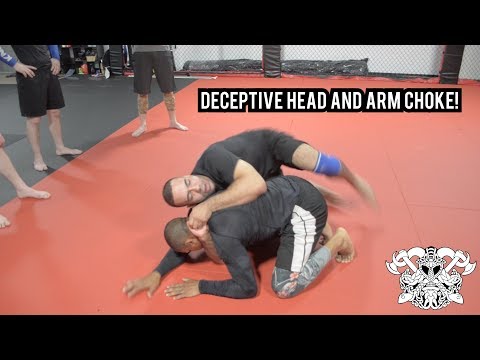
Arm Triangle Choke — From Turtle·Steven Strangles People
A deceptive way of attacking the head and arm choke. The trick is first stopping your opponent form scrambling up after …
1 / 2
3 videos
Что говорят инструкторы
The arm triangle choke from turtle position is executed by first establishing control of the opponent's head and hips to prevent escape or the Peterson roll, as emphasized by Steven Strangles People. From this dominant position, the attacker threads an arm under the opponent's armpit and across the neck, creating a channel that captures both the arm and neck together. McDojoLife's Eli Knight details multiple entry variations: entering by the neck and exiting by the armpit (anaconda setup), or entering by the armpit and exiting by the neck (Darce variation). Nicolas Renier stresses the importance of arm placement—the forearm must compress the neck rather than the armpit, and the attacker should delay closing until achieving proper positioning to avoid telegraphing the technique and allowing the opponent to open the trapped arm or transition to a guillotine. All three instructors agree on the fundamental mechanics: the attacking arm's hand clasps the bend of the elbow, the attacker's body drives forward to increase pressure, and the legs may be used to assist the squeeze. Steven Strangles People and Nicolas Renier emphasize the speed required to finish before the opponent escapes laterally, while McDojoLife provides detailed variations including bulldog headlock hybrids and Peruvian neck cranks that combine leg and arm pressure simultaneously.
Сформировано на основе 3 инструкторов
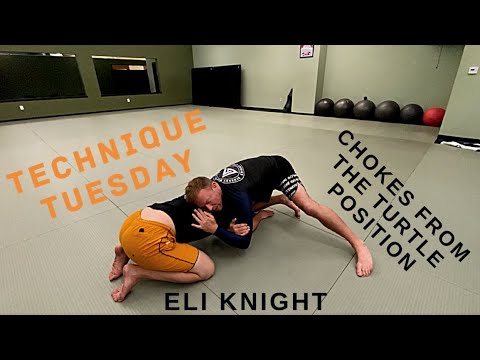
McDojoLife — Technique Tuesday: Eli Knight - Chokes from turtle position: Comprehensive breakdown of multiple arm triangle variations from turtle, including anaconda choke setup, Darce choke, arm-in guillotine, and bulldog headlock hybrids; detailed mechanics of threading the arm and using leg assistance.
Steven Strangles People — Head and Arm Choke from the Turtle Position - Professor Steven Williams: Emphasis on initial head and hip control to prevent Peterson roll escape; detailed grip mechanics (palm-to-palm vs. S-grip); rapid leg positioning and scissor action to maximize torque and finish the choke quickly.
NRFight Club par Nicolas Renier — [EN] HOW TO HAVE A STRONG ARM-TRIANGLE FROM THE TURTLE SITUATION: Strategic approach to avoiding telegraphing the technique and distinguishing arm triangle (arm near head) from guillotine (arm far from head); emphasis on correct forearm placement on the neck rather than armpit and using full body pressure rather than hand strength alone.
Изучить технику
Учебных курсов по этой технике пока нет.
Войдите, чтобы предложить курс.
Оценки
Уровень опасности
Риск травмы для человека, к которому применяется техника
9
Экстремальный9/10
Direct vascular choke; defender’s compact turtle position can make it difficult to relieve pressure once collapsed.
Сложность
Уровень мастерства, необходимый для надёжного выполнения техники
Продвинутый
Допустимость на соревнованиях
Разрешена ли техника по основным соревновательным правилам
IBJJFIJFFIAS Sport SamboUnified MMAADCC
Заметки по тренировке
✓Patience is key—set grips first, then collapse or roll. Block defender’s far hip to prevent granby roll or guard recovery. Shoulder depth is more important than speed; once arm is across, small angle changes seal the choke.
Типичные ошибки
!Not collapsing the turtle before squeezing
!Letting trapped arm slide back under chest
!Leaning too far forward and getting rolled
!Trying to finish with arm power instead of chest/shoulder pressure
Official Kodokan ground technique classification system
3ДругоеJapanese Martial Arts Standard Terminology (武道用語)
Established Japanese martial arts naming convention — native Japanese term (和語/漢語)
4ЦитатаKodokan Judo — Official Katame-waza Classification (肩固め Kata-gatame)
Japanese terminology sourced from Kodokan Judo — Official Katame-waza Classification (肩固め Kata-gatame)
Сообщество
Атлетизм
Requires
hip flexibility, long legs relative to torso
Favours
longer limbs for easier figure-four lock around head and arm
Key muscles
hip adductors, hamstrings, quadriceps
Подтехники
Ищите по тому, что делает техника, — а не по её названию
Каждое движение в любом боевом искусстве обладает рядом универсальных свойств. Комбинируйте параметры ниже, чтобы найти нужный инструмент или сравнить аналоги из разных стилей.
One of the most reliable submissions from turtle breakdown; often transitions directly into mount or side control finishes.
Часто задаваемые вопросы
How do I position my body to apply the arm triangle choke from turtle?
Get your chest toward the base of your opponent's shoulder so their head moves into your diaphragm, then cup your second hand and drive forward while getting up on the balls of your toes. According to Eli Knight, you want to cut back in throughout the squeeze to create a tight wedge.
What do I do if my opponent blocks my arm when I'm setting up the choke from turtle?
Cup to the back of their bicep, pull back and drag to open the space, then shoot your arm all the way through under their armpit with the back of your hand against the back of their lat and shoulder. This entry allows you to transition into the arm triangle or anaconda choke.
How do I finish the arm triangle once I have my arm in position?
Drive your elbow down to the floor and put your hand in the bend of your elbow, then squeeze and drive your hips forward into them. Nicolas Renier emphasizes closing your elbows and bringing the opponent's head to you while pushing with your body to make the choke tighter.
What's the key to getting a strong arm triangle from turtle position?
Find space to break your opponent's balance first, then connect your arm properly so your triceps and hips create the pressure rather than relying on hand strength. As Nicolas Renier explains, your palm should connect with your other palm to maximize the wedge effect.
Как работает Arm Triangle Choke — From Turtle?
A flexion wrist lock involves forcing the hand downward toward the inner forearm (palmar flexion), applying pressure on the radiocarpal joint. Causes intense pain and injury risk.
Откуда происходит Arm Triangle Choke — From Turtle?
An extension of classical kata gatame in Judo, adapted for turtle breakdowns in BJJ and Sambo. Popular in MMA as turtle is a common defensive posture.
Насколько опасен Arm Triangle Choke — From Turtle?
Danger: 9/10 | Direct vascular choke; defender’s compact turtle position can make it difficult to relieve pressure once collapsed.
Как подготовить Arm Triangle Choke — From Turtle?
Стандартная цепочка подготовки: Establish Position → Create the Threat → Secure the Hold → Finish.
Как защититься от Arm Triangle Choke — From Turtle?
Стандартные контрприёмы: Early Recognition — identify the submission attempt early and begin defence immediately / Posture and Base — maintain strong posture and base to prevent submission setups / Grip Fight — deny the attacker their preferred gripping configuration.
Какие есть варианты Arm Triangle Choke — From Turtle?
Распространённые варианты: Standard turtle collapse; Rolling kata gatame from turtle; Turtle to mount kata gatame transition.
Насколько эффективен Arm Triangle Choke — From Turtle на соревнованиях?
Turtle arm triangles are used in BJJ competition when the bottom player turtles to avoid giving up pass points.
Какие типичные ошибки при выполнении Arm Triangle Choke — From Turtle?
Основные ошибки, на которые стоит обратить внимание: Not collapsing the turtle before squeezing / Letting trapped arm slide back under chest / Leaning too far forward and getting rolled / Trying to finish with arm power instead of chest/shoulder pressure.
Какие ещё названия есть у Arm Triangle Choke — From Turtle?
Arm Triangle Choke — From Turtle также известен как Kata Gatame — From Turtle, A head-and-arm choke variation applied against the turtle position. The attacker threads under or around the defender’s arm to force it across the neck, then drops the shoulder and chest beside the head to create carotid compression. The finish is achieved after collapsing the turtle, rolling the defender, or transitioning to mount or side control while maintaining the choke..
![[EN] HOW TO HAVE A STRONG ARM-TRIANGLE FROM THE TURTLE SITUATION](https://img.youtube.com/vi/f2Sm-KgO-jA/hqdefault.jpg)