Kesa Gatame Attacks
0
Kesa Gatame·Gracie Ohio Jiu-Jitsu Academy
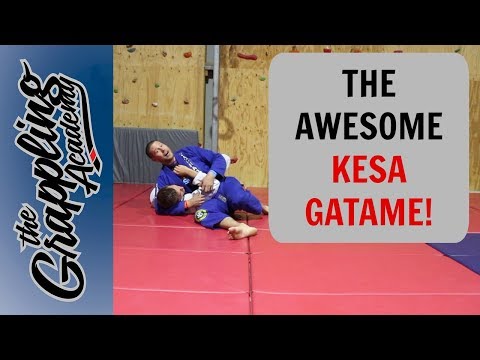
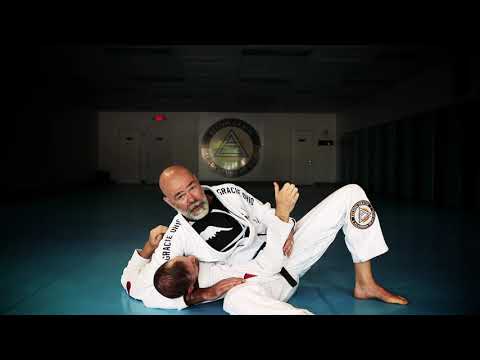
In this video we talk about the kesa-gatame. This is a very good control position and has a lot of possibilities for sub…
Перевод: scarf hold
The Kesa Gatame subfamily covers the scarf hold variation of side control, where the controlling fighter wraps one arm around the opponent's head and the other controls the near arm, with the hips turned to face the opponent's head. [1] Kesa gatame is one of the most traditional pinning positions in judo, providing extremely strong pinning pressure through the hip-and-shoulder weight distribution. [1],[2] The position has several variations including standard kesa, modified kesa (kuzure-kesa-gatame), and reverse kesa, each with different control and attack options. [2],[3]
Kesa gatame is one of the strongest pinning positions in judo, capable of generating immense downward pressure that makes escape extremely difficult. [1] In judo competition, kesa gatame is one of the most frequently used pins for ippon (full-point) osaekomi victories. [1] In BJJ, kesa gatame is considered less secure than standard side control because it can expose the back if the bottom fighter escapes the hip, but it remains effective when used with proper pressure. [2]
Kesa gatame is one of the original osaekomi-waza (pinning techniques) in Kodokan Judo, formalised by Jigoro Kano. [1] Josh Barnett, a catch wrestling and MMA practitioner, revived interest in kesa gatame in MMA competition, demonstrating its effectiveness as both a control position and submission setup. [2]
Изображений для этой техники пока нет.
Войдите, чтобы предложить изображение.
In this video we talk about the kesa-gatame. This is a very good control position and has a lot of possibilities for sub…
SALE SALE SALE OVER 50% OFF – BOX SET – ALL 4 COURSES 50% OFF CLICK HERE – https://bit.ly/2lAOHmp • The Blue Belt Sup…
Учебных курсов по этой технике пока нет.
Войдите, чтобы предложить курс.
Риск травмы для человека, к которому применяется техника
Top positions enable pressure and striking; rib compression risk under heavy pressure
Уровень мастерства, необходимый для надёжного выполнения техники
Разрешена ли техника по основным соревновательным правилам
Brazilian Jiu-Jitsu: Theory and Technique (Renzo Gracie & Royler Gracie, 2001)
Alias sources — [1] Kodokan Judo (Kano, 1986) [2] Jiu-Jitsu University (Ribeiro, 2008) [3] Jiu-Jitsu University (Ribeiro, 2008)
Effectiveness sources — [1] Kodokan Judo (Kano, 1986) [2] Jiu-Jitsu University (Ribeiro, 2008)
Standard Japanese martial arts terminology (kanji/hiragana)
Established Japanese martial arts naming convention — native Japanese term (和語/漢語)
Alias sources — [1] Kodokan Judo (Kano, 1986) [2] Jiu-Jitsu University (Ribeiro, 2008) [3] Jiu-Jitsu University (Ribeiro, 2008)
Effectiveness sources — [1] Kodokan Judo (Kano, 1986) [2] Jiu-Jitsu University (Ribeiro, 2008)
chest-to-chest pressure, hip positioning, crossface control
broad chest and shoulders for heavy top pressure
pectorals, deltoids, core, hip extensors
Каждое движение в любом боевом искусстве обладает рядом универсальных свойств. Комбинируйте параметры ниже, чтобы найти нужный инструмент или сравнить аналоги из разных стилей.
Hon Kesa Gatame is the basic scarf hold in judo — the foundational pinning technique from which all other Kesa Gatame variations derive. [1] The attacker sits beside the pinned opponent, wraps one arm around their head, grips their arm under the armpit with the other hand, and spreads the legs wide for base. [1] It is the most commonly taught hold-down in judo and the first Osae-komi-waza in the Kodokan curriculum. [1]
The Kuzure Kesa Gatame (modified scarf hold) is the variation of kesa gatame where the controlling fighter underhooks the far arm instead of wrapping around the head, providing different control dynamics and attack options. [1] The underhook-based control is sometimes preferred over the head wrap because it provides better resistance to the opponent's escape attempts and transitions. [1,2] Kuzure kesa gatame is one of the recognised pinning techniques in judo's official syllabus. [2,3]
The Reverse Kesa Gatame positions the controlling fighter facing the opponent's legs rather than the head, with the arm wrapping around the opponent's waist or hip area. [1] Reverse kesa gatame provides different submission and transition options than standard kesa, particularly access to leg attacks and knee-on-belly transitions. [1,2] The reversed orientation changes the control dynamics, making certain escapes easier but providing unique attacking angles. [2,3]
The Standard Kesa Gatame wraps one arm around the opponent's head, controls the near arm with the other hand, and turns the hips to face the opponent's head, with the near hip pressing against the opponent's side. [1] The standard kesa gatame provides crushing pinning pressure through the hip drive and head-wrap control, making it one of the most effective pinning positions in all of grappling. [1,2] From standard kesa, the controlling fighter can attack with head-and-arm chokes, arm cranks, and transitions to mount. [2,3]
Turn both of your knees to face your opponent rather than keeping them pointed to the side. The Grappling Academy emphasizes that proper knee positioning makes a significant difference in the effectiveness of the technique—if you don't adjust your knees correctly, you won't even tap people.
Control and grab the head, and don't let go of it. The Grappling Academy notes that controlling the head works reliably in this position.
If you don't control your opponent properly, they can insert hooks and take your back, leaving you vulnerable to being choked. The Grappling Academy warns that poor positioning in Kesa Gatame can quickly turn the tables, going from you being on top to having your back taken.
Slide your knee underneath your opponent's shoulder to control their arm, then trap their arm behind your knee against your thigh. Create counter pressure on the shoulder by holding it down while moving one knee down and the other knee up to apply the lock. Gracie Ohio Jiu-Jitsu Academy explains this arm lock can also become a shoulder lock if the opponent's thumb turns down.
The Kesa Gatame subfamily covers the scarf hold variation of side control, where the controlling fighter wraps one arm around the opponent's head and the other controls the near arm, with the hips turned to face the opponent's head. Kesa gatame is one of the most traditional pinning positions in judo, providing extremely strong pinning pressure through the hip-and-shoulder weight distribution.
Kesa gatame is one of the original judo osaekomi-waza (pinning techniques), named for the scarf-like draping of the arm around the opponent's head. It has been part of judo's curriculum since the art's founding and was adopted into BJJ and other grappling systems.
IBJJF: разрешён — Legal, mount scores 4 points — highest-scoring position; IJF: разрешён — Legal, osaekomi (pin) — 10-19 seconds scores waza-ari, 20 seconds scores ippon; ADCC: разрешён — Legal, mount scores 2 points; Unified MMA: разрешён — Legal dominant position; UWW: разрешён — Legal, back exposure scores points, pin ends match by fall; FIAS Sport Sambo: разрешён — Legal, pin scores points
Оценка опасности 3/10. Moderate — top positions enable pressure and striking; rib compression risk under heavy pressure
Стандартная цепочка подготовки: Pass the Guard → Settle Weight → Control Arms → Threaten Submissions.
Стандартные контрприёмы: Bridge (Upa) — explosive hip elevation to off-balance the top player / Elbow-Knee Escape (Shrimp) — create space by driving elbow to knee and hip-escaping / Frame — establish forearm frames to prevent the top player from settling weight.
Распространённые варианты: Standard side control (crossface and underhook, chest on chest); Kesa gatame (head control with arm trapped, hip facing the opponent); Reverse kesa gatame (facing the opponent's legs with arm control); Modified side control (arm under the head, leg-side arm controlling the hip).
Kesa gatame is one of the most commonly scored pins in judo competition at the Olympic and World Championship level. Josh Barnett used kesa gatame to control and submit opponents in multiple MMA bouts, including his catch wrestling-influenced ground game.
Основные ошибки, на которые стоит обратить внимание: Sitting too far from the opponent — the hip must be tight against their side for maximum control / Not wrapping the head tightly — the head must be hugged against the ribs with the arm / Allowing the near arm to escape — the near-arm control prevents bridging escapes / Leaning away from the opponent — lean into them for weight distribution.
Kesa Gatame также известен как Kesa-gatame, Scarf Hold, Kesa Gatame (袈裟固め), Head and Arm Control.