Kuzure-Kesa-Gatame Tips | Riki Judo Dojo
0
Kuzure Kesa Gatame·Riki Judo Dojo·Added by Admin
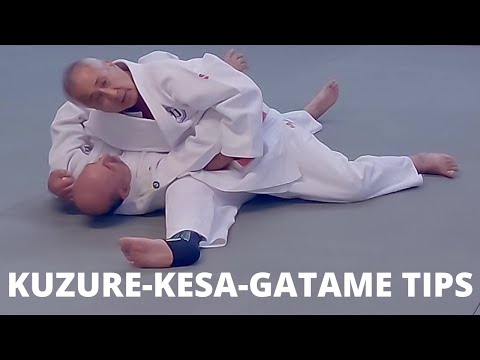
Riki sensei showed us several versions of kuzure-kesa-gatame (modified scarf hold) during judo class on 6-28-2021. 0:00 …
Перевод: modified scarf hold
The Kuzure Kesa Gatame (modified scarf hold) is the variation of kesa gatame where the controlling fighter underhooks the far arm instead of wrapping around the head, providing different control dynamics and attack options. [1] The underhook-based control is sometimes preferred over the head wrap because it provides better resistance to the opponent's escape attempts and transitions. [1],[2] Kuzure kesa gatame is one of the recognised pinning techniques in judo's official syllabus. [2],[3]
Kuzure kesa gatame (modified scarf hold) provides more arm control than standard kesa gatame by gripping under the opponent's far arm instead of around the head, reducing the risk of back exposure. [1]
Kuzure kesa gatame is a traditional Kodokan judo variation of kesa gatame, listed in the Kodokan's official osaekomi-waza classification. [1]
Kuzure kesa gatame (modified scarf hold) is commonly used in judo competition. [1]
Изображений для этой техники пока нет.
Войдите, чтобы предложить изображение.
Riki sensei showed us several versions of kuzure-kesa-gatame (modified scarf hold) during judo class on 6-28-2021. 0:00 …
Учебных курсов по этой технике пока нет.
Войдите, чтобы предложить курс.
Риск травмы для человека, к которому применяется техника
Top positions enable pressure and striking; rib compression risk under heavy pressure
Уровень мастерства, необходимый для надёжного выполнения техники
Разрешена ли техника по основным соревновательным правилам
Karate-Do Kyohan: The Master Text (Gichin Funakoshi, 1935)
Alias sources — [1] Kodokan Judo (Kano, 1986) [2] Dynamic Kodokan Judo (Kudo, 1967) [3] Dynamic Kodokan Judo (Kudo, 1967)
Effectiveness sources — [1] Kodokan Judo (Kano, 1986)
Standard Japanese martial arts terminology (kanji/hiragana)
Established Japanese martial arts naming convention — native Japanese term (和語/漢語)
Alias sources — [1] Kodokan Judo (Kano, 1986) [2] Dynamic Kodokan Judo (Kudo, 1967) [3] Dynamic Kodokan Judo (Kudo, 1967)
Effectiveness sources — [1] Kodokan Judo (Kano, 1986)
balance, lower body stability, quick directional change
well-proportioned build with strong base
calves, quadriceps, core, hip stabilisers
Control of the opponent's arm is very important—bring the hand up tight to your body to maintain control, then come around smoothly. Riki Judo Dojo emphasizes that once you have solid arm control, you can transition into other techniques like shime wasa (chokes) and kansetsu wasa (joint locks) very quickly.
Your leg position must be under the opponent's shoulder, not lower on the ribs, because if your leg is too low, they can bridge easily. Riki Judo Dojo stresses keeping your legs spread out to distribute your weight across a wider area, preventing them from rolling you over.
Shoot your foot through to bring your hips directly up to the side of the opponent's ribs, positioning your leg under their shoulder. This placement is critical for control and prevents them from escaping via bridge.
The Kuzure Kesa Gatame (modified scarf hold) is the variation of kesa gatame where the controlling fighter underhooks the far arm instead of wrapping around the head, providing different control dynamics and attack options. The underhook-based control is sometimes preferred over the head wrap because it provides better resistance to the opponent's escape attempts and transitions.
Kuzure kesa gatame is a traditional judo pinning technique, one of the officially recognised osaekomi-waza in the Kodokan judo syllabus. The 'kuzure' prefix means 'modified' or 'broken,' indicating it is a variation of the standard kesa gatame.
IBJJF: разрешён — Legal, mount scores 4 points — highest-scoring position; IJF: разрешён — Legal, osaekomi (pin) — 10-19 seconds scores waza-ari, 20 seconds scores ippon; ADCC: разрешён — Legal, mount scores 2 points; Unified MMA: разрешён — Legal dominant position; UWW: разрешён — Legal, back exposure scores points, pin ends match by fall; FIAS Sport Sambo: разрешён — Legal, pin scores points
Оценка опасности 3/10. Moderate — top positions enable pressure and striking; rib compression risk under heavy pressure
Стандартная цепочка подготовки: Achieve Position → Stabilize → Maintain → Attack.
Стандартные контрприёмы: Posture Control — maintain strong posture to limit the opponent's offensive options / Escape to Neutral — work back to standing or a neutral position.
Распространённые варианты: Standard variation (primary positioning for control and attack); Offensive variation (configured for submission or striking opportunities); Transitional variation (positioned for quick movement to the next position); Defensive variation (prioritising stability and control over attack).
Kuzure kesa gatame (modified scarf hold) is commonly used in judo competition.
Основные ошибки, на которые стоит обратить внимание: Not securing the underhook deeply — the hand must reach the far shoulder blade for effective control / Losing the near-arm clamp — the near arm must still be controlled as in standard kesa / Sitting too far from the opponent — maintain the tight hip-to-side contact / Not using the underhook to threaten the Americana — the submission threat keeps the opponent defensive.
Kuzure Kesa Gatame также известен как Kuzure Kesa-gatame, Modified Scarf Hold, Broken Kesa Gatame, Kuzure Kesa Gatame (崩袈裟固め).