TMG Clips #215 - The "No Hands" Pass!!
0
Преминаване към маунт без ръце·TeachMeGrappling Coach Brian
What's up guys! In this TMG Clips Video, we go over how to pass the half guard without using your arms to settle into a …
Translation: преминаване към маунт без ръце
Преминаването към маунт без ръце заобикаля полугарда, използвайки единствено натиска на бедрата и разпределението на теглото, без да разчита на хватки с ръце или подхватки. [1] Преминаващият използва бедрата си, за да се плъзне през полугарда директно до маунт позиция. [1]
Преминаването към маунт без ръце е техника, документирана в изчерпателната MMA система на BJ Penn. [1]
Доказана в състезания на ниво UFC от BJ Penn и неговите партньори по тренировка. [1]
Съвременна MMA методология; линия на BJ Penn / Greg Jackson. [1]
Използвано в UFC и професионален MMA състезателен формат
No images yet for this technique.
Sign in to suggest an image.
What's up guys! In this TMG Clips Video, we go over how to pass the half guard without using your arms to settle into a …
PLEASE Click this link to SUPPORT the TeachMeGrappling Channel!!! https://www.patreon.com/TeachMeGrappling or https:/…
PLEASE Click this link to SUPPORT the TeachMeGrappling Channel!!! https://www.patreon.com/TeachMeGrappling or https:/…
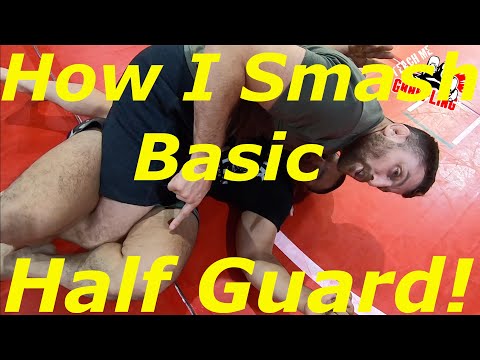
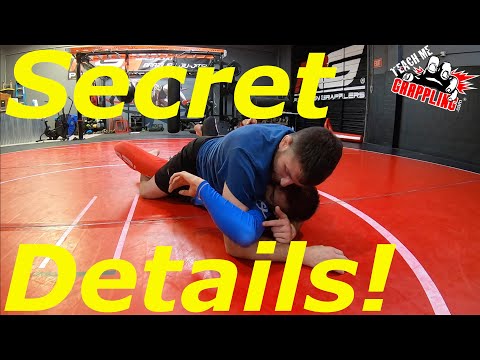
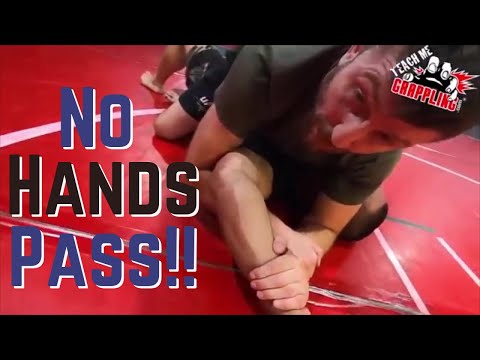
The no-hand pass to mount, also called the basic half guard pass or 'shim,' is a fundamental guard-passing technique executed from the top of half guard without relying on hand control of the opponent's legs. TeachMeGrappling Coach Brian emphasizes that success depends entirely on positional details rather than strength. The foundational setup requires an underhook with a cross-face grip (hand around the neck), with hands locked palm-to-palm. The passer applies shoulder pressure by turning the hips, creating a subtle choking sensation that signals effective execution when the opponent grabs the shoulder. The passer then opens and plants the elbow for balance while walking on the toes to lift the near-side knee and escape the opponent's leg squeeze. Once the knee clears, it is thrust downward to the mat with simultaneous hamstring curling of the heel to the buttocks, preventing the opponent from reclamping half guard. The critical detail emphasized across all three videos is that both feet must exit simultaneously; dangling one foot creates opportunities for the opponent to capture it or execute an elbow escape leading to guard replacement or back-control threats. After securing leg freedom, the passer walks the opponent's arm progressively higher, maintaining the cross-face pressure with forearm control positioned near the biceps rather than the elbow, preventing overhook escapes. The final entry to mount uses a 'tipping' motion to insert the foot past the opponent's knees rather than forcing it straight in, followed by grapevine hooks and submission control via Americana or similar finishes. Coach Brian stresses that these details matter more than athletic advantages, demonstrating the technique against both larger and smaller, flexible opponents to show universal applicability.
Synthesized from 3 instructors
No instructional courses yet for this technique.
Sign in to suggest a course.
Risk of injury to the person this technique is applied to
Позиционна техника
Skill level needed to execute this technique reliably
Whether this technique is allowed under major competition rule sets
Mixed Martial Arts: The Book of Knowledge (Penn, Cordoza & Krauss, 2007)
description, historyOrigin: sourced from Penn, B
description, historyOrigin: sourced from Penn, B
Специфичен за MMA контрол на тялото и натиск
According to Coach Brian, when your opponent grabs your shoulder and looks away, that's a sign you're doing a great job—it means the shoulder pressure is creating a choking sensation that forces them to react.
Coach Brian recommends placing the hand around the head with the palm down, and then locking your hands together with your shoulder driven into the opponent's chest while turning your hip to apply pressure.
Coach Brian emphasizes that when you tip over with your foot already in place and your bottom arm pinned, your opponent cannot post or bridge properly—their arm is trapped together, making it nearly impossible for them to escape or reverse the position.
Coach Brian warns not to place your foot in from a high position, as the opponent can pull their knee up to block it; instead, tip all the way out until your foot gets in low, then bring your other leg over.
Преминаването към маунт без ръце заобикаля полугарда, използвайки единствено натиска на бедрата и разпределението на теглото, без да разчита на хватки с ръце или подхватки. Преминаващият използва бедрата си, за да се плъзне през полугарда директно до маунт позиция.
Преминаването към маунт без ръце е техника, документирана в изчерпателната MMA система на BJ Penn.
IBJJF: легална — Разрешено, преминаването на гард носи 3 точки; IJF: легална — Разрешено — преминаването покрай краката на противника е част от нюваза; ADCC: легална — Разрешено, преминаването на гард носи 3 точки; Unified MMA: легална — Разрешено; FIAS Sport Sambo: легална — Разрешено
Оценка на опасност 3/10. Позиционна техника
Стандартната верига за подготовка: Влизане в контакт → Преминаване към маунт без ръце → Напредване на позицията.
Стандартните контри включват: Задържане на гард / Рамка и излизане / Контра с лост.
Чести варианти: Стандартно преминаване към маунт без ръце; Модифицирано преминаване към маунт без ръце.
Използвано в UFC и професионален MMA състезателен формат
Основни грешки, за които да внимавате: Загуба на баланс / Невъзможност за поддържане на контрол / Лоши преходи.
Преминаване към маунт без ръце е известна също като No Hand Pass to Mount, Преминаване на гард без ръце, Преминаване с натиск към маунт.