Initial Position: Half Guard with Underhook
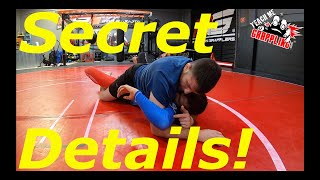
The practitioner establishes half guard with a deep underhook, then secures a classic cross-face grip by locking both hands together. Shoulder pressure is applied directly into the opponent's neck and jaw area, creating immediate positional control.
Shoulder Pressure and Knee Positioning
The instructor elevates the elbow while shifting weight onto the toes, allowing forward momentum. The knee is then planted on the mat and thrust upward in a controlled manner, progressively walking it higher to destabilize the opponent's structure.
Breaking the Overhook Defense
Continued upward pressure with the knee forces the opponent's arm higher until their hand rises above head level. At this critical point, the opponent's structure is considered broken, eliminating their ability to effectively defend or escape.
Maintaining Control Without Arm Triangle
Rather than transitioning to an arm triangle choke, the practitioner maintains the cross-face position with the arm held at mid-height. This control point prevents the opponent from generating leverage or changing their arm position to escape.
Transition to Mount Position
From the secured half-guard position, the instructor simply tips sideways to roll into full mount control. The trapped bottom arm remains pinned, preventing the opponent from bridging, transitioning to knees, or generating effective counter-pressure.
Countering the Roll Escape Attempt
If the opponent attempts to roll the practitioner, their trapped arm forces them to open their legs. The top player immediately re-establishes top control and applies grapevine hooks to prevent any further escape attempts.
Securing Diagonal Hook and Submission
From the mounted position with grapevine hooks engaged, the practitioner activates a diagonal hook using the foot on the opposite side. Hip pressure is then applied to complete the submission sequence.
Mechanical Advantage: Why the Arm Position Matters
A demonstration shows that when an opponent's arm is pinned across their body at head height, they cannot effectively bridge, transition to their knees, or generate upward pressure. This arm placement creates a structural disadvantage that makes all escape routes mechanically unavailable.
TMG Clips #215 - The "No Hands" Pass!!
Key Takeaways
- •Initial Position: Half Guard with Underhook
- •Shoulder Pressure and Knee Positioning
- •Breaking the Overhook Defense
- •Maintaining Control Without Arm Triangle
What's up guys! In this TMG Clips Video, we go over how to pass the half guard without using your arms to settle into a dominant position. The full video will be in the link down below, enjoy!! Full Video: https://www.youtube.com/watch?v=kTL_eSxPQGo PLEASE Click the links below to SUPPORT the TeachMeGrappling Channel!!! https://www.youtube.com/channel/UC8X1oaFtxTGGAueI-sWE4Mg/join (join channel) or https://www.patreon.com/TeachMeGrappling or https://www.paypal.me/CoachBrianPeterson Your contribution is much appreciated and will help me continue to bring you content! 🙏 www.NextLevelGuy.com The NextLevelGuy Podcast with Coach Brian Peterson has been released!! Check it out!
Frequently Asked Questions
What does this video teach about no hand pass to mount?
This video covers initial position: half guard with underhook, shoulder pressure and knee positioning, breaking the overhook defense. It provides detailed instruction from TeachMeGrappling Coach Brian.
How long does it take to learn no hand pass to mount?
The basic mechanics can be understood in a single session, but developing reliable execution requires consistent drilling over weeks of practice. This 8-part breakdown helps structure your training by isolating each phase of the technique.
What are the key details for finishing no hand pass to mount?
From the mounted position with grapevine hooks engaged, the practitioner activates a diagonal hook using the foot on the opposite side. Hip pressure is then applied to complete the submission sequence.