Introduction & Foundational Setup
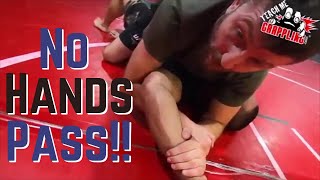
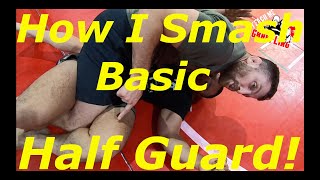
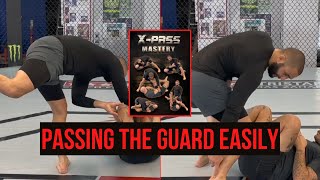
Instructor Brian Peterson begins by demonstrating the no-hands pass from half guard, emphasizing the importance of maintaining hand control through locked palms and open elbows. The fundamental position requires the practitioner to be in half guard while the opponent is on their side with their leg extended low toward the mat.
Identifying the Opponent's Common Defense
When the foot placement is attempted directly, most skilled opponents will close their knee and lift it upward, preventing foot insertion. This defensive response occurs because the opponent can sense the pass attempt and adjusts by keeping their knee elevated rather than leaving it open for the passing foot.
The Proper Foot Insertion Sequence
Rather than inserting the foot immediately, the practitioner should first establish control with the palm locked down while opening the elbow for shoulder pressure. The hip must be turned before attempting to raise the knee and extract it, using subtle hip shifts and knee shaking to escape the opponent's squeeze.
The Knee Thrust & Arm Control Transition
After successfully extracting the knee, the practitioner walks their arm upward and grasps their own forearm, controlling the opponent's arm position. This transition creates a bind that makes it difficult for the opponent to draw their knees to their chest and allows the practitioner to drive toward the mount position.
Critical Error: Premature Foot Release
A common mistake occurs when the practitioner pulls one foot out too early while the other foot dangles, allowing the opponent to capture it and establish quarter guard. This creates a dangerous position where the opponent gains an underhook and potential path to the back, potentially leading to back control if the practitioner loses their arm grip.
Simultaneous Hip & Foot Coordination
The practitioner must coordinate the tippy-toe hip walk with knee clearance and thrust, ensuring both feet exit the half guard position simultaneously. Separating the foot extraction into sequential movements creates a timing gap where the opponent can recapture the trailing ankle.
Maintaining Control Both Feet
Once the passing foot is inserted, both legs must remain controlled until they clear the opponent's position at the same time. Releasing one foot before the other is compared to allowing someone through a door while the door closes on you—the timing must be synchronized for the pass to be secure.
"No Hands Pass" Advanced DETAILS!! Must SEE!
Key Takeaways
- •Introduction & Foundational Setup
- •Identifying the Opponent's Common Defense
- •The Proper Foot Insertion Sequence
- •The Knee Thrust & Arm Control Transition
PLEASE Click this link to SUPPORT the TeachMeGrappling Channel!!! https://www.patreon.com/TeachMeGrappling or https://www.paypal.me/CoachBrianPeterson Your contribution is much appreciated and will help me continue to bring you content! 🙏 www.NextLevelGuy.com The NextLevelGuy Podcast with Coach Brian Peterson has been released!! Check it out! http://teachmegrappling.com This video I breakdown the no hands pass again with more info that I missed in my last video a few days ago! Check out the details and you are sure to find something useful! Enjoy! If you have any questions, comments, or suggestions, please comment below. More videos to come! Please like, share, and subscribe!!
Frequently Asked Questions
What does this video teach about no hand pass to mount?
This video covers introduction & foundational setup, identifying the opponent's common defense, the proper foot insertion sequence. It provides detailed instruction from TeachMeGrappling Coach Brian.
How long does it take to learn no hand pass to mount?
The basic mechanics can be understood in a single session, but developing reliable execution requires consistent drilling over weeks of practice. This 7-part breakdown helps structure your training by isolating each phase of the technique.
What are the key details for finishing no hand pass to mount?
The practitioner must coordinate the tippy-toe hip walk with knee clearance and thrust, ensuring both feet exit the half guard position simultaneously. Separating the foot extraction into sequential movements creates a timing gap where the opponent can recapture the trailing ankle.