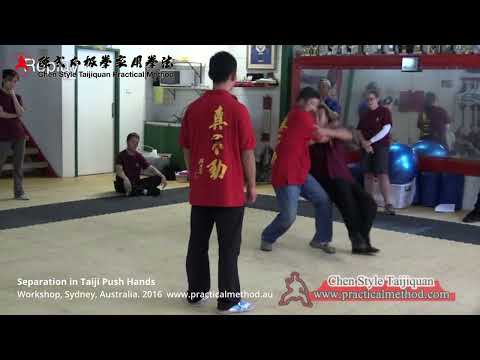
Separation in Taiji Push Hands Training - Master Chen Zhonghua
0
Пийл енд Ротейт·Practical Method Sydney·Added by Admin
In this video, Master Chen Zhonghua provided Push Hands instructions to Instructor Chen Xu (in red) and workshop partici…
Translation: обелване и завъртане
Излизането „пийл енд ротейт
Излизането пийл енд ротейт свлича ръката на противника, с която задушава, като едновременно завърта тялото с лице към него. [1]
Разработена в BJJ като метод за излизане от задна позиция. [1]
Използвана в BJJ и MMA състезания. [1]
No images yet for this technique.
Sign in to suggest an image.
In this video, Master Chen Zhonghua provided Push Hands instructions to Instructor Chen Xu (in red) and workshop partici…
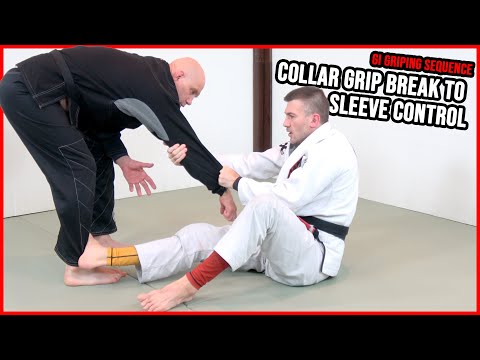
It's incredibly important to dominate the gripfighting battle in BJJ because a single grip can determine the course of a…
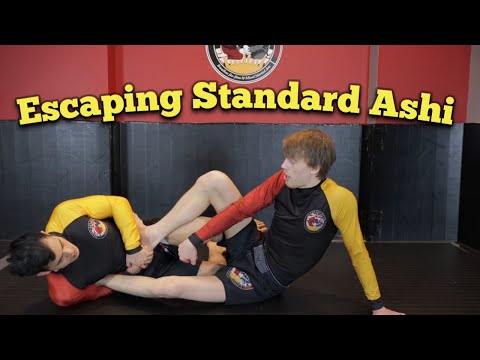
So we have put on the boot and need to actually start working to escape this position, and submission threat. We have d…
The Peel and Rotate technique is a hand-fighting escape method that leverages differential control and strategic body positioning to break opponent dominance. Master Chen Zhonghua of Practical Method Sydney teaches this through a Taiji push hands framework, emphasizing the metaphor of peeling an apple—the practitioner must separate the opponent's grip layer-by-layer using two distinct contact points rather than applying undifferentiated force. Chen stresses that power control must migrate downward through the body; when the opponent's upper body loses contact, their base remains vulnerable. Stephan Kesting demonstrates a modern Brazilian Jiu-Jitsu application, where internally rotating the opponent's shoulder via frame extension and lever control allows the defender to escape a collar grip and transition to preferred guard positions. Kesting notes that internal rotation—rotating the arm from thumb-up to thumb-down orientation—amplifies mechanical advantage and makes re-gripping difficult. RVV BJJ applies analogous principles in leg lock defense, describing how peeling the opponent's foot off the hip via lever control and strategic hip positioning creates mobility for escape. All three instructors agree on the core mechanism: isolating and controlling an opponent's limb at its lever point, managing distance through frames, and exploiting the mobility gap created by that control. Where they differ is application context: Chen emphasizes continuous power flow and body alignment; Kesting focuses on grip transitions and guard establishment; RVV BJJ prioritizes hip mobility and positional stacking to prevent submission.
Synthesized from 3 instructors
No instructional courses yet for this technique.
Sign in to suggest a course.
Risk of injury to the person this technique is applied to
Умерена — излизанията от задна позиция трябва да адресират заплахата от задушаване по време на излизането; спешността увеличава риска от нараняване
Skill level needed to execute this technique reliably
Whether this technique is allowed under major competition rule sets
Jiu-Jitsu University (Saulo Ribeiro, 2008)
Alias sources — [1] Back Attacks: Enter the System (John Danaher, 2018) [2] Brazilian Jiu-Jitsu: Theory and Technique (Renzo Gracie & Royler Gracie, 2001)
Effectiveness sources — [1] Jiu-Jitsu University (Ribeiro, 2008)
Standard katakana transliteration of Western martial arts terminology (外来語) — used in Japanese MMA, boxing, and BJJ communities
Alias sources — [1] Back Attacks: Enter the System (John Danaher, 2018) [2] Brazilian Jiu-Jitsu: Theory and Technique (Renzo Gracie & Royler Gracie, 2001)
Effectiveness sources — [1] Jiu-Jitsu University (Ribeiro, 2008)
експлозивна сила при мост с бедрата, умение за шримпинг, усет за момента
силни глутеуси и разгъвачи на бедрото за мощни мостове
глутеуси, разгъвачи на бедрото, корем, четириглав мускул
According to Stephan Kesting, internal rotation of the shoulder is critical because without it, the technique simply doesn't work—the grip break fails if you try to execute the move with just external rotation or neutral position.
Stephan Kesting explains that peel and rotate works significantly better from standing than kneeling because standing allows you to create a greater height difference and level change, which generates the leverage needed for the rotation to be effective.
Stephan Kesting emphasizes that breaking the grip using this technique immediately opens doors to whatever guard assault you want to launch—your skill level determines what you do with the position you've created.
Излизането „пийл енд ротейт
Техниката пийл енд ротейт е разработена като надежден метод за излизане от задна позиция, който едновременно адресира заплахата от задушаване и позиционното излизане. Тя се преподава широко в BJJ и MMA като високопроцентно излизане от задна позиция.
Unified MMA: легална — Разрешена отбранително-преходна техника; IBJJF: легална — Разрешена; IJF: легална — Разрешена; ADCC: легална — Разрешена; UWW: легална — Разрешена; FIAS Sport Sambo: легална — Разрешена
Оценка на опасност 4/10. Умерена — излизанията от задна позиция трябва да адресират заплахата от задушаване по време на излизането; спешността увеличава риска от нараняване
Стандартната верига за подготовка: Създаване на пространство → Нарушаване на контрола → Изпълнение на излизането → Възстановяване на позицията.
Стандартните контри включват: Поддържане на натиск — запазвайте постоянно разпределение на теглото за ограничаване на пространството за излизане / Предвиждане на посоката — четете опита за излизане и блокирайте рано / Преход — преминете в нова позиция, когато настоящата е застрашена.
Чести варианти: Мост и преобръщане (упа) (експлозивен мост с хващане на ръка и крак за обръщане на …); Излизане с лакът-коляно (рамкиране и шримпинг за възстановяване на гарда); Влачене на крака (влачене на крака на противника с петата за създаване на п…); Комбинирано излизане (мост за провокиране на реакция, последван от шримпинг, ко…).
Използвана в BJJ и MMA състезания.
Основни грешки, за които да внимавате: Свличане на горната кука вместо долната — долната кука е по-достъпна и отстраняването ѝ открива ъгъла за излизане / Свличане с една ръка — двете ръце на глезена осигуряват необходимата сила за отстраняването му / Свличане без предварителен мост — мостът създава пространство между бедрото и куката / Неизвършване на незабавна ротация след свличането — прозорецът за завъртане е малък; ротирайте мигновено.
Пийл енд Ротейт е известна също като Pīru Ando Rōtēto, Свличане на хвата и завой, Обелване и завъртане за излизане.