Rear Triangle Overview
The rear triangle choke, known as ura sankaku in judo, is an alternative back attack applied from rear mount when conventional rear naked chokes prove ineffective. This technique is particularly useful against opponents who successfully defend the basic choke by maintaining arm position.
Positioning and Hip Control
The attacker establishes control by stepping on the opponent's hip while tapping off the shoulder to break posture. The attacker uses their foot as a base to create a kickstand effect while scooting their hip outward, which can transition into a Kimura trap or directly to the triangle setup.
Arm Trap with Leg Press
Rather than relying on intricate leg positioning, the attacker executes a simple leg press over the opponent's arm to establish the trap. However, when the opponent successfully keeps their arm defended, the triangle can be transitioned to without the arm being fully trapped.
Wrist Control and Hip Angling
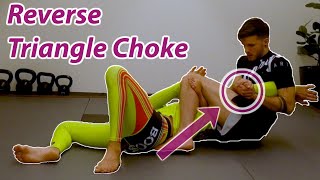
The attacker covers the opponent's wrist while angling their hip upward to position their Achilles tendon across the wrist. Maximum internal rotation of the opponent's shoulder improves the effectiveness of the subsequent triangle choke.
Triangle Alignment and Closure
The triangle must be properly angled to compress the carotid arteries rather than the back of the neck. The attacker positions their calf across the side of the opponent's neck while their hip flexor and thigh drive the opponent's shoulder inward, then closes the triangle with precise pressure.
Posture Break and Finishing
Hooking under the opponent's arm and establishing a posture break tightens the triangle and makes escape more difficult, though this positioning aid is not strictly necessary. The attacker maintains their hip angle to ensure the Achilles tendon insertion cuts off the artery while the thigh applies rotational pressure to complete the submission.
Alternative Triangle Setup
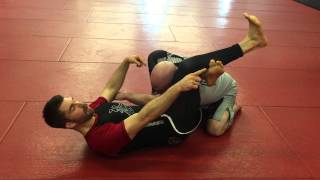
A second triangle variation involves stepping the leg across the opponent's body and extracting the other leg to achieve a more conventional triangle alignment. This setup remains effective whether the opponent stays on their side or attempts to rotate toward the attacker.
Finishing the Weak-Side Triangle
The attacker ensures the Achilles tendon insertion cuts the carotid artery while maintaining sufficient hip extension so the opponent's shoulder rotates into their neck. Breaking posture with the thigh completes the submission, with the technique available from both the right and left leg positions.
How to do the Rear Triangle Choke (or 'Ura Sankaku')
Key Takeaways
- •Rear Triangle Overview
- •Positioning and Hip Control
- •Arm Trap with Leg Press
- •Wrist Control and Hip Angling
Rob Biernacki breaks down the rear triangle choke (aka Ura Sankaku). This is from the back attacks module that will be available for free on the Grapplearts BJJ Master App - download that free at https://www.grapplearts.com/masterapp
Frequently Asked Questions
What does this video teach about rear triangle?
This video covers rear triangle overview, positioning and hip control, arm trap with leg press. It provides detailed instruction from Stephan Kesting.
How long does it take to learn rear triangle?
The basic mechanics can be understood in a single session, but developing reliable execution requires consistent drilling over weeks of practice. This 8-part breakdown helps structure your training by isolating each phase of the technique.
What are the key details for finishing rear triangle?
A second triangle variation involves stepping the leg across the opponent's body and extracting the other leg to achieve a more conventional triangle alignment. This setup remains effective whether the opponent stays on their side or attempts to rotate toward the attacker.