Double Under Guard Entry
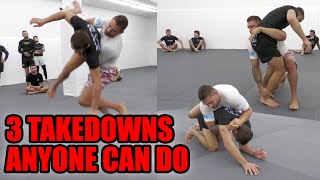
The instructor begins in an over-under clinch position, demonstrating the initial grip where one arm controls under the opponent's arm while the other wraps over. He emphasizes the importance of pummeling to establish double unders, which provides a more dominant control position. The goal is to secure both arms inside the opponent's arms before executing the takedown.
Proper Posture and Head Position
When transitioning from over-under to double unders, the instructor must stand upright to prevent the opponent from countering with a headlock. Maintaining an elevated posture with a strong base protects against defensive headlock attempts. The instructor demonstrates the critical positioning where elbows remain tucked and the hips stay engaged.
High Lock Grip and Swing Mechanics
Once double unders are secured, the grip should be maintained high on the opponent's neck or upper back, using either a palm-to-palm lock or S-grip. The takedown is executed by swinging the opponent one direction while throwing the hips in the opposite direction, allowing the attacker to rotate behind the opponent's back. A lifting motion combined with the directional change completes the takedown.
Hip Positioning for Base Defense
Strong hip positioning is essential to prevent the opponent from executing a counter trip or escape. The instructor demonstrates keeping hips engaged and directly under the body rather than trailing behind. This defensive posture prevents the opponent from accessing the legs or executing effective trips.
Defense Against Head Block
When the opponent attempts to defend by blocking with their head or compressing downward, the instructor responds with a double snap using both hands on the shoulders, rotating the opponent face-up. This creates the opportunity for a follow-up headlock or continued control. The snap technique disrupts the opponent's defensive frame and maintains the attacker's momentum.
Elbows Down Defense and Hip Drop Counter
If the opponent brings their elbows down tightly to defend against the body lock, the instructor drops their grip down to the opponent's hips and executes a bear hug takedown. This adjustment maintains control when the upper body defense is strong. The hip drop method is particularly effective when the opponent resists the initial high lock pressure.
Creating Space and Adjusting Grip Height
The instructor can create space within the body lock by slightly loosening the squeeze, then re-adjusting the grip height to the opponent's hips. This technique allows the attacker to transition from upper body control to lower body control. Slipping the grip down and pulling closer reinitializes the takedown sequence with renewed leverage.
Lift Versus Trip Finishing Options
The takedown can be completed using either a lifting motion with the back or a trip that targets the opponent's legs. Both methods can be executed from the body lock position depending on the opponent's weight distribution and defensive posture. The instructor demonstrates switching between these options based on where the opponent's energy and weight are positioned.
Basic CLINCH Bodylock Takedowns for EVERYONE!
Key Takeaways
- •Double Under Guard Entry
- •Proper Posture and Head Position
- •High Lock Grip and Swing Mechanics
- •Hip Positioning for Base Defense
This video I teach my morning class a basic series I like from the pummel position. Check out the details and you are sure to find something useful! Enjoy! If you have any questions, comments, or suggestions, please comment below. More videos to come! Please like, share, and subscribe!! PLEASE Click this link to SUPPORT the TeachMeGrappling Channel!!! https://www.patreon.com/TeachMeGrappling or https://www.paypal.me/CoachBrianPeterson Your contribution is much appreciated and will help me continue to bring you content! 🙏 www.NextLevelGuy.com The NextLevelGuy Podcast with Coach Brian Peterson has been released!! Check it out!
Related Techniques
Frequently Asked Questions
What does this video teach about body-lock takedown to back?
This video covers double under guard entry, proper posture and head position, high lock grip and swing mechanics. It provides detailed instruction from TeachMeGrappling Coach Brian.
How long does it take to learn body-lock takedown to back?
The basic mechanics can be understood in a single session, but developing reliable execution requires consistent drilling over weeks of practice. This 8-part breakdown helps structure your training by isolating each phase of the technique.
What are the key details for finishing body-lock takedown to back?
The instructor can create space within the body lock by slightly loosening the squeeze, then re-adjusting the grip height to the opponent's hips. This technique allows the attacker to transition from upper body control to lower body control. Slipping the grip down and pulling closer reinitializes the takedown sequence with renewed leverage.
Related videos
How to Takedown From a Rear Bodylock | #Wrestling for #JiuJitsu
Etienne Duchesne | Victimweight Jiu Jitsu
Back Bend Takedown by John Danaher
BJJ Fanatics
THE KING OF ALL TAKEDOWNS: THE BODY LOCK TAKEDOWN FOR ALL GRAPPLING SYSTEMS.
Kata Jiu Jitsu
How To Defend Double Jab: Body Lock Takedown To Ground & Pound
TRITAC Martial Arts
3 Simple Takedowns from Rear Body Lock | Nicky Rod B-Team Technique
The B-Team