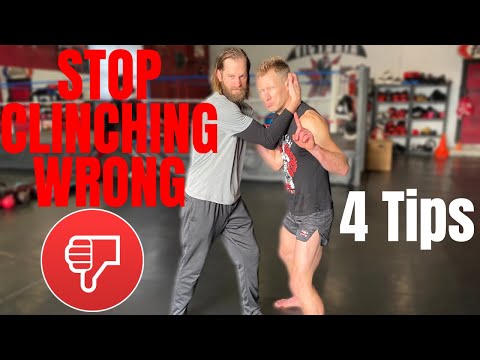
Clinch Like A Thai Fighter! 4 Common Clinch Mistakes To Avoid
0
Dirty Boxing Clinch·Gabriel Varga
After clinching in Thailand for 10 weeks I learnt how to do things properly. But after returning home I realized so man…
Translation: Dirty boxing clinch — 'dirty' refers to the inside fighting tactics (collar ties, short punches, elbows, knees) that fall outside the clean boxing paradigm of long-range exchanges
The Dirty Boxing Clinch is an MMA-specific clinch position where one hand controls the opponent's head via a collar tie (cupping the back of the neck) while the other hand delivers short punches, elbows, and uppercuts, creating a devastating inside-fighting position that bridges the gap between wrestling and striking. [1] The term 'dirty boxing' comes from the perception in traditional boxing that clinch-range striking is unsportsmanlike — in boxing, the referee separates clinched fighters, but in MMA the clinch is a contested fighting range where short strikes, knees, elbows, and takedowns are all legal. [1],[2] Randy Couture is widely credited with popularising dirty boxing in MMA, using his Greco-Roman wrestling clinch skills to control opponents' heads while delivering devastating short uppercuts, elbows, and knees — a style that neutralised both strikers (by closing distance) and wrestlers (by maintaining upper body control while striking). [2],[3] BJ Penn documented the Dirty Boxing Clinch as a core MMA skill in The Book of Knowledge, demonstrating how the collar tie provides head control that enables both strikes AND takedown entries from the same position. [1] The technique's tactical brilliance lies in its dual-threat nature: the opponent cannot defend the short strikes without loosening their takedown defence, and cannot defend the takedowns without absorbing strikes — creating an unresolvable defensive dilemma. [1],[2] In UFC competition, the dirty boxing clinch against the cage has become one of the most common and effective fighting positions, with fighters like Khabib Nurmagomedov, Daniel Cormier, and Colby Covington building entire gameplans around cage-clinch dirty boxing. [3]
Dirty boxing in its modern MMA form was pioneered by Randy Couture, a three-time UFC heavyweight champion and Olympic Greco-Roman wrestling alternate, who recognised that his Greco-Roman clinch skills could be combined with short strikes to create a fighting style uniquely suited to MMA. [2],[3] Couture's systematic approach to clinch striking — using the collar tie, underhooks, and cage to control opponents while delivering uppercuts, elbows, and knees — became the template for MMA dirty boxing from approximately 2003 onward. [3] The concept has older roots: inside fighting in boxing has existed since the bare-knuckle era, and Muay Thai's plum clinch with knee strikes is an ancient precursor. [2] BJ Penn documented the Dirty Boxing Clinch in The Book of Knowledge (2007), integrating it into a complete MMA tactical framework. [1] Since Couture's era, dirty boxing has become a mandatory skill for all professional MMA fighters, with specialists like Daniel Cormier (who inherited Couture's style through training at Team Quest), Khabib Nurmagomedov (who combined Dagestani wrestling clinch with dirty boxing), and Colby Covington (who built an entire career on cage-clinch dirty boxing volume) demonstrating its evolution. [3]
Dirty boxing is one of the most strategically important skill sets in MMA. [1],[2] It solves the 'range problem' that plagues pure strikers and pure wrestlers: strikers are vulnerable when opponents close to clinch range, and wrestlers are vulnerable to strikes during clinch transitions — dirty boxing thrives in exactly this transitional space. [2] Statistically, dirty boxing accounts for a significant percentage of total strikes landed in UFC fights, particularly against the cage. [3] Randy Couture used dirty boxing to defeat Tim Sylvia (UFC 68), Vitor Belfort (UFC 49), and multiple other opponents who were considered superior strikers at range. [3] The technique's greatest tactical advantage is that it forces the opponent to defend BOTH strikes and wrestling simultaneously, creating cognitive overload. [1],[2]
Randy Couture vs Tim Sylvia (UFC 68, 2007) — Couture's dirty boxing dominated the larger Sylvia for five rounds || Randy Couture vs Vitor Belfort (UFC 49, 2004) — clinch dirty boxing neutralised Belfort's striking || Daniel Cormier vs Stipe Miocic (UFC 226, 2018) — dirty boxing in the clinch set up the knockout || Khabib Nurmagomedov — used cage-clinch dirty boxing as a standard component of his ground-and-pound setup || Colby Covington vs Robbie Lawler (UFC on ESPN 5, 2019) — pure dirty boxing volume victory.
No images yet for this technique.
Sign in to suggest an image.
After clinching in Thailand for 10 weeks I learnt how to do things properly. But after returning home I realized so man…
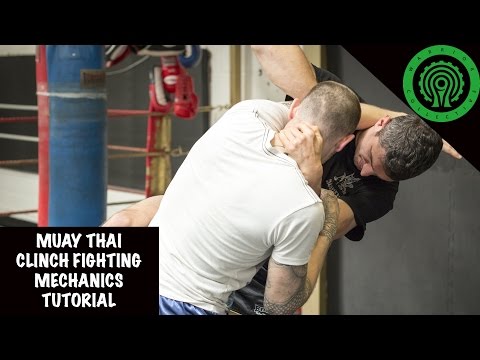
Craig Jose, head instructor of Northern Kings in Newcastle is here filmed by the Warrior Collective giving a tutorial on…
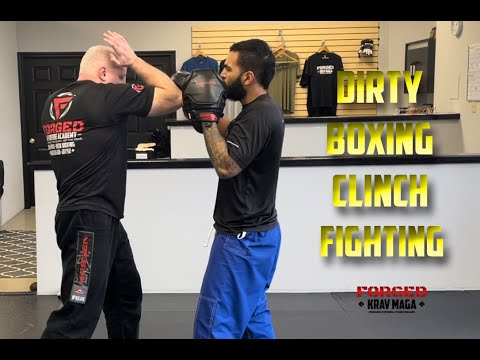
Hey guys, in this video I’m going over a Dirty Boxing Clinch Fighting Drill. Your starting from a 50/50 Clinch position …
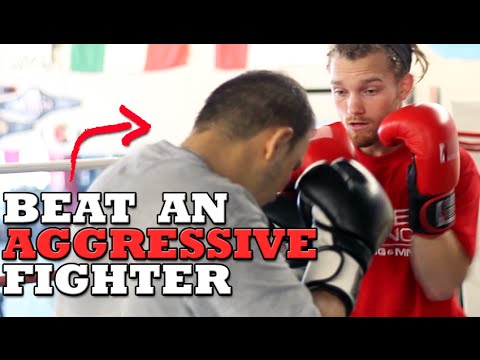
Get More Boxing SECRETS►http://www.MyFightGym.com Here is one of the best dirty boxing technique that is used to beat ag…
Like these MMA lessons !!! Check out the official app http://apple.co/1DIxHwS Watch more MMA: UFC Training Videos video…
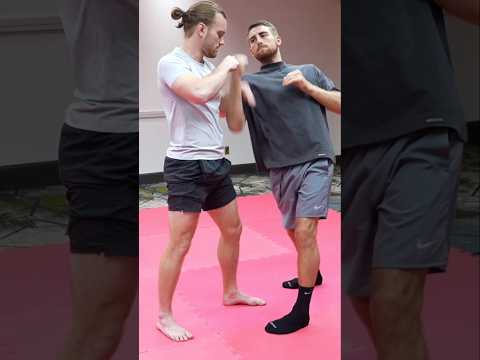
New Podcast LIVE every Wednesday at 9pm EST Icy Mike: Imperfect On the Podbean app: https://icymike.podbean.com/ This is…
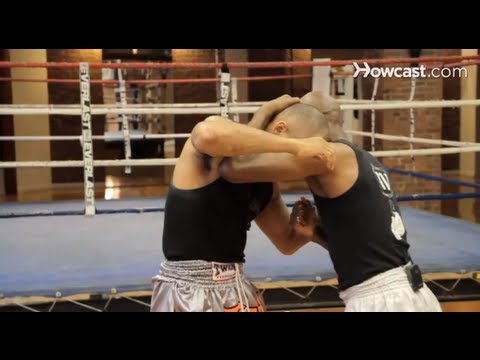
The dirty boxing clinch is a close-range fighting position that emphasizes aggressive pressure and striking while maintaining physical control of an opponent. fightTIPS demonstrates that stepping forward to collide with an aggressive fighter—rather than retreating—prevents opponents from extending their reach effectively; this forward pressure involves driving the shoulder into ribs, smashing into the solar plexus or chin with the head, and lifting the opponent's head with the forehead to create openings for hooks. Danny Mitchell MMA emphasizes structural control through specific framing: the controlling hand should wedge the elbow against the opponent's collarbone with fingertips on top of the head (mimicking a chin-up grip) rather than grabbing the neck, while maintaining an angled stance offset from the opponent to enable striking combinations. This positioning prevents the opponent from getting inside and establishing counter-control. Forge Krav Maga contextualizes the clinch within a broader self-defense framework, detailing how to transition between clinch work and striking: starting from a 50/50 position, practitioners use knees, shoulder bumps, and elbows to either create space for follow-up striking (jabs, crosses) or maintain clinch distance for continued knee attacks. fightTIPS also notes that strong frames and cross-faces from the clinch position enable effective striking angles. All instructors agree that positioning and structural control are prerequisites for effective dirty boxing clinch work, though they emphasize different mechanical details—pressure forward versus angled stance, hand placement versus general framing.
Synthesized from 4 instructors
No instructional courses yet for this technique.
Sign in to suggest a course.
Risk of injury to the person this technique is applied to
The short punches and elbows from dirty boxing cause significant cumulative damage — cuts from elbows, broken noses from short uppercuts, and concussive damage from knees. The controlled head position means the recipient often cannot see the strikes coming, increasing the chance of clean connections. Multiple UFC fights have been stopped due to cuts and TKOs from dirty boxing exchanges.
Skill level needed to execute this technique reliably
Whether this technique is allowed under major competition rule sets
Mixed Martial Arts: The Book of Knowledge (Penn, Cordoza & Krauss, 2007)
description: [1] Penn 2007, [2] Couture 2008, [3] UFC records
Standard katakana transliteration of Western martial arts terminology (外来語) — used in Japanese MMA, boxing, and BJJ communities
description: [1] Penn 2007, [2] Couture 2008, [3] UFC records
Strong neck for maintaining collar tie and resisting opponent's tie attempts
Good grip endurance for sustained collar tie control
Wrestling base for balance and underhook fighting
Short-range punching technique (hip-generated power, not arm extension)
Cardio endurance — dirty boxing is physically demanding, requiring sustained clinch pressure
Elbow conditioning for short-range elbow strikes
Instead of just stepping back, bait your opponent to come forward by taking one or two steps back. When you see them loading up to throw, step in aggressively and close the distance rather than retreating further, which only extends their reach.
According to hard2hurt, establish inside position early before your opponent can build a strong clinch, and use cross-facing to control their posture by turning their head—this breaks their balance and makes it easier to dominate them even if they're larger.
Danny Mitchell MMA emphasizes wedging your elbow against the opponent's collarbone to prevent them from getting inside position, then getting your fingertips on top of their head and flexing it down like a chin-up grip while staying slightly offset on an angle so you can throw punches.
The Dirty Boxing Clinch is an MMA-specific clinch position where one hand controls the opponent's head via a collar tie (cupping the back of the neck) while the other hand delivers short punches, elbows, and uppercuts, creating a devastating inside-fighting position that bridges the gap between wrestling and striking. The term 'dirty boxing' comes from the perception in traditional boxing that clinch-range striking is unsportsmanlike — in boxing, the referee separates clinched fighters, but in MMA the clinch is a contested fighting range where short strikes, knees, elbows, and takedowns are all legal.
Dirty boxing in its modern MMA form was pioneered by Randy Couture, a three-time UFC heavyweight champion and Olympic Greco-Roman wrestling alternate, who recognised that his Greco-Roman clinch skills could be combined with short strikes to create a fighting style uniquely suited to MMA. Couture's systematic approach to clinch striking — using the collar tie, underhooks, and cage to control opponents while delivering uppercuts, elbows, and knees — became the template for MMA dirty boxing from approximately 2003 onward.
Unified MMA: legal — Legal — clinching is integral to MMA; IJF: legal — Legal — kumi-kata (grip fighting) is fundamental to judo; IBJJF: legal — Legal — standing grip fighting and clinch work permitted; IFMA: legal — Legal — the clinch is a core element of Muay Thai, clinch dominance is highly…; WBC/Boxing: restricted — Holding is technically a foul — referee breaks clinch, excessive holding resu…; K: restricted — 1/GLORY — One attack from clinch allowed, then referee breaks; WAKO: restricted — Clinch generally broken by referee — limited or no clinch fighting in most fo…; UWW: legal — Legal — clinch is fundamental to wrestling, the primary position in Greco-Roman
Danger rating 7/10. The short punches and elbows from dirty boxing cause significant cumulative damage — cuts from elbows, broken noses from short uppercuts, and concussive damage from knees. The controlled head position means the recipient often cannot see the strikes coming, increasing the chance of clean connections. Multiple UFC fights have been stopped due to cuts and TKOs from dirty boxing exchanges.
The standard setup chain: Close distance (through strikes, takedown threat, or cage cutting) → Establish collar tie on the back of opponent's neck → Pull opponent's head down and sideways to break their posture → Begin delivering short uppercuts, hooks, and elbows with the free hand → Mix in knees to the body when head control is dominant → If opponent defends strikes by covering up → Transition to takedown (single leg, body lock, trip) → If opponent defends takedown by straightening up → Resume short strikes to the newly exposed targets → Continue this strike/takedown cycle.
Standard counters include: Pummel for underhooks — winning the underhook battle prevents the collar tie from being established / Frame with both hands — double frames (both palms against the opponent's chest/shoulders) create distance to exit the… / Duck under — when the opponent reaches for the collar tie, duck under their arm and circle behind / Arm drag — drag the collar-tie arm past your body and circle to the opponent's back.
Common variants: Collar tie dirty boxing (one hand collar tie, other hand strikes (the standard ver…); Double collar tie (Thai plum) to knees (both hands behind the head, delivering knees to the body …); Underhook dirty boxing (one underhook for body control, the other hand delivers s…); Cage dirty boxing (using the cage wall as a third point of control, pinning …); Body lock dirty boxing (maintaining a body lock with one arm while delivering sho…); Reactive dirty boxing (using dirty boxing as a default response when the opponen…).
Randy Couture vs Tim Sylvia (UFC 68, 2007) — Couture's dirty boxing dominated the larger Sylvia for five rounds || Randy Couture vs Vitor Belfort (UFC 49, 2004) — clinch dirty boxing neutralised Belfort's striking || Daniel Cormier vs Stipe Miocic (UFC 226, 2018) — dirty boxing in the clinch set up the knockout || Khabib Nurmagomedov — used cage-clinch dirty boxing as a standard component of his ground-and-pound setup || Colby Covington vs Robbie Lawler (UFC on ESPN 5, 2019) — pure dirty boxing volume victory.
Top errors to watch for: Dropping the collar tie to throw big punches — releasing head control to wind up for a power shot gives the opponent … / Throwing long-range punches from clinch distance — full-extension punches from clinch range have no power (the arm is… / Ignoring takedown threats — dirty boxing without wrestling awareness invites the opponent to duck under and complete … / Staying static — standing in one place while dirty boxing allows the opponent to establish defensive frames; the dirt….
The Dirty Boxing Clinch is also known as Dāti Bokushingu Kurinchi, Dirty Clinch, Collar Tie Punching, Greco Clinch Strikes, Thai Boxing Clinch Punching.