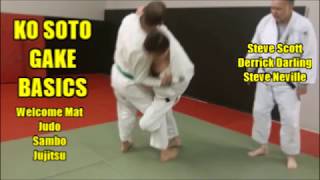
Immediate Counter-Attack Principle
Defense alone is insufficient in judo competition. Upon successfully blocking and evading an opponent's throw, the practitioner must immediately execute a counter-attack without hesitation. The defensive action should seamlessly transition into an offensive response to capitalize on the opponent's vulnerability.
Ko Soto Gake as Tai Otoshi Counter
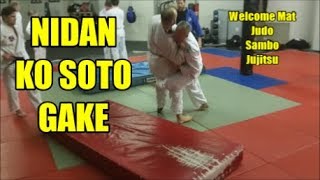
Ko soto gake (minor outer hook) serves as a highly effective counter to tai otoshi. When the opponent commits to tai otoshi and the defender blocks and hops around, the defender immediately responds with a low, driving ko soto gake to take the opponent directly to the mat.
Execution Mechanics: Low Position and Hip Drive
The ko soto gake counter requires the defender to maintain an exceptionally low body position while driving force from the hips rather than the legs. The hooking foot should point the toes rather than lead with the heel, preventing the opponent from executing an uchi mata counter. This low-slung positioning generates maximum power and control.
Hand Grip Initiates the Counter
The defender's hand grip should lead the counter technique, not the legs. As the defender moves into the opponent, the grip catches the opponent's waist, signaling that the body is positioned correctly to execute the hook. This sequential hand-then-leg approach ensures proper distance and prevents reaching with an extended leg.
Grip Control and Hook Sequencing
The defender establishes connection through the forearm and chest before executing the leg hook. Once the grip is secured around the opponent's waist, the defender immediately hooks the leg in a fast, controlled motion. This method ensures the defender remains in a strong, defensive position while generating explosive power.
Speed and Timing of Counter Execution
The counter must be executed with immediate, choppy movements the moment the opponent commits to tai otoshi and the block is successful. Hesitation or delay allows the opponent recovery time to defend or counter. Fast, decisive action maximizes the effectiveness of the ko soto gake counter.
HOP AROUND TAI OTOSHI COUNTER WITH KO SOTO GAKE
Key Takeaways
- •Immediate Counter-Attack Principle
- •Ko Soto Gake as Tai Otoshi Counter
- •Execution Mechanics: Low Position and Hip Drive
- •Hand Grip Initiates the Counter
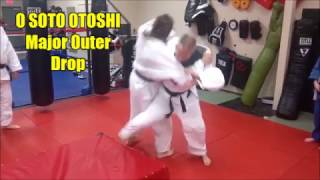
This video shows a standard defense or avoidance move of hopping around an opponent's throwing attack and countering. In this case, the defender hops around the opponent's Tai Otoshi and counters with Ko Soto Gake or Tani Otoshi. Coaching by Steve Scott, Derrick Darling and Mike Pennington.
Frequently Asked Questions
What does this video teach about standard o soto gake?
This video covers immediate counter-attack principle, ko soto gake as tai otoshi counter, execution mechanics: low position and hip drive. It provides detailed instruction from welcomematstevescott.
How long does it take to learn standard o soto gake?
The basic mechanics can be understood in a single session, but developing reliable execution requires consistent drilling over weeks of practice. This 6-part breakdown helps structure your training by isolating each phase of the technique.
What are the key details for finishing standard o soto gake?
The defender establishes connection through the forearm and chest before executing the leg hook. Once the grip is secured around the opponent's waist, the defender immediately hooks the leg in a fast, controlled motion. This method ensures the defender remains in a strong, defensive position while generating explosive power.