Definition and Etymology
Ko Soto Gake translates as a minor outside hooking technique. Ko means minor, soto refers to the outside of the opponent's body, and gake means to hook. While fundamentally a leg hook, proper execution distinguishes it from a basic leg sweep.
Common Error and Hip Positioning
The most frequent mistake is rushing the hook, leaving the technician vulnerable to an uchimata counter. The correct approach requires initiating the technique with hip movement rather than leg movement, ensuring the hips pass beyond the opponent's centerline before hooking.
Initial Grip and Setup
The technique begins from a standard judo grip, typically a lapel and sleeve hold with slight offset positioning to one side. The hand placement sets up the initial control similar to a ko kami entry, with the gripping hand pulling down on the opponent's elbow.
Entry and Weight Distribution
The technician steps forward with the lead foot in a straight line while pulling the opponent down and back. Critical to success is ensuring the technician's hips advance past the opponent's hips to prevent the opponent from countering effectively.
Back Foot Placement and Hook Mechanics
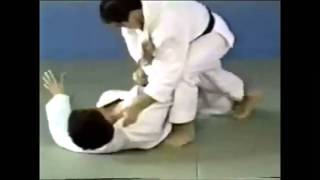
The trailing foot steps in close, providing a solid base from which to generate power. With the toe pointed downward, the technician executes a chopping hook motion using the foot, shin, and knee in coordinated movement.
Drive and Completion
The technician drives through the hooked leg while keeping the chest close to the opponent, driving them straight onto their back. The head, toe, and knee work together as a unit to execute the sweeping force in the intended direction.
Foot Trapping and Heel Weight
The hook traps the opponent's foot to the mat, concentrating their body weight on the heel. This mechanical disadvantage facilitates the throw whether the technician descends to the mat or remains standing.
Finishing Options
The technician may complete the throw by descending with the opponent to facilitate transitions to ground control, or remain standing. The prone position of the opponent after the throw allows immediate entry into pinning techniques, making it effective for both stand-up and ground transitions.
KO SOTO GAKE BASICS
Key Takeaways
- •Definition and Etymology
- •Common Error and Hip Positioning
- •Initial Grip and Setup
- •Entry and Weight Distribution
Ko Soto Gake (Minor Outer Hook) and a popular and versatile throwing technique. This video shows the basic skills. View hundreds of videos of judo, freestyle judo, Shingitai Jujitsu, sambo, submission grappling and sport jujitsu on our Youtube channel at http://youtube.com/user/welcomematstevescott. The Welcome Mat Judo-Jujitsu Club was founded in 1969. Please subscribe to our Youtube channel if you have not done so already. Visit our web sites at http://www.WelcomeMatJudoClub, http://www.judoblackbelt.com and visit our online store at http://www.WelcomeMatStore.com. Join our premium channel at http://www.grapplingcoach.us. Thank you for watching our video.
Related Techniques
Frequently Asked Questions
What does this video teach about ko soto gake?
This video covers definition and etymology, common error and hip positioning, initial grip and setup. It provides detailed instruction from welcomematstevescott.
How long does it take to learn ko soto gake?
The basic mechanics can be understood in a single session, but developing reliable execution requires consistent drilling over weeks of practice. This 8-part breakdown helps structure your training by isolating each phase of the technique.
What are the key details for finishing ko soto gake?
The hook traps the opponent's foot to the mat, concentrating their body weight on the heel. This mechanical disadvantage facilitates the throw whether the technician descends to the mat or remains standing.