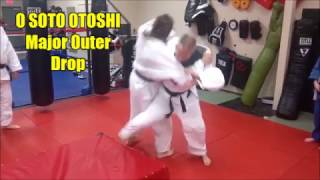
Technique as Adaptable Skill
The instructor emphasizes that techniques should not be viewed as rigid, isolated methods but rather as skill sets that practitioners adapt to their own style and physical attributes. Drawing on coaching from world sambo champion Morris Allen, the principle is that skill represents the practical application of technique optimized for the individual performer.
Guard Position and Grip Foundation
The o soto gake begins from a fighting stance where the practitioner secures an anchor grip with the right hand around the opponent's deltoid and back. This grip uses the entire arm and shoulder complex to immobilize and control the opponent's shoulder, rendering it ineffective rather than relying solely on hand strength.
Sleeve Control and Posture Breaking
After establishing the anchor grip, the practitioner grabs the opponent's sleeve at mid-height to avoid allowing the opponent to escape. The pulling hand then brings the opponent's arms inward while the elbows compress the opponent's body, breaking their upright posture and bringing them closer for the throw.
Hip Positioning and Turning Mechanics
The thrower's right hip rotates slightly inward toward the opponent while maintaining close proximity, positioning the hip almost touching the opponent's body. This minimal rotation on the balls of the feet determines the direction of the throw while keeping the thrower low and connected to the opponent's center.
Pulling Theory and Body Mechanics
The sambo interpretation of o soto gake emphasizes sucking the opponent into the thrower's body and pulling them upward, contrasting with classical judo's lift-and-pull theory. This approach creates a tighter connection and reduces the opponent's defensive options through superior proximity and control.
Hook Execution and Foot Placement
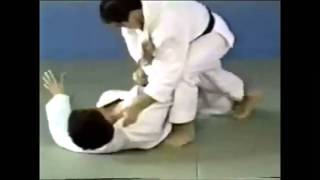
As the thrower rotates, the heel hooks across the opponent's leg in a hooking motion rather than a reaping motion, with the toes pointed to guide the trajectory. The term o soto gaki refers specifically to this hooking action, distinguishing it from o soto gari, which describes a high reaping motion.
Completion and Follow-Through
The anchor hand keeps the opponent tied up while the hooking leg sweeps across their body, completing the throw to the mat. In sambo competition, the thrower may choose to remain standing rather than follow the opponent down, as this positioning prevents the opponent from achieving superior positioning during the fall.
O SOTO GARI O SOTO GAKE
Key Takeaways
- •Technique as Adaptable Skill
- •Guard Position and Grip Foundation
- •Sleeve Control and Posture Breaking
- •Hip Positioning and Turning Mechanics
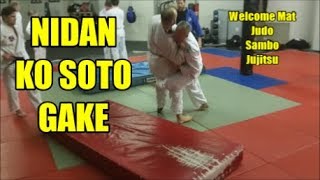
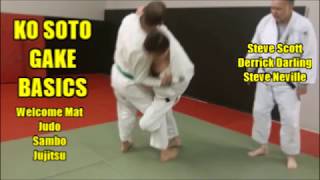
O Soto Gari (Major Outer Reap) and O Soto Gake (Major Outer Hook) are taught by Coach Steve Scott in this video made at one of his clinics. View hundreds of videos of judo, freestyle judo, Shingitai Jujitsu, sambo, submission grappling and sport jujitsu on our Youtube channel at http://youtube.com/user/welcomematstevescott. The Welcome Mat Judo-Jujitsu Club was founded in 1969. Please subscribe to our Youtube channel if you have not done so already. Visit our web sites at http://www.WelcomeMatJudoClub, http://www.judoblackbelt.com and visit our online store at http://www.WelcomeMatStore.com. Join our premium channel at http://www.grapplingcoach.us. Thank you for watching our video.
Related Techniques
Frequently Asked Questions
What does this video teach about o soto gake?
This video covers technique as adaptable skill, guard position and grip foundation, sleeve control and posture breaking. It provides detailed instruction from welcomematstevescott.
How long does it take to learn o soto gake?
The basic mechanics can be understood in a single session, but developing reliable execution requires consistent drilling over weeks of practice. This 7-part breakdown helps structure your training by isolating each phase of the technique.
What are the key details for finishing o soto gake?
As the thrower rotates, the heel hooks across the opponent's leg in a hooking motion rather than a reaping motion, with the toes pointed to guide the trajectory. The term o soto gaki refers specifically to this hooking action, distinguishing it from o soto gari, which describes a high reaping motion.