Introduction to the Body Lock Clinch
The body lock clinch is a defensive tactic designed to close distance safely and neutralize an opponent's striking capability. This technique positions the defender to control the opponent and set up takedown opportunities.
Understanding Strike Range and Distance Management
Every strike has an effective range beyond which it loses power. By closing distance beyond this range, the defender negates the opponent's striking advantage and enters a position of safety where clinching becomes possible.
Legal Application: Preemptive Engagement
When an opponent demonstrates intent, ability, and opportunity to strike through verbal threats and aggressive stance, the defender has legal grounds to preemptively engage. The key is moving before the actual strike lands, not waiting for contact.
Execution: Entry and Clinch Formation
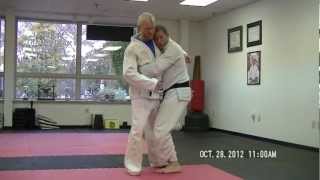
The defender drops their level, steps forward with power from the back foot, and makes chest-to-chest contact. The clinch is secured tightly around the opponent's torso with hips positioned close and legs wrapped to control the opponent's base.
Positional Mechanics: Base Control and Balance Disruption
By maintaining a lower center of gravity with the head below the opponent's head, the defender drives the opponent backward onto their heels. This compromised stance prevents the opponent from generating power and prepares them for a takedown.
Active Defense Against Incoming Strikes
When an opponent throws a looping punch, the defender drops their level and drives straight forward into the clinch. The committed movement causes the punch to pass over the defender's head while maintaining the tight clinch position.
Position Variations and Control Principles
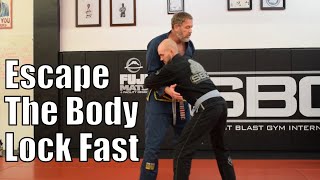
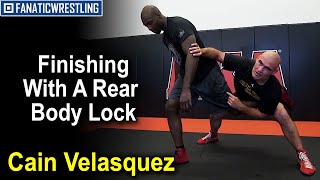
The defender may end up beside or behind the opponent depending on their level drop and timing. Regardless of exact position, maintaining tight body contact, inward pressure, and close hip positioning neutralizes all strike options including elbows and knees.
Progressive Training Methodology
Training should progress from static practice against a non-attacking opponent, to movement drills, to controlled looping punches, and finally to padded impact drills. This graduated approach builds competency and timing before introducing full-contact scenarios.
Defensive Tactics - Body Lock Clinch
Key Takeaways
- •Introduction to the Body Lock Clinch
- •Understanding Strike Range and Distance Management
- •Legal Application: Preemptive Engagement
- •Execution: Entry and Clinch Formation
The body lock clinch is a great way to nullify an opponent's striking and get inside for control or a takedown. This technique serves a number of different purposes in defensive tactics and can also be used in competition. At Valhalla we teach weapon retention, weapon deployment, weapon disarms, airsoft marksmanship fundamentals, and airsoft force on force and tactics. If you like this material please subscribe to our channel, follow us on Twitter @ Valhalla Academy, check out our website at www.ValhallaAcademy.com, and find us on Facebook (https://www.facebook.com/pages/Valhalla-Academy/134294743317057) Please contact me for seminars.
Frequently Asked Questions
What does this video teach about standard rear body lock?
This video covers introduction to the body lock clinch, understanding strike range and distance management, legal application: preemptive engagement. It provides detailed instruction from Valhalla Academy.
How long does it take to learn standard rear body lock?
The basic mechanics can be understood in a single session, but developing reliable execution requires consistent drilling over weeks of practice. This 8-part breakdown helps structure your training by isolating each phase of the technique.
What are the key details for finishing standard rear body lock?
The defender may end up beside or behind the opponent depending on their level drop and timing. Regardless of exact position, maintaining tight body contact, inward pressure, and close hip positioning neutralizes all strike options including elbows and knees.