Bodylock takedowns for BEGINNERS
0
Standard Rear Body Lock·Energia Martial Arts·Added by Admin
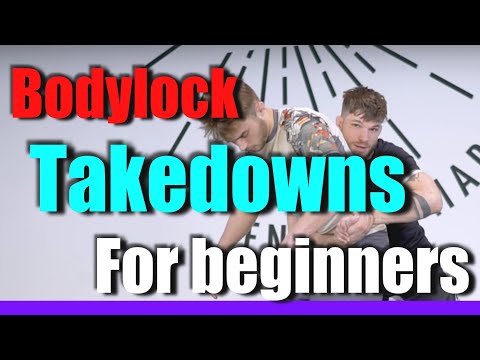
Bodylock takedowns for BEGINNERS With our new gym, and bigger filming studio, we can finally get into some more takedown…
Translation: standard rear body lock
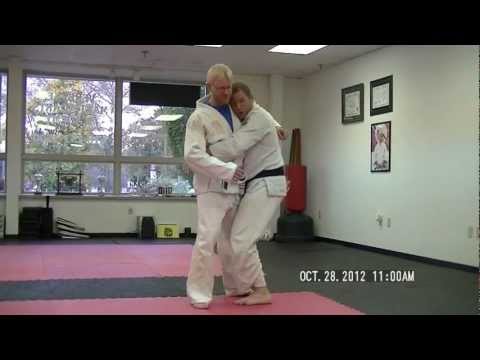
The Standard Rear Body Lock positions the attacker behind the opponent with arms locked around the waist, hands clasped with a Gable grip, S-grip, or butterfly grip. [1] The attacker presses their chest into the opponent's upper back, keeps hips tight, and positions the head to one side of the opponent's spine. [1],[2] From this position, the attacker can execute mat returns by driving the opponent forward to the ground, rear lifts by elevating the opponent, or lateral rotations by turning the opponent to either side. [2],[3]
The standard rear body lock is one of wrestling's most fundamental positions, taught universally across Greco-Roman, freestyle, and folkstyle wrestling as a primary scoring position. [1] Alexander Karelin's devastating reverse body lifts from this position became iconic in wrestling history. [2],[3]
The rear body lock is one of the most dominant control positions in the clinch, as the attacker controls the opponent from behind where defensive options are limited. [1] Welker notes that in wrestling, securing a rear body lock almost always results in scoring, whether through a mat return, lift, or throw. [1] In MMA, the rear body lock is the standard position for slam takedowns and suplex attacks. [2]
A fundamental Greco-Roman wrestling position taught for mat returns and suplex entries. [1]
The standard rear body lock is a dominant control position used in Greco-Roman wrestling, freestyle wrestling, and MMA competition at all levels. [1]
No images yet for this technique.
Sign in to suggest an image.
Bodylock takedowns for BEGINNERS With our new gym, and bigger filming studio, we can finally get into some more takedown…
The Clinch
The body lock clinch is a great way to nullify an opponent's striking and get inside for control or a takedown. This tec…
The standard rear body lock is a clinch position executed from behind an opponent, used to control posture and set up takedowns across wrestling, jiu-jitsu, and MMA. Energia Martial Arts emphasizes that proper grip placement is critical: the hands should control the hips rather than the chest, using either an S-grip or gable grip depending on arm length. The position must be asymmetrical—with one arm pulling the hip inward and the other elbow lifting slightly—rather than symmetrical around the center, as this prevents the opponent from rotating within the arm span and keeps the hip trapped. Head pressure forward into the opponent's back further breaks posture and creates stability, particularly in MMA where elbow strikes are a concern. Energia Martial Arts details four fundamental takedowns from this position: the metric turn (staying hip-to-hip, releasing hands at the tipping point to base out and secure top position), reverse variations, forward dips with leg blocks, and sideways shuffles. SundarJiuJitsu and Valhalla Academy both address the clinch entry preceding rear body lock, stressing hip proximity, triangulated foot positioning, and tall posture with head and shoulder contact on the opponent's chest. Valhalla Academy adds that the body lock clinch is particularly effective for closing distance against strikes and setting up takedowns by driving the opponent onto their heels. All three instructors agree that hip control and pressure maintenance are paramount to preventing escape.
Synthesized from 3 instructors
No instructional courses yet for this technique.
Sign in to suggest a course.
Risk of injury to the person this technique is applied to
Body clinch positions enable throws and takedowns; rib compression risk
Skill level needed to execute this technique reliably
Whether this technique is allowed under major competition rule sets
Freestyle Wrestling: A Complete Guide for Coaches and Wrestlers (Petrov, 1977)
Alias sources — [1] Greco-Roman Wrestling (Petrov, 1987) [2] Wrestling Physical Conditioning Encyclopedia (Welker, 2010) [3] UWW Technical Terminology (UWW, 2018)
Effectiveness sources — [1] Wrestling Physical Conditioning Encyclopedia (Welker, 2010) [2] Clinch Fighting for MMA (Couture, 2011)
Standard katakana transliteration of Western martial arts terminology (外来語) — used in Japanese MMA, boxing, and BJJ communities
Alias sources — [1] Greco-Roman Wrestling (Petrov, 1987) [2] Wrestling Physical Conditioning Encyclopedia (Welker, 2010) [3] UWW Technical Terminology (UWW, 2018)
Effectiveness sources — [1] Wrestling Physical Conditioning Encyclopedia (Welker, 2010) [2] Clinch Fighting for MMA (Couture, 2011)
arm length to wrap the torso, squeeze strength, hip drive
long arms and strong grip, powerful lower back
biceps, pectorals, forearms, erector spinae, glutes
Positioning symmetrically in the middle makes you vulnerable to elbows and other strikes. Energia Martial Arts emphasizes going asymmetrical—controlling one hip with one arm longer while keeping pressure with your head on the back—to make it harder for your opponent to defend and escape.
The biggest mistake is sitting down first instead of staying standing. You want to beat your opponent in that first second to score the top position before falling, rather than dropping to your knee immediately.
Keep your hips very close to your opponent and don't push forward with your head, as that drives your hips back and gives them space to escape. SundarJiuJitsu stresses that hips close is the most important thing—maintain a triangulated stance with your back foot relatively close and use shuffling footwork to follow your opponent as they move.
Always grip the wrist, not the hand, because the hand is soft and can slip free more easily.
The Standard Rear Body Lock positions the attacker behind the opponent with arms locked around the waist, hands clasped with a Gable grip, S-grip, or butterfly grip. The attacker presses their chest into the opponent's upper back, keeps hips tight, and positions the head to one side of the opponent's spine.
The standard rear body lock is one of wrestling's most fundamental positions, taught universally across Greco-Roman, freestyle, and folkstyle wrestling as a primary scoring position. Alexander Karelin's devastating reverse body lifts from this position became iconic in wrestling history.
Unified MMA: legal — Legal — clinching is integral to MMA; IJF: legal — Legal — kumi-kata (grip fighting) is fundamental to judo; IBJJF: legal — Legal — standing grip fighting and clinch work permitted; IFMA: legal — Legal — the clinch is a core element of Muay Thai, clinch dominance is highly…; WBC/Boxing: restricted — Holding is technically a foul — referee breaks clinch, excessive holding resu…; K: restricted — 1/GLORY — One attack from clinch allowed, then referee breaks; WAKO: restricted — Clinch generally broken by referee — limited or no clinch fighting in most fo…; UWW: legal — Legal — clinch is fundamental to wrestling, the primary position in Greco-Roman
Danger rating 4/10. Moderate — body clinch positions enable throws and takedowns; rib compression risk
The standard setup chain: Close Distance → Secure Both Arms → Clasp Hands → Hip Drive.
Standard counters include: Pummeling — fight for inside position by swimming arms under opponent's grips / Frame and Push — create distance using forearm frames against the chest or neck / Grip Break — systematically strip the opponent's controlling grips / Posture Up — straighten the spine and drive the hips forward to break clinch control.
Common variants: Front body lock (locked hands around the torso face-to-face); Rear body lock (hands locked around the torso from behind); Side body lock (angled body lock for trips and throws); Over-arms body lock (locking over both arms to pin the opponent's arms to thei…).
The standard rear body lock is a dominant control position used in Greco-Roman wrestling, freestyle wrestling, and MMA competition at all levels.
Top errors to watch for: Clasping hands at chest level — lock at the waist or lower for maximum control and throwing leverage / Standing behind the opponent with feet together — stagger the feet for balance and driving power / Not maintaining chest-to-back contact — any gap allows the opponent to turn / Locking the grip and standing still — attack within 2-3 seconds or the opponent escapes.
The Standard Rear Body Lock is also known as Sutandādo Ria Bodi Rokku, Basic Rear Body Lock, Standard Back Clinch Lock, Back Body Squeeze.