Fundamental Strategy: Distance Management
In self-defense, the primary objective while standing is to avoid knockout strikes. Punches derive their damaging force from distance, where the attacker can wind up and generate full acceleration. The clinch position neutralizes this advantage by closing distance and transitioning into grappling range.
The Clinch Defined
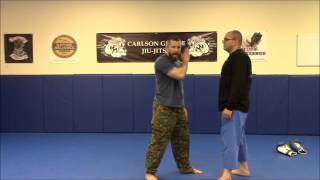
The clinch is established with one arm wrapped around the opponent's back and the other hand gripping the wrist, pulling across the lower back to control hip position. This configuration prevents the opponent from creating distance needed for effective striking while keeping the practitioner in full control.
Stance and Foot Positioning
The back foot remains close to the opponent while the front foot creates a triangulated stance that surrounds the opponent's leg. This geometry prevents the opponent from easily breaking free while maintaining the practitioner's balance and mobility. The feet should never cross during position adjustments.
Upper Body Control and Head Placement
The head and shoulder rest on the opponent's chest rather than pushing into it, as pushing causes the hips to drift backward and weakens control. Proper positioning keeps the head upright on the shoulder, making the practitioner difficult to strike while protecting against neck injuries. Weight hangs through the hips and feet rather than through head pressure.
Wrist Control Mechanics
The front hand must grip the wrist, not the hand, as the hand is too mobile and allows escape. The grip must pull backward with sufficient tension to keep the opponent's hips engaged. Improper hand placement allows the wrist to slip free when the opponent attempts to create separation.
Dynamic Positioning and Side Switching
The clinch position follows the opponent as they attempt to escape, requiring the practitioner to shuffle and adjust position while maintaining contact. When necessary, the practitioner can switch to the opposite side by releasing, stepping around, and re-establishing the same control pattern. The T-position formed should remain slightly offset toward the front rather than perpendicular.
Common Errors and Safety Considerations
A critical mistake occurs when the head drifts underneath the opponent's arm, creating an opening for a guillotine choke. The practitioner must maintain head position on the shoulder and keep hips close to the opponent at all times. Excessive forward lean or head pressure compromises both control and safety.
Drill Protocol: Maintaining Grip Against Resistance
The partner initiates escape attempts while the clinch holder maintains position using proper mechanics rather than muscular force. The drill lasts ten seconds and teaches the practitioner to follow movement, adjust stance, and hold control against an actively resisting opponent. Success depends on keeping hips close and feet positioned correctly.
L6S1_The Clinch
Key Takeaways
- •Fundamental Strategy: Distance Management
- •The Clinch Defined
- •Stance and Foot Positioning
- •Upper Body Control and Head Placement
The Clinch
Frequently Asked Questions
What does this video teach about standard rear body lock?
This video covers fundamental strategy: distance management, the clinch defined, stance and foot positioning. It provides detailed instruction from SundarJiuJitsu.
How long does it take to learn standard rear body lock?
The basic mechanics can be understood in a single session, but developing reliable execution requires consistent drilling over weeks of practice. This 8-part breakdown helps structure your training by isolating each phase of the technique.
What are the key details for finishing standard rear body lock?
A critical mistake occurs when the head drifts underneath the opponent's arm, creating an opening for a guillotine choke. The practitioner must maintain head position on the shoulder and keep hips close to the opponent at all times. Excessive forward lean or head pressure compromises both control and safety.