Setup and Lifting Mechanics
The technique begins with the practitioner establishing control and preparing to lift the opponent, simulating a suplex or turn throw using pelvis rotation and knee drive. The goal is to elevate the opponent while maintaining balance and control for the subsequent throw.
Positional Transition to Side Control
After the initial lift, the practitioner moves the opponent to the side position. This transition sets up opportunities for follow-up strikes and ground control techniques.
Ground Striking and Submission Setup
Once side control is established, the practitioner executes strikes to the face and torso, then transitions into a mounted position. From mount, the practitioner can transition into an armbar submission, creating a fluid combination from throw to submission.
Hip Drive and Knee Execution
The key mechanical detail involves picking up the opponent while driving with the hip and generating power through a strong knee lift. This coordinated motion generates the explosive force needed for an effective throw.
Body Mechanics and Impact Control
The instructor emphasizes using hip motion synchronized with knee lift to generate explosiveness. The practitioner should use their entire body to control the descent and impact of the opponent during the slam.
Refinement: Hip and Knee Coordination
Advanced practitioners should focus on timing the hip motion with knee lift for maximum efficiency. The instructor corrects the student's knee positioning and tempo to improve the throw's effectiveness and control.
Repetition and Movement Refinement
Multiple repetitions are performed to develop muscle memory and timing. The drill emphasizes consistent execution of the throw followed immediately by the armbar submission, creating a seamless technical combination.
Te Guruma (Hand Wheel) throw for MMA Drill
Key Takeaways
- •Setup and Lifting Mechanics
- •Positional Transition to Side Control
- •Ground Striking and Submission Setup
- •Hip Drive and Knee Execution
In this video Sensei Phu teaches how to use Te Guruma for MMA Drill using the punching bag Te-guruma is a member of the sukui-nage group of throws, but is applied to the above throws. Often used as a counter, tori drops one hand to the leg of uke (either will work) and lifts up with their hand turning uke upside down. Fusion Mixed Martial Arts http://www.fusionmma.com Please Join Our Facebook Fan Page Join Us On Facebook - https://www.facebook.com/fusionmixedmartialarts Fusion Genesis Jiu-Jitsu http://www.fusiongenesisjiujitsu.com Fusion Mixed Martial Arts Offers Kids Anti Bully Training Program, Brazilian Jiu-jitsu (BJJ), Judo, Thai Boxing and Full Contact Karate in the following are: Marion, Clyde, Phelps, Geneva, Palmrya, Macedon, Waterloo, Williamson, Ganada, Sodus, Farmington, Canadaigua, Lyons, Victor, Seneca Falls, Fairport, Newark, Auburn, Webster, Rochester, Syracuse New York (NY) State Call us @ 315-398-8354
Related Techniques
Frequently Asked Questions
What does this video teach about wheel throw (guruma)?
This video covers setup and lifting mechanics, positional transition to side control, ground striking and submission setup. It provides detailed instruction from Mong Phu.
How long does it take to learn wheel throw (guruma)?
The basic mechanics can be understood in a single session, but developing reliable execution requires consistent drilling over weeks of practice. This 7-part breakdown helps structure your training by isolating each phase of the technique.
What are the key details for finishing wheel throw (guruma)?
Advanced practitioners should focus on timing the hip motion with knee lift for maximum efficiency. The instructor corrects the student's knee positioning and tempo to improve the throw's effectiveness and control.
Related videos
2 WAYS to do a HIP WHEEL Throw (Koshi Guruma)
DadBod Judo
The Shoulder Throw machine - Alexandre Iddir
Grappler Kingdom
Basingstoke MMA Martial Arts - Sacrifice throw and groundwork tutorial
Basingstoke Martial Arts
Tai Otoshi (Body Drop) Throw
WINNING
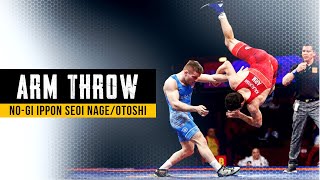
Arm Throw in Wrestling, MMA, BJJ and Sumo
Grappler Kingdom