Entry via Reverse De La Riva
The reverse de la riva guard creates distance while allowing the practitioner to turn supine and insert a de la riva hook. By pushing against the opponent's waist with the hook, the defender can bring the opponent to the mat. Deeper hook placement extends the opponent further, facilitating easier transitions to ankle lock entries.
Entry via Single Leg X Guard
Single leg X guard provides an accessible entry point applicable whether the opponent is standing or grounded. The inside leg drives to the opponent's hip for extension, creating space to insert the de la riva hook. The same pushing mechanics from the reverse de la riva entry apply to execute the sweep.
Entry via Ankle Pick and Head Control
From a standing position, the practitioner hooks low on the opponent's leg while pushing the head away, lightening the leg weight. Falling backward with this setup immediately drives the opponent into a sweep with the ankle positioned across the chest or outside hip. Both ankle placements facilitate the finishing sequence.
Sweep Mechanics and Finishing Position
Regardless of entry method, the sweep follows consistent mechanics: the opposite hand pushes the opponent's knee in the desired direction while the upper leg extends via hip pressure. This positioning places the practitioner in a dominant setup once both bodies reach the mat. The de la riva hook prevents hip escape, the most common defense to leg attacks.
Grip Placement and Submission Application
Proper grip placement requires the hand positioned over the opponent's toes rather than hooking the calf, maximizing leverage. The submission finish involves three sequential steps: closing the hip distance, rotating the chest downward to create torque, and rotating the shoulders to tighten ligament pressure before final compression. The de la riva hook and cupping hand prevent knee rotation, eliminating escape options.
Alternative Grip and Roll Prevention
Switching grip positioning prevents the opponent from rolling away, as even directional rolls lead into the foot lock rather than escape. This modified grip reduces reliance on pure hip positioning and body mechanics, making the submission more accessible to practitioners with varying physical attributes.
Defense Against Hip Escape
When the opponent clears the foot and rotates the hip over the leg, the practitioner transitions by bringing the opposite leg over the opponent's leg while maintaining ankle control. Inverting to belly-down position with hip and leg pressure prevents the opponent's defensive rotation. This repositioning restores submission control before the opponent achieves full escape.
Transition to Inversion and Follow-up Attacks
After the ankle lock attempt, maintaining the de la riva hook allows inversion around the opponent's knee. The practitioner can then either wrestle up to reapply entry number three, transition to open guard and ankle guillotine, or move to back control and turtle position. Each option preserves leg attack opportunities rather than concluding the sequence.
I Made The ULTIMATE Ankle Lock Guide
Key Takeaways
- •Entry via Reverse De La Riva
- •Entry via Single Leg X Guard
- •Entry via Ankle Pick and Head Control
- •Sweep Mechanics and Finishing Position
This is the ultimate guide to doing an ankle lock in Jiu Jitsu. Join my Patreon for more instructionals ► Patreon: https://bit.ly/TylerPatreon ► Xmartial: https://www.xmartial.com/?ref=TYLERSPANGLER CODE: TYLER10 ►IG: https://www.instagram.com/spanglertyler/
Related Techniques
Frequently Asked Questions
What does this video teach about ankle lock?
This video covers entry via reverse de la riva, entry via single leg x guard, entry via ankle pick and head control. It provides detailed instruction from Tyler Spangler.
How long does it take to learn ankle lock?
The basic mechanics can be understood in a single session, but developing reliable execution requires consistent drilling over weeks of practice. This 8-part breakdown helps structure your training by isolating each phase of the technique.
What are the key details for finishing ankle lock?
When the opponent clears the foot and rotates the hip over the leg, the practitioner transitions by bringing the opposite leg over the opponent's leg while maintaining ankle control. Inverting to belly-down position with hip and leg pressure prevents the opponent's defensive rotation. This repositioning restores submission control before the opponent achieves full escape.
Related videos
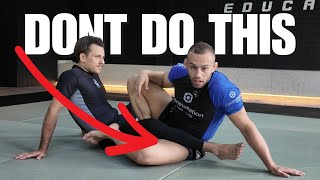
How I Ankle Lock EVERYONE (almost)
Ebsayz
Small Hand Wrap Chin Na Wrist Locking
Gary Gee

Gooseneck Wrist Lock (Nikyo): Ultimate Self-Defense Technique #aikido #hapkido #martialarts
Weapons Defense Academy

10 Elbow Locks Every Martial Artist Must Know.
Straight Circle Martial Arts
10 Elbow Locks Every Martial Artist Must Know.
Straight Circle Martial Arts