Definition of Preparation
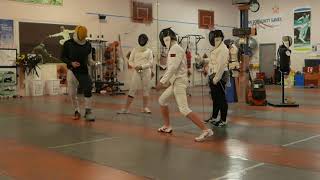
In sabre fencing, preparation refers to the actions a fencer takes immediately after the referee's start command to position themselves and their opponent favorably for an offensive or defensive action. This includes decisions about stepping patterns—whether to take large or small steps, move quickly or slowly, and how many steps to execute. Like a chess opening, an effective preparation should maintain multiple tactical possibilities while sometimes sacrificing options to provoke a specific opponent response.
Movement Principles and Forward Motion
Sabre fencing emphasizes constant forward movement during preparation, even if minimal, because the sport's rules advantage the attacking fencer. Standing still or retreating allows an opponent to initiate attacks without defensive counters. While individual movement styles vary—using multiple small steps, single larger steps, slides, or jumps—the fundamental requirement is maintaining forward momentum to preserve attacking options.
Reactive Preparations
Reactive or 'eyes-open' preparations involve observing the opponent's actions to select an appropriate counter-response. These require balanced footwork and measured speed to enable directional changes and maintain reaction time, with minimal tells or involuntary movements that telegraph intent. Consistency is critical—the preparation should appear identical regardless of which follow-up action the fencer ultimately executes. While mentally demanding due to juggling multiple options, limiting considerations to two or three primary actions helps manage complexity.
Proactive Preparations
Proactive preparations deliberately provoke a predicted opponent reaction that can then be exploited or countered. A larger, committed-looking preparation may bait an opponent into attacking during the setup phase, which the fencer can then evade or parry. These touch exchanges are high-risk and entertaining but should not form the basis of a fencer's primary strategy.
Blade Position and Hand Work
Beyond footwork, blade position during preparation determines both available target areas and likely opponent attack angles. Hand feints and blade movements serve to elicit defensive or offensive responses from the opponent. Strategic blade positioning complements footwork variations to create comprehensive preparation patterns.
Aggressive Direct Attacks
Occasionally, a fencer may forgo measured preparation and launch an immediate large-step lunge from the start line. While such attacks carry lower success rates, they can surprise opponents and instill doubt that may cause them to guess rather than react methodically. This tactic is situational rather than foundational.
Opponent-Specific Adjustments
Effective fencers modify their preparations against different opponents and adjust throughout a bout as opponents change tactics. Subtle variations in rhythm, step count, and preparation size allow fencers to maintain tactical flexibility. Mastery involves experimenting broadly while ultimately settling on a refined set of reliable preparations suited to individual strengths.
Preparations in Sabre | Fencing Explained 🤺
Key Takeaways
- •Definition of Preparation
- •Movement Principles and Forward Motion
- •Reactive Preparations
- •Proactive Preparations
0:00 Intro 0:50 "physical chess" 1:43 go forwards 2:16 rock paper scissors 2:50 two kinds of preps 3:08 Reactive 4:31 Proactive 5:12 varying preps 5:35 the hand 5:59 no prep 6:26 adjusting 6:50 playing 7:22 pls don't skip this bit ;) Preparations are really important in sabre fencing strategy and tactical bla bla bla nobody reads this Follow Slicer Sabre on Instagram for more fencing highlights: https://www.instagram.com/slicersabre/ If you want to support the channel feel free to buy a t shirt!
Frequently Asked Questions
What does this video teach about sabre — sport?
This video covers definition of preparation, movement principles and forward motion, reactive preparations. It provides detailed instruction from Slicer Sabre.
How long does it take to learn sabre — sport?
The basic mechanics can be understood in a single session, but developing reliable execution requires consistent drilling over weeks of practice. This 7-part breakdown helps structure your training by isolating each phase of the technique.
What are the key details for finishing sabre — sport?
Occasionally, a fencer may forgo measured preparation and launch an immediate large-step lunge from the start line. While such attacks carry lower success rates, they can surprise opponents and instill doubt that may cause them to guess rather than react methodically. This tactic is situational rather than foundational.