Introduction to Shin-On-Shin Entry
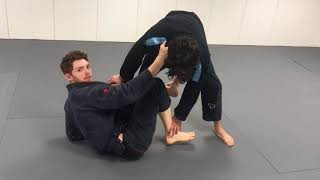
The shin-on-shin single leg X entry is the foundational leg lock entry that beginners should master first. This technique provides an excellent setup for accessing leg locks from the bottom position and is best practiced from a seated starting position, which offers superior mobility and positioning options.
Foot Positioning Fundamentals
Both feet must be positioned on the inside of the opponent's feet to execute this technique properly. This inside foot placement is the critical foundation that enables all subsequent movements and cannot be compromised.
Basic Slide-In Drill
The basic entry begins by gripping behind the opponent's knees while planting the heels on the mat. The practitioner pulls themselves underneath while drawing the opponent slightly forward, positioning their body nearly parallel to the opponent before bringing the knees to the chest and securing the standard grip.
Adjusting for Active Resistance
Against an opponent in a natural stance with a lead leg, the practitioner must tilt their weight onto one hip while keeping both feet pointed inward. This weight distribution enables lateral mobility and allows the practitioner to scoot in on their side while maintaining connection behind the knee.
Grip Options and Hook Placement
Two grip variations are available: a shallow grip with the hand behind the hamstring and elbow outside the knee, or the deeper elbow-in grip. The deep grip is preferred as it closes space and prevents the opponent from executing a counter-hook. The shin hook must remain flexed and tight throughout the entry to maintain control.
Head Position and Operational Safety
The practitioner must maintain an upward gaze to prevent the opponent from pushing down the head or attempting a guillotine choke. The free hand posts inside the opponent's knee to create leverage while the practitioner leans toward their shoulder, maintaining tension in the hook as they pull the knee inward.
Weight Transfer and Leg Lift
Critical pressure is applied by leaning toward the shoulder while pushing outward on the inside of the opponent's knee to transfer their weight to the far leg. The practitioner extends their hook upward, transitioning into the finish position by shooting through with both knees to the chest while securing the final grip configuration.
Common Mistakes and Counters
The opponent's weight distribution is paramount—if pressure remains on the targeted leg, the pull will fail. Maintaining minimal space between the practitioner's chest and the opponent's leg prevents counter-hooks, and opening this space significantly increases vulnerability to the opponent's defensive hooks and cutting leverage.
Training Progression and Key Checkpoints
Practitioners should drill this entry slowly with a compliant partner before attempting it live during training. Essential details include staying on one hip during the approach, maintaining a tight hook throughout, ensuring both feet remain inside the opponent's feet, and executing the weight transfer to complete the entry smoothly into subsequent attacks.
This is the first single leg x entry beginners should learn: shin-to-shin entry
Key Takeaways
- •Introduction to Shin-On-Shin Entry
- •Foot Positioning Fundamentals
- •Basic Slide-In Drill
- •Adjusting for Active Resistance
In this video, I cover one of the most fundamental and reliable entries into the Single leg x position (aka. Irimi/standard ashi garami). If you are a beginner in nogi BJJ this is a must-have entry, and it will probably be the entry that you use the most. I've been using this all the way from white to brown belt, and I'm still using it on a daily basis. If you want to learn how to sweep from this position, check out the cards in the video. If you enjoy the video please, like, subscribe and share the video. A comment also goes a long way to help grow the channel.
Frequently Asked Questions
What does this video teach about standard shin-on-shin?
This video covers introduction to shin-on-shin entry, foot positioning fundamentals, basic slide-in drill. It provides detailed instruction from Mads H. BJJ.
How long does it take to learn standard shin-on-shin?
The basic mechanics can be understood in a single session, but developing reliable execution requires consistent drilling over weeks of practice. This 9-part breakdown helps structure your training by isolating each phase of the technique.
What are the key details for finishing standard shin-on-shin?
The opponent's weight distribution is paramount—if pressure remains on the targeted leg, the pull will fail. Maintaining minimal space between the practitioner's chest and the opponent's leg prevents counter-hooks, and opening this space significantly increases vulnerability to the opponent's defensive hooks and cutting leverage.