This is the first single leg x entry beginners should learn: shin-to-shin entry
0
Standard Shin-On-Shin·Mads H. BJJ
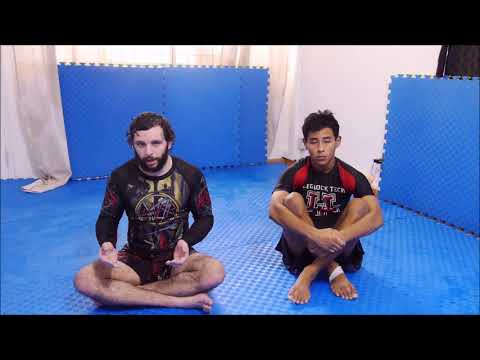
In this video, I cover one of the most fundamental and reliable entries into the Single leg x position (aka. Irimi/stand…
Translation: standard shin-on-shin
The Standard Shin-On-Shin places the guard player's shin horizontally across the opponent's lead shin, with hands controlling the collar/sleeve or wrists, creating a connection point for guard entries and sweeps. [1] From standard shin-on-shin, the guard player can transition to single leg X by threading under the leg, to X-guard by inserting both hooks, or directly sweep using the shin leverage. [1],[2] The position is valued as one of the most effective guard entry positions in modern grappling. [2],[3]
The standard shin-on-shin is the baseline version of this guard position. [1]
A standard modern BJJ guard position. [1]
Used in BJJ competition. [1]
No images yet for this technique.
Sign in to suggest an image.
In this video, I cover one of the most fundamental and reliable entries into the Single leg x position (aka. Irimi/stand…
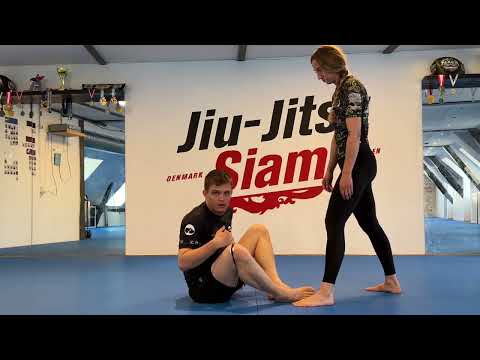
The debate over inside versus outside positioning will probably never be fully settled but here's a great way to incorpo…
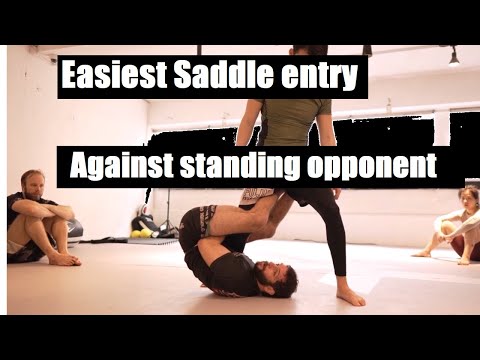
There are a lot of ways to potentially get into the saddle or cross ashi position against a standing opponent. In my exp…
The standard shin-on-shin guard position, taught across multiple instructional contexts, represents a foundational leg entanglement entry initiated from seated or supine positions against standing or passing opponents. Mads H. BJJ emphasizes the seated entry as the primary beginner approach, detailing a slide-in mechanics where both feet are planted inside the opponent's feet, the practitioner tilts to one hip for mobility, and establishes a shin-on-shin hook by flexing the foot while maintaining a tight connection behind the opponent's knee. The instructor stresses the importance of keeping both feet inside, maintaining posture by looking up rather than down, and using hand positioning to control the knee before shooting the legs up into a mounted-style position. RobertDiggleJJ contributes a more advanced understanding, demonstrating how shin-on-shin positioning functions as a wedge within broader leg entanglement sequences—particularly within inside/outside leg positioning combinations. He illustrates how the shin-on-shin configuration prevents the opponent from escaping via knee positioning and facilitates transitions to attacks like heel hooks from opposite-hip ashi positions. RobertDiggleJJ also demonstrates a reverse shin-on-shin entry against standing opponents, emphasizing foot height (high foot, low knee), proper hand grips on the ankle and back of knee, and hip angling to secure the position. Where Mads H. BJJ focuses on the fundamental mechanics and grip security, RobertDiggleJJ contextualizes shin-on-shin within a dynamic leg lock system and emphasizes positional transitions and counter-prevention. Both instructors agree on the necessity of keeping the position tight and preventing the opponent from escaping the knee line.
Synthesized from 3 instructors
No instructional courses yet for this technique.
Sign in to suggest a course.
Risk of injury to the person this technique is applied to
Guard positions are defensive; injury risk comes from transitions, not the position itself
Skill level needed to execute this technique reliably
Whether this technique is allowed under major competition rule sets
Advanced Brazilian Jiu-Jitsu Techniques (Marcelo Garcia, 2011)
Alias sources — [1] Jiu-Jitsu University (Ribeiro, 2008) [2] Marcelo Garcia: Advanced BJJ Techniques (2011)
Effectiveness sources — [1] Mastering Jujitsu (Gracie & Danaher, 2003)
Standard katakana transliteration of Western martial arts terminology (外来語) — used in Japanese MMA, boxing, and BJJ communities
Alias sources — [1] Jiu-Jitsu University (Ribeiro, 2008) [2] Marcelo Garcia: Advanced BJJ Techniques (2011)
Effectiveness sources — [1] Mastering Jujitsu (Gracie & Danaher, 2003)
hip flexibility, active legs, grip management
long legs for distance control and guard retention
hip flexors, adductors, quadriceps, core, grip
According to Mads H. BJJ, scoot in on your side while tilted on one hip (not both butt cheeks), make a tight connection behind your opponent's knee, and ensure both your feet are pointing to the inside—this is the whole point of the technique. Then throw your head in, transfer weight to the other leg, and shoot through to complete the entry.
Mads H. BJJ emphasizes that if you don't get both feet on the inside, the move simply won't work, and you should watch out for the underhook when scooting in.
Mads H. BJJ stresses making sure everything is tight when you attach yourself, keeping your hook tension high as you pull your opponent's knee, and avoiding opening up spaces between your body and theirs, as this allows your opponent to hook you.
According to Robert Diggle, the opposite hip ashi is one of the best positions to perform a rotational break because you have excellent ability to regulate the height of your opponent's forehead and can hide your heel to misdirect pressure and prevent them from applying counter-forces.
The Standard Shin-On-Shin places the guard player's shin horizontally across the opponent's lead shin, with hands controlling the collar/sleeve or wrists, creating a connection point for guard entries and sweeps. From standard shin-on-shin, the guard player can transition to single leg X by threading under the leg, to X-guard by inserting both hooks, or directly sweep using the shin leverage.
The standard shin-on-shin is a fundamental transitional guard position in modern BJJ, serving as the primary entry point to the X-guard and single leg X-guard systems. Its importance in guard transitions has made it a widely taught position at all levels.
IBJJF: legal — Legal — guard is fundamental to BJJ, sweeps from guard score 2 points; IJF: restricted — Guard pulling penalized as non-combativity — groundwork from guard permitted …; ADCC: legal — Legal, guard pull penalized -1 point in points portion; Unified MMA: legal — Legal — no penalty for playing guard; FIAS Sport Sambo: legal — Legal
Danger rating 2/10. Low — guard positions are defensive; injury risk comes from transitions, not the position itself
The standard setup chain: Achieve Guard Contact → Control Grips → Manage Distance → Threaten Submissions/Sweeps.
Standard counters include: Guard Pass — systematically work to clear the legs and establish a dominant position / Leg Pin — control one or both legs to neutralize guard retention / Pressure Passing — use heavy chest pressure to flatten and immobilize the guard player.
Common variants: Spider guard (gripping both sleeves with feet on the biceps for distanc…); De la Riva guard (one hook behind the opponent's lead leg with opposite foo…); Lasso guard (lasso grip wrapping the leg around the opponent's arm); Collar-sleeve guard (controlling collar with one hand and sleeve with the othe…).
Used in BJJ competition.
Top errors to watch for: Placing the shin without gripping the sleeve — the grip prevents the opponent from stepping back / Not hooking behind the ankle — the instep hook is what controls the leg / Sitting too far away — the shin must be in firm contact with the opponent's shin / Posting the back hand too far behind — keep it close for quick transitions.
The Standard Shin-On-Shin is also known as Sutandādo Shin On Shin, Basic Shin-to-Shin, Classic Shin Guard.