Introduction to Inside Sankaku Position
This instructional guide demonstrates two distinct entries into the saddle position, also known as inside sankaku, from the butterfly guard. Both techniques culminate in heel hook and leg lock applications suitable for no-gi grappling. The instructor will break down each entry methodically for clear comprehension.
Proper Butterfly Guard Setup
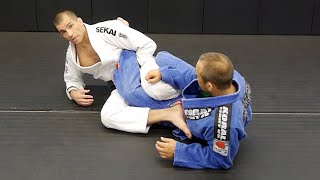
The foundation begins with a staggered butterfly guard position rather than a symmetrical stance. The feet are positioned wider and at different heights to facilitate seamless leg lock transitions. This positioning creates immediate access for the underhook passage required in the first entry.
Entry One: Underhook Passage
From butterfly guard with the hook already established, the practitioner keeps the left foot ready beneath the opponent. As engagement continues, the right leg passes over the opponent's body while the arm reaches underneath to maintain control of the knee during the roll.
Achieving the Deep Leg Triangle
The practitioner rolls onto the shoulder and back, landing in a deep leg triangle position. The left hand controls the opponent's knee, preventing scrambling and leg withdrawal. From this control position, the practitioner can transition to either a calf slicer or heel hook.
Transitioning to Heel Hook Finish
If the opponent resists the initial leg lock position, the practitioner repositions and applies the heel hook from the controlled knee-control position. This transition maintains all established control points while escalating the submission threat.
Entry Two: Body Lock Setup
The second entry begins from butterfly guard and incorporates an S-grip body lock to pull the opponent in closer. This setup differs fundamentally from the first entry by using upper-body control before leg engagement.
Leg Placement and Crossing
As the practitioner spins underneath the opponent's body, the right leg crosses through the gap between the opponent's legs. This placement is coordinated with the elevation and pulling motion to transition into the leg lock position.
Finishing Entry Two
The practitioner lands in the inside sankaku position with dominant knee control on the same side as the body lock grip. From this secured position, the heel hook can be applied with the established control preventing escape.
2 saddle entries in to heel hooks/leg locks from butterfly guard for no gi grappling bjj
Key Takeaways
- •Introduction to Inside Sankaku Position
- •Proper Butterfly Guard Setup
- •Entry One: Underhook Passage
- •Achieving the Deep Leg Triangle
Former UFC fighter and world renowned coach Tom Blackledge shows you a couple of great saddle entries from butterfly position to enter in to some leg locks for mma and bjj no gi grappling. Look out for the playlist that features a collection of these leg locks and submissions to implement in your grappling for mma or bjj blueprint. These are certainly more advanced leg locking techniques and as with all physical activity and technique we recommend using caution and common sense when practicing these techniques. Be sure to subscribe to our channel for more combat, martial arts and lifestyle content for the beginner all the way to the pro ranks. 👍👍👍👍 👇👇 click here👇👇 and subscribe 👇👇 https://www.youtube.com/channel/UC0uGaDOGi9N3KGGS3zg8RPA
Frequently Asked Questions
What does this video teach about standard inside sankaku?
This video covers introduction to inside sankaku position, proper butterfly guard setup, entry one: underhook passage. It provides detailed instruction from Fighter Blueprint.
How long does it take to learn standard inside sankaku?
The basic mechanics can be understood in a single session, but developing reliable execution requires consistent drilling over weeks of practice. This 8-part breakdown helps structure your training by isolating each phase of the technique.
What are the key details for finishing standard inside sankaku?
As the practitioner spins underneath the opponent's body, the right leg crosses through the gap between the opponent's legs. This placement is coordinated with the elevation and pulling motion to transition into the leg lock position.