Strike & defenceLocksClose rangeFighting multiple people
Distance
CloseMiddleLong
Overview
The inside sankaku (honey hole/saddle) is the apex control position in the modern leg lock hierarchy, where the attacker forms a triangle configuration with their legs inside the opponent's trapped leg, controlling the hip, knee, and foot simultaneously. [1] While leg entanglements existed in catch wrestling and sambo for decades, John Danaher systematized the inside sankaku as the dominant leg lock position through the Danaher Death Squad (DDS) at Renzo Gracie Academy, starting around 2014-2016. His students — Eddie Cummings, Garry Tonon, and Gordon Ryan — dominated EBI and ADCC competitions using this system, forcing a wholesale reassessment of leg lock methodology in BJJ. [2] Lachlan Giles' legendary ADCC 2019 absolute division bronze medal run, heel-hooking multiple larger opponents from this position, further cemented its importance.
Also known as
Inside SankakuJPHoney HoleSaddle411Cross Ashi GaramiJP
Leg entanglements existed in catch wrestling and sambo for decades, but the inside sankaku became the apex position through John Danaher's systematic approach at Renzo Gracie Academy (2014-2016). [1] Eddie Cummings, Garry Tonon, and Gordon Ryan dominated EBI and ADCC using the DDS leg lock system. Lachlan Giles' ADCC 2019 bronze medal run (heel-hooking larger opponents from the saddle) further cemented its importance. [2]
Country of origin· shown in random order
🇧🇷BrazilBJJ, MMA, Submission Grappling
🇯🇵JapanBJJ, Submission Grappling
🇺🇸USAMMA, Submission Grappling
🇷🇺RussiaSambo
Effectiveness
The inside sankaku is widely considered the most dominant leg lock position in grappling. When fully established with both legs controlled, the submission rate approaches near-certainty at the highest levels. Gordon Ryan's dominance in ADCC no-gi competition is largely built on this positional hierarchy. [1][2]
Lineage
From catch wrestling and sambo leg entanglements through John Danaher's systematic hierarchy at Renzo Gracie Academy. Eddie Cummings, Garry Tonon, and Gordon Ryan proved the system competitively. Lachlan Giles provided accessible instructional content for the broader community.
Competition Record
Gordon Ryan: ADCC champion, dominant no-gi competitor using leg lock system built on inside sankaku. Lachlan Giles: ADCC 2019 absolute bronze — heel-hooked multiple larger opponents from saddle. Eddie Cummings: EBI champion, pioneer of competitive inside sankaku attacks. Garry Tonon: multiple EBI titles and ADCC medals.
Images
No images yet for this technique.
Sign in to suggest an image.
Biomechanical Mechanism
Primary Action — Triangle (sankaku) formed with the legs inside the opponent's trapped leg — one foot hooks into the opposite thigh while the other leg completes the triangle configuration behind the knee
Control Points — Three simultaneous points of control: the opponent's hip, knee, and foot (end of lever)
Force Vector — The controlling knee points downward to prevent the opponent from rotating out; the clamping leg across the hip creates a wedge that immobilizes the pelvis
Submission Access — Position provides direct access to inside heel hook (primary), toe hold, and kneebar attacks on the trapped leg
Position & Entry
From single leg X guard — Transition from SLX by inverting and threading legs inside opponent's trapped leg
From K-guard — Enter through Lachlan Giles' K-guard system, feeding the leg through
Imanari roll — Rolling entry from standing, popularized by Masakazu Imanari
From guard passing defense — Backstep entry when opponent attempts to pass guard
From 50/50 — Transition from 50/50 position by clearing the opponent's leg and establishing the triangle
Variants
Standard saddle — classical configuration with triangle formed inside the trapped leg
Reverse saddle — attacker faces the opposite direction, entered from different angles
Backside 50/50 — evolution where opponent faces away, making heel hook defense extremely difficult; considered by many as even more dominant than the standard saddle
50/50 — gateway/transitional position with mirrored leg configuration that often leads to saddle entries
Powerful Single Leg X-Guard Sweep (The Assis Sweep) Ashi Garami Fundamentals Online Course
0
Standard Inside Sankaku·MMA Leech
Ashi Garami Fundamentals Online Video Course: https://ashigaramifundamentals.com/
Professor Gustavo Gasperin shows how …
1 / 2
3 videos
What Instructors Say
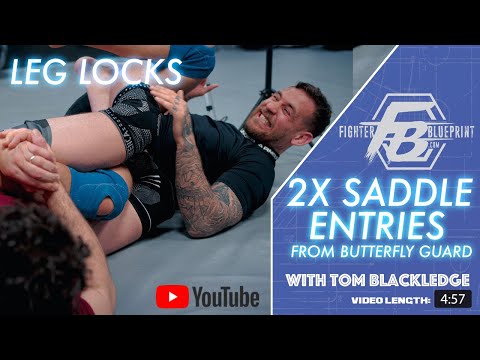
The standard inside sankaku (also called inside leg triangle or saddle position) represents a balanced leg configuration that prioritizes moderate control of the opponent's hip while maintaining tactical mobility. According to Less Impressed More Involved BJJ, this position features one leg placed over the opponent's hip, reinforced by a second leg with a strong back heel cinch to amplify hip control. The standard configuration allows practitioners to follow an opponent if they rotate to defend against heel hooks, enabling seamless transitions to top position or back control—a significant advantage over more locked-down variants. Fighter Blueprint demonstrates entry mechanics from butterfly guard, emphasizing underhook transitions and knee control to establish the position. MMA Leech approaches the position through single-leg X-guard sweeps, showing how the standard configuration serves as a staging point for transitions into leg drag passes, ankle locks, and the honey hole position. All three instructors agree the standard sankaku offers a strategic middle ground: superior hip immobilization compared to the looser "heist leg" configuration (legs uncrossed), but greater mobility than the fully locked "lockdown" position (where the bottom foot tucks behind the opponent's buttock). Less Impressed More Involved BJJ emphasizes transitioning between these configurations by controlling which hip the opponent faces, allowing weight distribution shifts that enable leg repositioning. The position's versatility makes it foundational for modern leg-lock systems in both gi and no-gi grappling.
Synthesized from 3 instructors
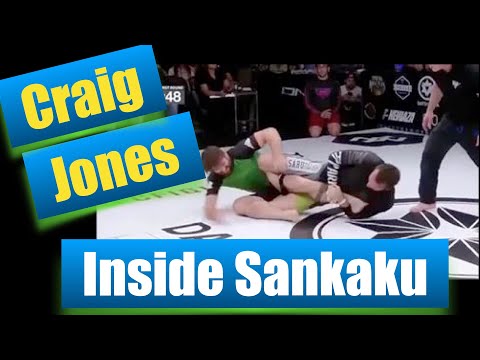
Less Impressed More Involved BJJ — Craig Jones - Inside Sankaku Foot Position: Comprehensive analysis of standard sankaku as one of three leg configurations, emphasizing hip control through crossed legs and back heel cinch, demonstrating mobility advantages and transitions to back takes or heel hook finishes
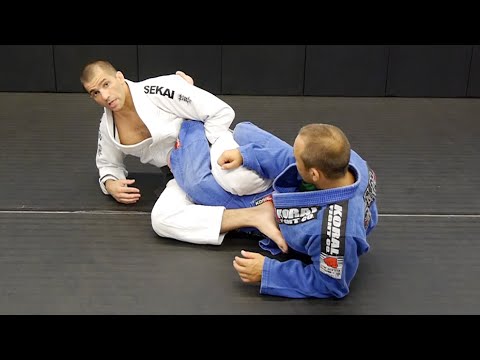
MMA Leech — Powerful Single Leg X-Guard Sweep (The Assis Sweep) Ashi Garami Fundamentals Online Course: Entry pathway from single-leg X-guard with arm variations and hand positioning strategies; demonstrates multiple finish options including leg drag passes, ankle locks, and honey hole position entries
Fighter Blueprint — 2 saddle entries in to heel hooks/leg locks from butterfly guard for no gi grappling bjj: Butterfly guard entry mechanics using underhook transitions and body lock approaches; emphasizes knee control maintenance during position establishment and transitions to heel hook applications
Learn This Technique
No instructional courses yet for this technique.
Sign in to suggest a course.
Ratings
Danger Rating
Risk of injury to the person this technique is applied to
9
Extreme9/10
Extremely dangerous — the inside heel hook from this position attacks the knee ligaments (ACL, MCL) with very little warning or pain before catastrophic, career-ending damage occurs; training requires extreme trust and controlled application
Difficulty
Skill level needed to execute this technique reliably
Advanced
Competition Legality
Whether this technique is allowed under major competition rule sets
Restricted
— IJF — Guard pulling penalized as non-combativity — ground...
✓The inside sankaku represents the pinnacle of the modern leg lock revolution in BJJ. John Danaher's 'Leglocks: Enter the System' (BJJ Fanatics, 8 volumes) dedicates Volume 5 entirely to this position — the longest volume in the series. The position's power comes from the 'double trouble' principle (Danaher): controlling both of the opponent's legs simultaneously makes submission nearly inevitable. The controlling knee should point downward (not upward) to prevent the opponent from rotating out. Eddie Cummings is often credited with popularizing the 'Honey Hole' name. Danaher publicly objected to the inconsistent naming, posting that 'this nomenclature needs to end.' The standard names in the Danaher system are 'inside sankaku' (formal) and 'cross ashi garami' (positional). Lachlan Giles' 'Saddle' instructional on Submeta (6 parts) and his 'Leg Lock Anthology: 50/50' on BJJ Fanatics are the other premier instructional resources. A critical safety note: the inside heel hook from this position can cause catastrophic ACL tears with almost no pain warning — partners must be completely trusted and tapping must be respected immediately.
Common Mistakes
!Controlling knee pointing upward — must point downward to prevent opponent's rotation
!Not securing both legs — controlling only one leg allows the opponent to generate base and escape
!Not completing the triangle configuration — leaving gaps allows the opponent to extract their leg
!Attacking the heel hook before establishing position control — 'position before submission' applies to leg locks too
!Not managing the opponent's free leg — the free leg can be used to kick out or create distance
Competition proof — [2] Lachlan Giles — ADCC 2019 absolute division bronze medal using saddle position
7CitationSaddle (Giles, Submeta)
Advanced system — Saddle (Giles, Submeta, 6-part instructional)
Community
Athletics
Requires
hip flexibility, precise leg dexterity, understanding of leg entanglement hierarchy
Favours
flexible hips and strong legs for maintaining the triangle configuration
Key muscles
hip adductors, hamstrings, glutes, core stabilizers
Frequently Asked Questions
What's the difference between standard inside sankaku and the lockdown position?
In the standard configuration, your bottom foot is on the ground, which provides a good balance between control and mobility. In the lockdown position, your bottom foot is tucked behind your opponent's buttocks, which locks down their hip much more effectively and makes it very difficult for them to turn out. According to Craig Jones, you should choose your leg configuration based on your specific goal and understand the pros and cons of each.
How do I transition between different inside sankaku leg configurations?
When your opponent defends by tucking their heel and turning to hide it, you should control the transition by bringing them in the opposite direction instead. This creates weightless legs on your part, allowing you to reposition your legs into your desired configuration smoothly. Craig Jones emphasizes understanding how to transition between configurations so you can adapt based on what your opponent does.
How can I prevent my opponent from escaping the inside sankaku position?
If your opponent turns and gives their back to defend against a heel hook, you can untangle your legs and follow them to take their back instead. The standard leg configuration serves as a good compromise between control and mobility for handling these defensive adjustments.
How does the Standard Inside Sankaku work?
The inside sankaku (honey hole/saddle) is the apex control position in the modern leg lock hierarchy, where the attacker forms a triangle configuration with their legs inside the opponent's trapped leg, controlling the hip, knee, and foot simultaneously. While leg entanglements existed in catch wrestling and sambo for decades, John Danaher systematized the inside sankaku as the dominant leg lock position through the Danaher Death Squad (DDS) at Renzo Gracie Academy, starting around 2014-2016.
Where does the Standard Inside Sankaku come from?
Leg entanglements existed in catch wrestling and sambo for decades, but the inside sankaku became the apex position through John Danaher's systematic approach at Renzo Gracie Academy (2014-2016). Eddie Cummings, Garry Tonon, and Gordon Ryan dominated EBI and ADCC using the DDS leg lock system.
Is the Standard Inside Sankaku legal in competition?
IBJJF: legal — Legal — guard is fundamental to BJJ, sweeps from guard score 2 points; IJF: restricted — Guard pulling penalized as non-combativity — groundwork from guard permitted …; ADCC: legal — Legal, guard pull penalized -1 point in points portion; Unified MMA: legal — Legal — no penalty for playing guard; FIAS Sport Sambo: legal — Legal
How dangerous is the Standard Inside Sankaku?
Danger rating 9/10. Extremely dangerous — the inside heel hook from this position attacks the knee ligaments (ACL, MCL) with very little warning or pain before catastrophic, career-ending damage occurs; training requires extreme trust and controlled application
How do I set up the Standard Inside Sankaku?
The standard setup chain: Establish Leg Entanglement → Thread Legs Inside → Complete Triangle Configuration → Control Knee Direction → Manage Both Legs → Attack the Heel.
How do I defend against the Standard Inside Sankaku?
Standard counters include: Protect the Foot — hug the trapped foot close to the body to deny heel hook grip / Fight the Inside Hook — prevent the triangle from being fully locked by addressing the inside leg hook / Turn Into Opponent — rotate toward the attacker to relieve rotational pressure on the knee / Clear the Legs — swing the opposite leg underneath both of the attacker's legs to dislodge the configuration (require….
What are the variants of the Standard Inside Sankaku?
Common variants: Standard saddle (classical configuration with triangle formed inside the t…); Reverse saddle (attacker faces the opposite direction, entered from diffe…); Backside 50/50 (evolution where opponent faces away, making heel hook def…); 50/50 (gateway/transitional position with mirrored leg configura…).
How effective is the Standard Inside Sankaku in competition?
Gordon Ryan: ADCC champion, dominant no-gi competitor using leg lock system built on inside sankaku. Lachlan Giles: ADCC 2019 absolute bronze — heel-hooked multiple larger opponents from saddle.
What are common mistakes when doing the Standard Inside Sankaku?
Top errors to watch for: Controlling knee pointing upward — must point downward to prevent opponent's rotation / Not securing both legs — controlling only one leg allows the opponent to generate base and escape / Not completing the triangle configuration — leaving gaps allows the opponent to extract their leg / Attacking the heel hook before establishing position control — 'position before submission' applies to leg locks too.
What are other names for the Standard Inside Sankaku?
The Standard Inside Sankaku is also known as Uchi-Sankaku, Inside Sankaku, Honey Hole, Saddle, 411.
What is the honey hole / saddle / 411 and why does it have so many names?
It is the same position called different names by different systems: 'Inside Sankaku' (John Danaher's term, Japanese for 'inside triangle'), 'Honey Hole' (Eddie Cummings / 10th Planet term), 'Saddle' (common American term), '411' (numerical designation). Danaher has publicly advocated for standardized naming. Regardless of the name, it is the apex control position in modern leg lock grappling.
Why is the inside sankaku considered the most dominant leg lock position?
Three reasons: (1) It controls three points simultaneously — the opponent's hip, knee, and foot — making escape extremely difficult. (2) It provides direct access to the inside heel hook, the highest-percentage leg lock finish. (3) The 'double trouble' principle — when you control both legs, the opponent cannot generate base to escape. Gordon Ryan's dominant ADCC career is largely built on this position.
How do I escape the inside sankaku / saddle?
Immediate priority: hide your heel by dorsiflexing (pulling toes up) and turning your foot inward — the 'boot.' Then rotate your entire body toward the trapped leg to relieve rotational pressure on the knee. Finally, pummel your trapped leg free by circling it over or under their entangling legs. The body rotation is the most important part — it removes the twist from your knee.