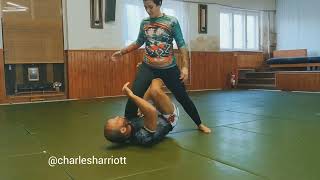
K-Guard Setup and Leg Control
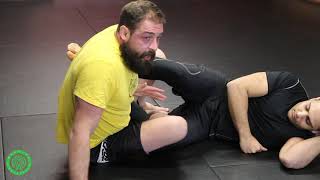
The instructor establishes a K-guard position with the bottom leg's short-leg X-hook while the opponent is mounted. The near-side leg is kept on the opponent's shoulder to maintain distance and control. A step toward the opponent's thigh helps establish the desired positioning for the technique progression.
Knee Positioning and Chopping Mechanics
The instructor moves the leg behind the opponent's knee, similar to a matrix entry, focusing on bending the knee inward rather than attacking the thigh. Critical positioning places the opponent's knee directly in front of the bottom leg's thigh. A chopping motion with the top leg ensures the knee remains trapped in this position.
Leg Lacing and Pressure Application
The free foot hooks in front of the opponent's opposite thigh with the sole purpose of maintaining pressure. The instructor places the second foot underneath to create a foot-on-foot pressure system. Twisting and pinching the knees together intensifies pressure toward the opponent's hips while securing the leg position.
Heel Exposure and Catch Mechanics
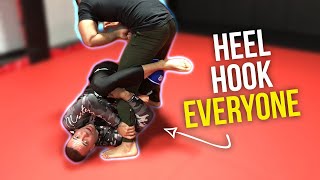
Once the legs are properly laced, the opponent's heel becomes highly exposed as the top leg sweeps across the body. The instructor catches the heel on the foot blade while using shoulder and ribcage pressure to compress the foot. If the opponent rolls toward 50/50 positioning before the catch, significant knee pressure results from the squeezed leg configuration.
Finishing Position and Submission Application
The instructor secures a hand-on-hand grip or gable grip across the opponent's foot blade. The submission finish relies on pulling and twisting using body rotation rather than arm strength. Simultaneous knee squeezing enhances pressure while the upper body executes the rotational finish of the heel hook.
Knee Control as Critical Detail
Throughout the technique, maintaining the opponent's knee position inside the leg scissor is emphasized as essential to success. If the opponent's knee escapes, the opponent may scramble to a superior position or step over the entanglement. Proper knee trapping prevents these escape opportunities and ensures the heel remains accessible for the final submission.
K-Guard to 50/50 Inside Heel Hook
Key Takeaways
- •K-Guard Setup and Leg Control
- •Knee Positioning and Chopping Mechanics
- •Leg Lacing and Pressure Application
- •Heel Exposure and Catch Mechanics
🔗 Links: Follow me on Instagram for more jiu-jitsu content: https://www.instagram.com/tarik_bjj/ Discover top-quality gear at Progress JJ. Use "TARIK15" for 15% Discount! UK Progress Referral: https://shorturl.at/joJMX EU Progress Referral: https://shorturl.at/pADPQ Teespring merch: https://shorturl.at/opHK3 Patreon: https://www.patreon.com/tarikbjj BJJ Fanatics: https://shorturl.at/cqsEI Twitch: https://www.twitch.tv/tarik_bjj
Related Techniques
Frequently Asked Questions
What does this video teach about inside heel hook entry?
This video covers k-guard setup and leg control, knee positioning and chopping mechanics, leg lacing and pressure application. It provides detailed instruction from Tarik BJJ.
How long does it take to learn inside heel hook entry?
The basic mechanics can be understood in a single session, but developing reliable execution requires consistent drilling over weeks of practice. This 6-part breakdown helps structure your training by isolating each phase of the technique.
What are the key details for finishing inside heel hook entry?
The instructor secures a hand-on-hand grip or gable grip across the opponent's foot blade. The submission finish relies on pulling and twisting using body rotation rather than arm strength. Simultaneous knee squeezing enhances pressure while the upper body executes the rotational finish of the heel hook.