Russian Tie Overview and Dominance
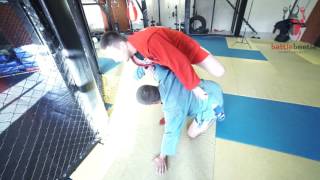
The Russian tie, or two-on-one grip, is established by securing the opponent's collar tie with one hand while gripping their opposite wrist with the other. This grip provides exceptional control in both sport grappling and self-defense contexts, enabling the controller to isolate the opponent's arm and threaten multiple takedown options including leg sweeps and hip-heavy pressure passes.
Control Requirements and Head Pressure
Effective Russian tie control requires the practitioner to apply significant head pressure and maintain heavy hip positioning to prevent the opponent from generating striking or escape options. Simply holding the grip without this pressure allows the opponent relative freedom to attack, making the quality of the control essential for safety and dominance.
Escape Method One: Head Pressure Defense and Arm Repositioning
The first escape begins by fighting the opponent's head pressure through counter-pressure on their head while simultaneously working the trapped arm upward toward the neck. The escaping practitioner attempts to establish at least fingertip control on the opponent's neck, then uses stiff-arm pressure to break the Russian tie and create space, potentially transitioning to front control or choke opportunities.
Escape Method Two: Far Elbow Control and Arm Drag Transition
When head pressure fighting proves insufficient, the escaping practitioner targets the far elbow by pulling it toward their stomach and torso. Once secured, they weave their bottom hand underneath while maintaining tight elbow positioning, then transition through an arm drag to establish a reverse Russian tie on the opponent's other side.
Advanced Transitions from Reversed Control
After successfully escaping via far elbow control and arm drag, the practitioner achieves a Russian tie on the opponent's opposite side, enabling multiple follow-up options including cross-body two-on-one control, body lock takedowns, or back-take positioning. This reversal can be drilled as a positional exchange where practitioners alternate applying and escaping the grip.
Drilling Methods for Russian Tie Exchanges
Practitioners can develop Russian tie defense through specific drills where one partner starts with a collar tie and allows the other to establish a Russian tie, then practices the escape sequence. An alternative drill involves both partners continuously switching the Russian tie between sides, creating a rhythmic exchange that builds familiarity with grip transitions and counter-positioning.
3 Ways To Defend The Russian Tie
Key Takeaways
- •Russian Tie Overview and Dominance
- •Control Requirements and Head Pressure
- •Escape Method One: Head Pressure Defense and Arm Repositioning
- •Escape Method Two: Far Elbow Control and Arm Drag Transition
The last one will catch your opponent off guard every time. Social Media: Instagram: https://www.instagram.com/davidheineman90/ Tik Tok: https://www.tiktok.com/@davidheineman90?lang=en Facebook: https://www.facebook.com/staysafesd/ Tranzfuse code STAYSAFE https://www.tranzfuseusa.com/ Bighorn Athletics code STAYSAFE https://www.bighornathletics.com/ Combat Corner for all of your fighting gear needs! www.combatcorner.com #staysafemartialarts #wrestling #selfdefense
Related Techniques
Frequently Asked Questions
What does this video teach about two-on-one-russian tie?
This video covers russian tie overview and dominance, control requirements and head pressure, escape method one: head pressure defense and arm repositioning. It provides detailed instruction from Stay Safe Martial Arts.
How long does it take to learn two-on-one-russian tie?
The basic mechanics can be understood in a single session, but developing reliable execution requires consistent drilling over weeks of practice. This 6-part breakdown helps structure your training by isolating each phase of the technique.
What are the key details for finishing two-on-one-russian tie?
After successfully escaping via far elbow control and arm drag, the practitioner achieves a Russian tie on the opponent's opposite side, enabling multiple follow-up options including cross-body two-on-one control, body lock takedowns, or back-take positioning. This reversal can be drilled as a positional exchange where practitioners alternate applying and escaping the grip.
Related videos
Control Your Opponent EASY with THIS!!
TeachMeGrappling Coach Brian
Teaching BEGINNERS "Elbow Control" for Takedowns! Part 2
TeachMeGrappling Coach Brian
How To Arm Drag | Technical Tuesday |
The Bomb MMA
The BASIC Inside Wrist Control from Wrestling!
TeachMeGrappling Coach Brian
Two Armbars and a rolling kneebar from a Russian Tie by Kirill Sementov from Battle beetle
BeyondGrappling