High Crotch Setup and Elbow Control Entry
The instructor demonstrates approaching a high crotch takedown by driving upward through the opponent's buttocks rather than the knee. From this position, the instructor establishes elbow control on the opponent's arm, which serves as the foundation for multiple takedown variations including the duck under and high crotch finish.
Thumb Break Defense and Hand Position Manipulation
Two methods of breaking the opponent's grip are presented: applying head pressure directly, or manipulating hand positioning to prevent the opponent from achieving a secure thumb position. By closing the distance between shoulder and hand while the opponent's arm is extended, the defender can force the opponent's arm to bend, causing them to miss the optimal grip position.
Post Position and Head Placement Strategy
The instructor establishes a post position using the thumb against the opponent's body. Head placement is intentionally kept deceptive—appearing high to give the opponent false confidence in their defensive position—while the instructor maintains control and prepares for the level change.
Duck Under Transition and Finish Options
From the initial setup, the instructor demonstrates a level change and duck under movement, which can transition into a double-leg takedown, a behind position, or a high crotch finish. The high crotch variation involves driving the head up with chest elevated, rotating the torso, and throwing the elbow behind before pulling the opponent down.
Continuous Pressure and Re-engagement Principles
The instructor emphasizes maintaining consistent pressure on the opponent without necessarily attacking aggressively, allowing the partner to defend while keeping them off-balance. If control is lost, the practitioner should immediately re-establish the grip and maintain forward pressure until the opponent can no longer retreat, eventually forcing engagement.
Snap Down and Alternative Responses to Position Changes
When the opponent lowers their level to prevent the shot, the instructor transitions to striking with elbow and tricep across the head and neck area. If the opponent drops their hand from the controlling position, an arm drag can be executed to punish the movement and reinforce proper hand placement.
Grip Exchange and Balance Control During Setup
The instructor stresses that opponents should grip back to maintain balance rather than creating dead weight. When an opponent fails to engage with grips, the practitioner should aggressively off-balance them through yanking and repositioning, teaching the opponent to use the grip relationship for stability.
Teaching BEGINNERS "Elbow Control" for Takedowns! Part 2
Key Takeaways
- •High Crotch Setup and Elbow Control Entry
- •Thumb Break Defense and Hand Position Manipulation
- •Post Position and Head Placement Strategy
- •Duck Under Transition and Finish Options
This video is from a class where I taught the elbow control tieup. Its a basic tieup to learn but the details make it quite challenging for beginners. Over time you will have a great understanding of the tie. Check out the details and you are sure to find something useful! Enjoy! If you have any questions, comments, or suggestions, please comment below. More videos to come! Please like, share, and subscribe!! PLEASE Click this link to SUPPORT the TeachMeGrappling Channel!!! https://www.patreon.com/TeachMeGrappling or https://www.paypal.me/CoachBrianPeterson Your contribution is much appreciated and will help me continue to bring you content! 🙏 www.NextLevelGuy.com The NextLevelGuy Podcast with Coach Brian Peterson has been released!! Check it out!
Related Techniques
Frequently Asked Questions
What does this video teach about elbow control?
This video covers high crotch setup and elbow control entry, thumb break defense and hand position manipulation, post position and head placement strategy. It provides detailed instruction from TeachMeGrappling Coach Brian.
How long does it take to learn elbow control?
The basic mechanics can be understood in a single session, but developing reliable execution requires consistent drilling over weeks of practice. This 7-part breakdown helps structure your training by isolating each phase of the technique.
What are the key details for finishing elbow control?
When the opponent lowers their level to prevent the shot, the instructor transitions to striking with elbow and tricep across the head and neck area. If the opponent drops their hand from the controlling position, an arm drag can be executed to punish the movement and reinforce proper hand placement.
Related videos
Control Your Opponent EASY with THIS!!
TeachMeGrappling Coach Brian
3 Ways To Defend The Russian Tie
Stay Safe Martial Arts
How To Arm Drag | Technical Tuesday |
The Bomb MMA
The BASIC Inside Wrist Control from Wrestling!
TeachMeGrappling Coach Brian
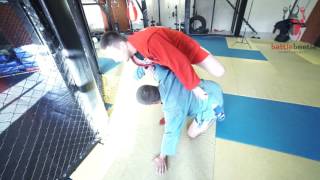
Two Armbars and a rolling kneebar from a Russian Tie by Kirill Sementov from Battle beetle
BeyondGrappling