Introduction to Arm Drag Fundamentals
The instructor introduces the arm drag as a foundational wrestling technique that many practitioners believe they understand but often miss critical details. The session will cover basic mechanics, intermediate variations, and an advanced jiu-jitsu-influenced finish.
Hand Positioning and Initial Grip
The arm drag begins from a standard wrestling stance as the opponent reaches for a collar tie. The defender uses a 'wax off' motion, pushing the opponent's hand inward and downward while establishing a loose directional grip. The key is driving the grip deep into the armpit rather than targeting the elbow, ensuring that any slip results in contact with the tricep or upper arm rather than a complete loss of control.
Chest-to-Chest Position and Follow-Through
After securing the arm drag grip, the defender steps the lead leg between the opponent's legs and rotates to achieve a chest-to-chest position. Rather than immediately attacking the hip, the defender places the far arm high on the opponent's body and transitions to the knee, then drives through with a running finish to complete the takedown.
Proactive Thumb-Down Grip Variation
In the second variation, the defender initiates the arm drag rather than waiting for the opponent to commit. Using a thumbs-down grip, the defender controls the opponent's arm by pushing it downward and exploits any attempt to retract by executing the arm drag. A knee bump into the inside of the opponent's leg creates additional off-balance at the moment of entry.
Knee Bump Mechanics and Double-Leg Setup
The knee bump is performed on the toe, with the defender's knee pivoting into the inside of the opponent's knee. This subtle movement disrupts the opponent's base and facilitates entry into a double-leg takedown with greater ease and control.
Back-Take Finish with Lat Lock
The advanced jiu-jitsu variation emphasizes locking the lat and pulling the elbow to the hips while leaning backward, forcing the opponent to move forward. As the opponent shifts weight, the defender jumps to the back, establishes the first hook, and searches for the second hook on the far side while controlling the neck and shoulder with a mataleon grip.
Back Control and Mataleon Lock
The defender secures back control by placing the hand around the opponent's neck, searching for the shoulder, and maintaining the back wrist position to lock the mataleon grip with the head positioned near the opponent's ear. This finish remains effective even if the opponent attempts to jump and slam, as demonstrated in the instructor's competition experience.
How To Arm Drag | Technical Tuesday |
Key Takeaways
- •Introduction to Arm Drag Fundamentals
- •Hand Positioning and Initial Grip
- •Chest-to-Chest Position and Follow-Through
- •Proactive Thumb-Down Grip Variation
Whats up YouTube Family! This week on Technical Tuesday I brake down a couple arm drag variations that will help in bjj wrestling or mma! Enjoy! https://www.adampiccolotti.com/ https://www.patreon.com/thebombmma https://twitter.com/adampiccolotti https://www.instagram.com/adampiccolotti/?hl=en https://www.facebook.com/AdamTheBombPiccolotti/?ref=bookmarks 10% discount code= AP10 https://www.norcalfightshop.com/
Related Techniques
Frequently Asked Questions
What does this video teach about arm drag?
This video covers introduction to arm drag fundamentals, hand positioning and initial grip, chest-to-chest position and follow-through. It provides detailed instruction from The Bomb MMA.
How long does it take to learn arm drag?
The basic mechanics can be understood in a single session, but developing reliable execution requires consistent drilling over weeks of practice. This 7-part breakdown helps structure your training by isolating each phase of the technique.
What are the key details for finishing arm drag?
The advanced jiu-jitsu variation emphasizes locking the lat and pulling the elbow to the hips while leaning backward, forcing the opponent to move forward. As the opponent shifts weight, the defender jumps to the back, establishes the first hook, and searches for the second hook on the far side while controlling the neck and shoulder with a mataleon grip.
Related videos
Control Your Opponent EASY with THIS!!
TeachMeGrappling Coach Brian
3 Ways To Defend The Russian Tie
Stay Safe Martial Arts
Teaching BEGINNERS "Elbow Control" for Takedowns! Part 2
TeachMeGrappling Coach Brian
The BASIC Inside Wrist Control from Wrestling!
TeachMeGrappling Coach Brian
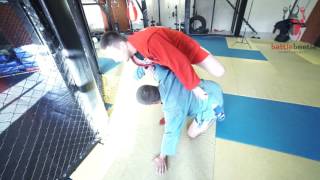
Two Armbars and a rolling kneebar from a Russian Tie by Kirill Sementov from Battle beetle
BeyondGrappling