Defensive Posture Against Left-Handed Players
Stevens addresses a specific defensive scenario where the opponent avoids collar and sleeve engagement by keeping their shoulder back and posting their hands to prevent grip access. This posture, common among left-handed judoka, prioritizes distance and defensive positioning over offensive setup.
Sleeve Control Dynamics
Stevens explains that a defensive left-handed player maintains inside control through the sleeve grip, which creates a significant positional advantage. Without breaking down the opponent's arm and establishing upper body connection, the defender maintains control and can prevent effective throws.
The Distance Problem
When a defensive opponent turns their shoulder down and creates distance, standard attacking approaches become ineffective. This positioning problem commonly frustrates players attempting to work against opposite-side defensive players, as conventional gripping lanes become inaccessible.
Initial Grip Setup and Body Positioning
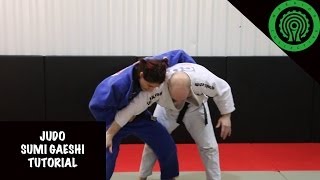
Stevens initiates the technique by rolling his shoulder in response to the opponent's grip, then reaches inside the collar with his thumb while maintaining his own sleeve position. He uses chest pressure to drive into the opponent while positioning himself to access the back of the neck, mirroring the opponent's shoulder turn.
Grip Advantage and Control Principles
Due to his grip position on the far side of the opponent's collar, Stevens gains control of the opponent's upper body that the opponent cannot achieve with their distance-creating sleeve grip. This asymmetry in control allows him to apply arching pressure and shoulder rotation while the opponent can only generate distance.
Two-Hand Collar Grip and Neck Control
Stevens transitions to a two-handed grip by keeping one hand on the back of the collar while stealing the front collar with his other hand, creating a line of tension close together. This configuration pressurizes the side of the neck and establishes directional control of the head independent of the opponent's defensive resistance.
Execution and Follow-Through
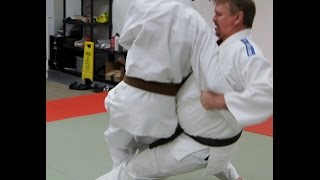
With head control established and the opponent's defensive pressure maintained, Stevens steps inside to slide into a sumi position and executes the throw over the top. The technique leverages the opponent's own defensive pressure to facilitate the sacrifice throw entry.
Defensive Aftermath and Positional Reset
Stevens notes that even if the technique does not result in a score, the opponent will typically relax their stiffened arm post-throw attempt and open their collar. This relaxation allows the attacker to transition into their standard attacking game and establish more conventional offensive gripping patterns.
The Best Sacrifice Throw In Judo by Olympian Travis Stevens
Key Takeaways
- •Defensive Posture Against Left-Handed Players
- •Sleeve Control Dynamics
- •The Distance Problem
- •Initial Grip Setup and Body Positioning
Sumi Gaeshi is the best sacrifice throw you can do in judo! It has so many elements to it that work in Tori's favor. From being able to score with it, getting out of danger, transitioning into newaza. For the next 48 hours, you can save an additional 20% on any membership to The American Judo System. Just click here to secure your membership: https://bit.ly/3g8Xl3C Make sure you join my YouTube Community for exclusive content and perks! Click here to become a member: https://bit.ly/JudoSilencer_Community Submit Everyone BJJ Gi: https://amzn.to/2FQKr99 Mizuno Judo Gi: https://amzn.to/2TpBZWp Baseline Rashguards: https://amzn.to/2TlNEFQ Baseline Shorts: https://amzn.to/2ReoZAk Baseline Spats: https://amzn.to/2srqiUd Finger Tape: https://amzn.to/2NrYVAI Lightweight Backpack: https://amzn.to/2RhWYYK BJJ Belts: https://amzn.to/2QTPps0
Frequently Asked Questions
What does this video teach about sacrifice throw?
This video covers defensive posture against left-handed players, sleeve control dynamics, the distance problem. It provides detailed instruction from Travis Stevens.
How long does it take to learn sacrifice throw?
The basic mechanics can be understood in a single session, but developing reliable execution requires consistent drilling over weeks of practice. This 8-part breakdown helps structure your training by isolating each phase of the technique.
What are the key details for finishing sacrifice throw?
With head control established and the opponent's defensive pressure maintained, Stevens steps inside to slide into a sumi position and executes the throw over the top. The technique leverages the opponent's own defensive pressure to facilitate the sacrifice throw entry.