Clinch Entry and Hand Position
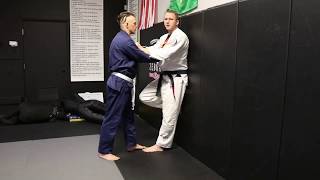
The clinch is entered by closing distance with a punch or jab while simultaneously establishing neck control with the hands positioned inside the opponent's arms. This inside hand position provides superior body control and leverage to manipulate the opponent's movement and posture.
Positioning and Knee Mechanics
Once in the clinch, the practitioner controls the opponent's direction by managing their neck while positioning their rear foot to generate power. Knee strikes are driven straight forward by stepping back slightly to create distance, then driving the rear leg forward with extension through the hips and back.
The Neck Swim and Inside Position
The neck swim is a positional exchange where both fighters maneuver for the inside position—a controlling location that offers superior leverage. Competitors work only at the neck level during this transition, competing for hand placement on the interior of the opponent's arm structure.
Disruption Techniques
From the inside position, the clinch fighter can execute a chicken wing to elevate the opponent's arms, disrupting their structure. Alternatively, driving the arm inward to rotate the opponent's body sets up offensive opportunities such as a circular knee strike.
Arm Control Position and the Second Swim
The second clinch position establishes arm control, where one hand controls the opponent's neck while the other hand controls their arm. Transitioning between positions through the swim maneuver allows the fighter to shift leverage and control to the opposite side.
Leverage and Turning with Arm Control
Arm control provides significant turning leverage; the fighter pulls with the arm-controlling hand while pushing with the neck-controlling hand to rotate the opponent. The knee strike is typically driven in the direction of arm control, where leverage is maximized.
Hip Check Defense
The hip check is a defensive position employed when the opponent attempts to drive a knee strike into the clinch fighter. This low-level defensive swim counters knee attacks and can transition into alternative controlling positions.
Three Fundamental Knee Strikes
The straight knee is delivered by stepping back, extending the torso, and driving the rear leg forward in a linear path. The circular knee (or slap knee) opens the hip like a door and swings it closed, while the slant knee approaches from an angle similar to a Muay Thai kick, striking from the side.
Kickboxing Lesson - The Clinch
Key Takeaways
- •Clinch Entry and Hand Position
- •Positioning and Knee Mechanics
- •The Neck Swim and Inside Position
- •Disruption Techniques
Here is a thorough lesson on the Muay Thai clinch and 3 different knees that can be used in the clinch. We demonstrate the basic clinch. the swim and different variations of defenses and offenses that can be utilized in this very important aspect of Muay Thai. Total Boxing is a kickboxing school located in Roswell, Georgia. http://www.totalboxing.net
Related Techniques
Frequently Asked Questions
What does this video teach about fundamental clinch?
This video covers clinch entry and hand position, positioning and knee mechanics, the neck swim and inside position. It provides detailed instruction from AtlantaKickboxing.
How long does it take to learn fundamental clinch?
The basic mechanics can be understood in a single session, but developing reliable execution requires consistent drilling over weeks of practice. This 8-part breakdown helps structure your training by isolating each phase of the technique.
What are the key details for finishing fundamental clinch?
The hip check is a defensive position employed when the opponent attempts to drive a knee strike into the clinch fighter. This low-level defensive swim counters knee attacks and can transition into alternative controlling positions.